
Krewe of Boo rolls at 6.30pm on Saturday 24 October 2026, out of the Faubourg Marigny, up through the French Quarter and down into the Warehouse District, on floats that spend the other eleven months of the year as Mardi Gras floats. The parade needs roughly two hours to clear the route, which leaves you a whole day on either side of it. Here is how to spend that day on foot, without standing in a crowd for all of it.
What the parade is and where it goes
This is the city's Halloween parade rather than a Halloween-themed event, and the distinction matters when you choose your spot. It runs on carnival machinery: full-size tandem floats built at Kern Studios, marching bands and dance troupes in the gaps, riders throwing from well above your head. It forms in the Marigny, works along the river side of the French Quarter with Decatur Street as its spine, and ends in the Warehouse District, where the floats peel off and the crowd finally thins.
Watching from the kerb costs nothing and, for most people, is the right answer. The Decatur blocks are the densest and the loudest. If you want room to stand, walk down towards the Warehouse District end, where the crowd loosens and the floats still arrive with plenty left to throw. Be in position by about 6pm and accept that you will not move much for the next two hours. With small children, a front row on a quiet block beats any balcony, because riders throw to whoever they can actually see.
d.b.a. (Frenchmen Street, Marigny) is the natural place to begin, because the parade assembles more or less on its doorstep. It is the anchor of Frenchmen Street, with brass bands, zydeco, swamp pop and traditional jazz, a different act most nights, a $10 to $20 cover at the door and drinks at $8 to $14. There are no bookings and no table service worth the name; a group will fit standing but not seated, so come for the first set, have one drink, and be back outside well before 6.30pm.

The balconies the krewe sells itself
The parade organisers sell official viewing parties at four venues along the route. Three of them span its full length, from the middle of the Quarter down to the far end, and all three follow the same format: a ticket price that covers an open bar for a set number of hours, food, and a private balcony directly above the floats. At $200 to $275 a head this is not cheap, and you should be honest with yourself about what you are buying. You are buying a guaranteed sightline, a chair, and (the part nobody advertises but everybody remembers) a bathroom you do not have to queue for in the Quarter at eight in the evening. For a group of six or eight, or for anyone who cannot stand for two hours, it is money well spent. For two people happy on their feet, it is not.
Crescent City Brewhouse (Decatur Street, French Quarter) charges $275 per person on parade night for a four-hour open bar, food and a private balcony, the longest drinking window of the four. It is the Quarter's only working microbrewery, its balcony sits directly on the route, there is a river breeze most evenings and live jazz downstairs. On an ordinary night, mains run $20 to $35 and beers $7 to $9.

Willie's Boil House Seafood Kitchen & Bar (336 Decatur Street, French Quarter) is $225 per person for a three-hour open bar, food and the upstairs VIP balcony above the route. It is the pick if you would rather eat properly than drink on an empty stomach: the house format is a Louisiana boil, which is also what makes it work for a big table on any other night of the trip, at roughly $20 to $40 a head.
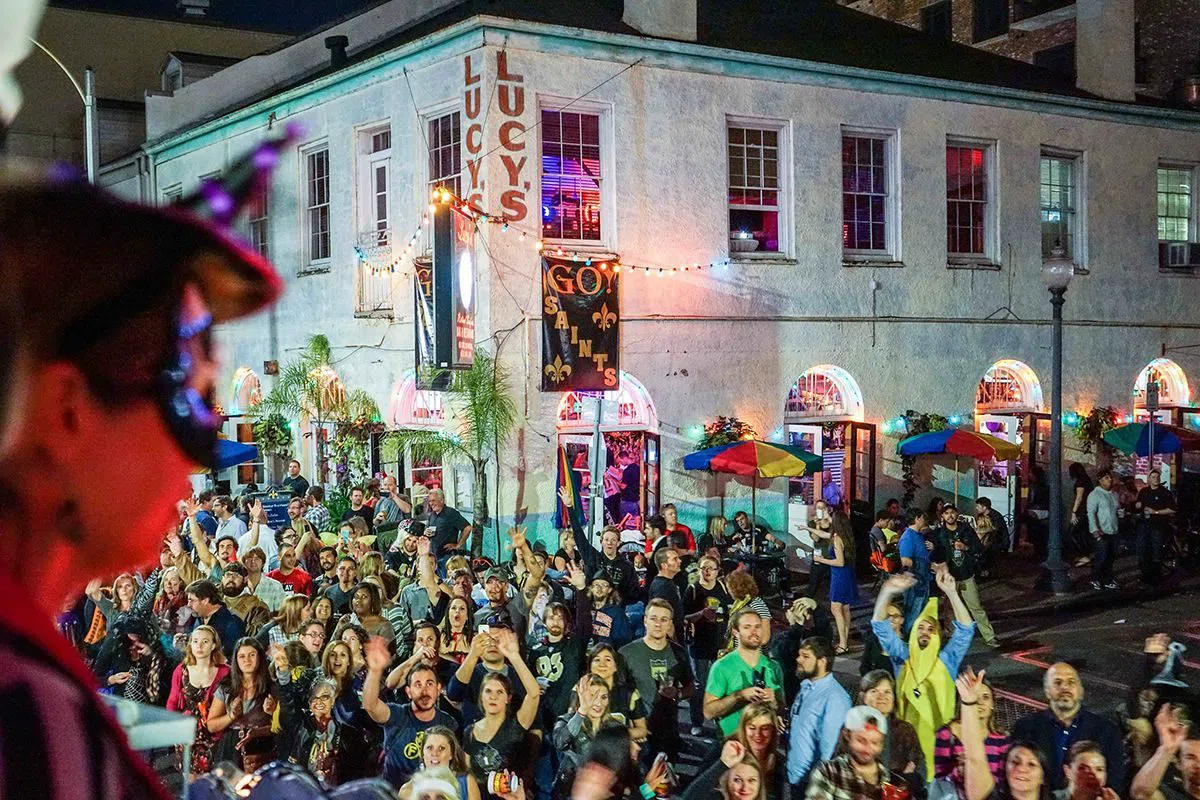
Lucy's Retired Surfers Bar & Restaurant (Warehouse District) is the cheapest of the three at $200 per person for a three-hour open bar, food, private balcony and private bathrooms, and it is the only official party at the Warehouse District end. That position is its argument: the floats reach it last, by which point the riders have loosened up and are throwing hard to get rid of everything they are carrying. Outside parade season Lucy's is a straightforward bar at $10 to $20 a plate that takes large parties and private hires.
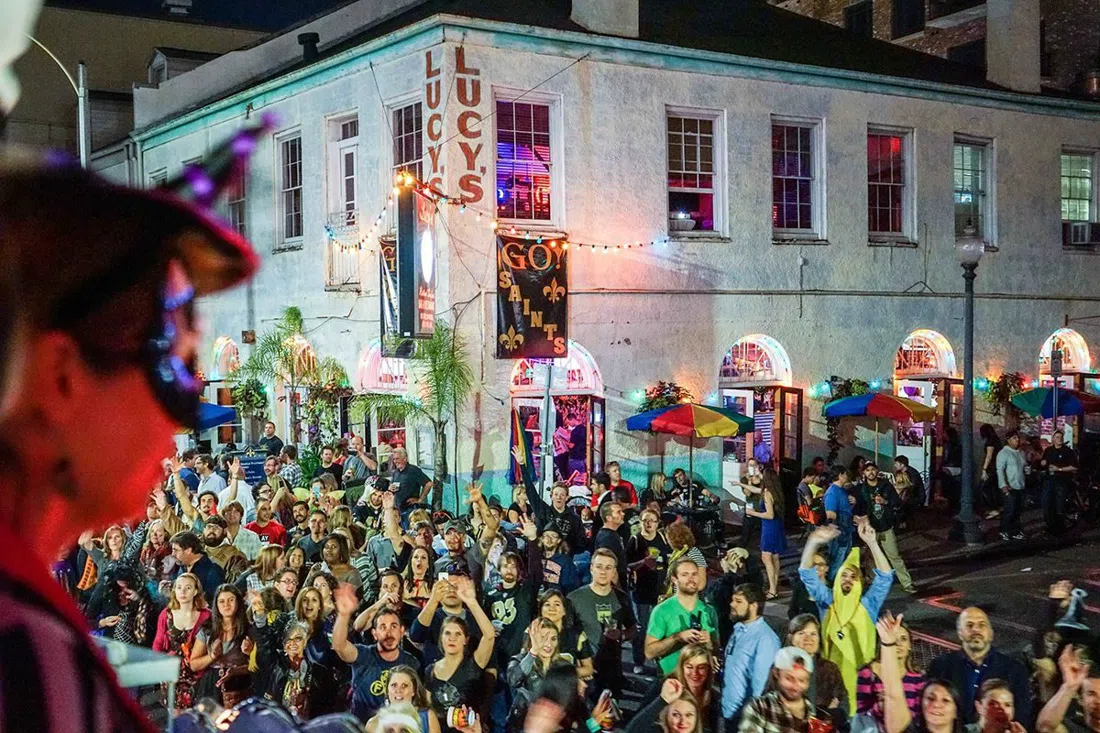
All three sell out well before late October, and the balconies go earlier than the hotel rooms do. If you want one, book it before you book anything else.
Daylight hours on parade day
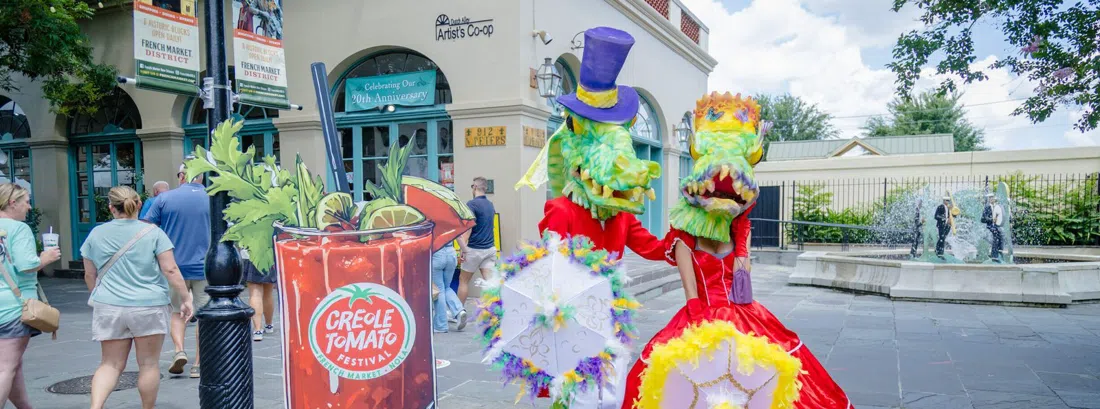
The French Market District (Dutch Alley, French Quarter) runs the Boo Carré Halloween Haunt from 11am to 4pm on the 24th itself: free, outdoors, unticketed, with no cap on numbers, which makes it the only thing all weekend that absorbs both a family and a group of ten without planning. Black Masking Indians appear in full suits, there is a gumbo cooking demonstration, and market stalls and food run $5 to $20. Treat it as the daytime half of the same day, not a separate outing.
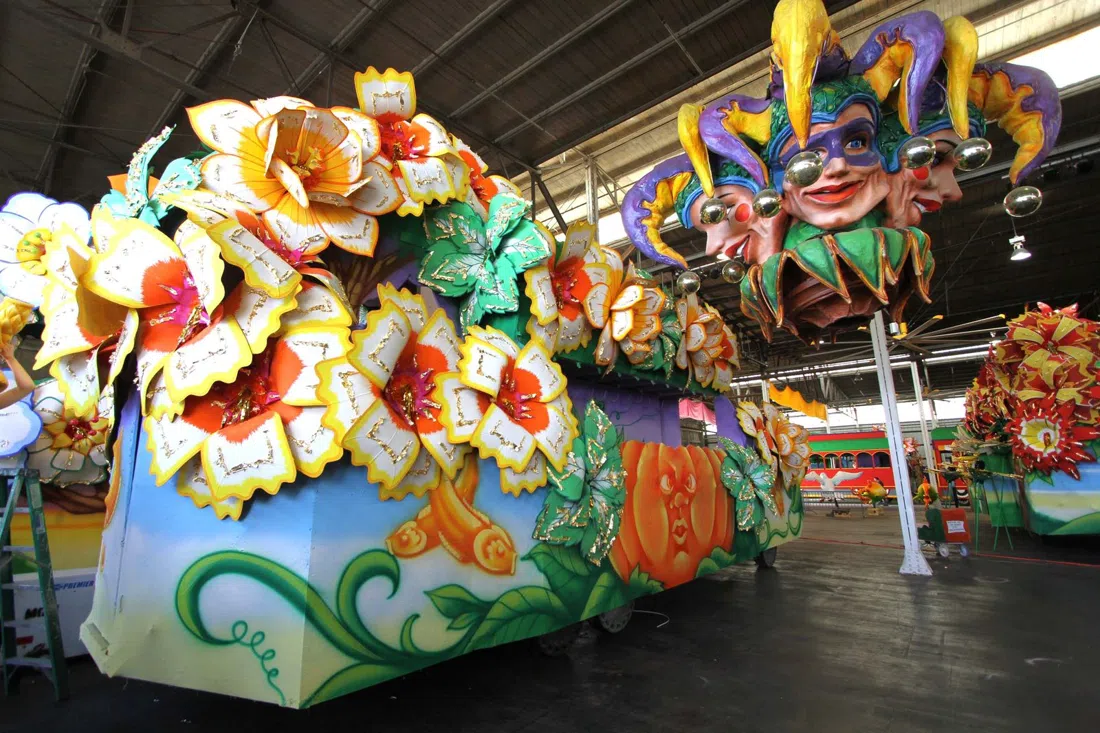
Before that, give the morning to Mardi Gras World (riverfront, just below the Convention Center). Krewe of Boo rides on Kern Studios floats, and this is Kern's working den, the warehouses where the props are sculpted, painted and stored between seasons. Tours leave every 30 minutes, entry is from $29.95 for adults, $24.95 for children, seniors and military, and under-twos are free; a free shuttle collects from ten downtown pick-up points, which saves you a walk you do not want on your feet before a parade. Book a timed slot, because they sell out. The payoff is specific and slightly absurd: you will stand on Decatur that evening and recognise a fifteen-foot papier-mâché head you watched someone touch up eight hours earlier.
The dark rooms that aren't theatre
Halloween week brings out a great deal of costumed nonsense, so it is worth knowing which of the city's dark attractions are the real thing.
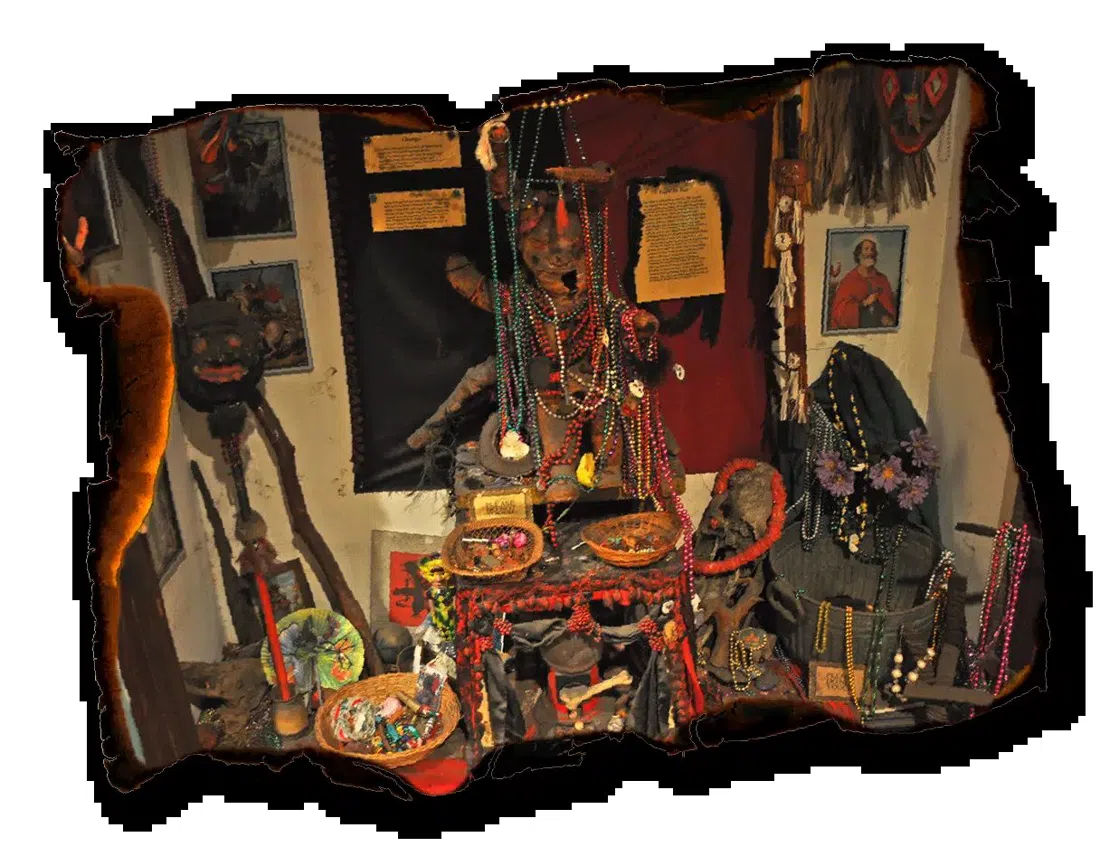
The New Orleans Historic Voodoo Museum (Dumaine Street, French Quarter) takes twenty minutes and is genuinely odd rather than polished: two small rooms, $10 for adults, $8 for students and seniors, $5 for under-twelves, open 10am to 6pm daily. The rooms hold only a handful of people at a time, so a party of more than six should split and go in waves; guided walking tours can be arranged for groups. Go here before the cemetery rather than after, because it gives you the names and the context that a guide at the tombs will otherwise have to compress into a sentence.
The Museum of Death (227 Dauphine Street, French Quarter) is around $20, walk-in only with no reservations, open 10am to 6pm. It is not for everyone and I will not pretend otherwise: real autopsy photography and crime-scene material, no children, and a steady trickle of people who leave halfway through. It is also the one place in the Quarter marketing itself on death that is not putting on a show. The corridors are tight, so large groups shuffle through in waves.
Getting inside St. Louis Cemetery No. 1
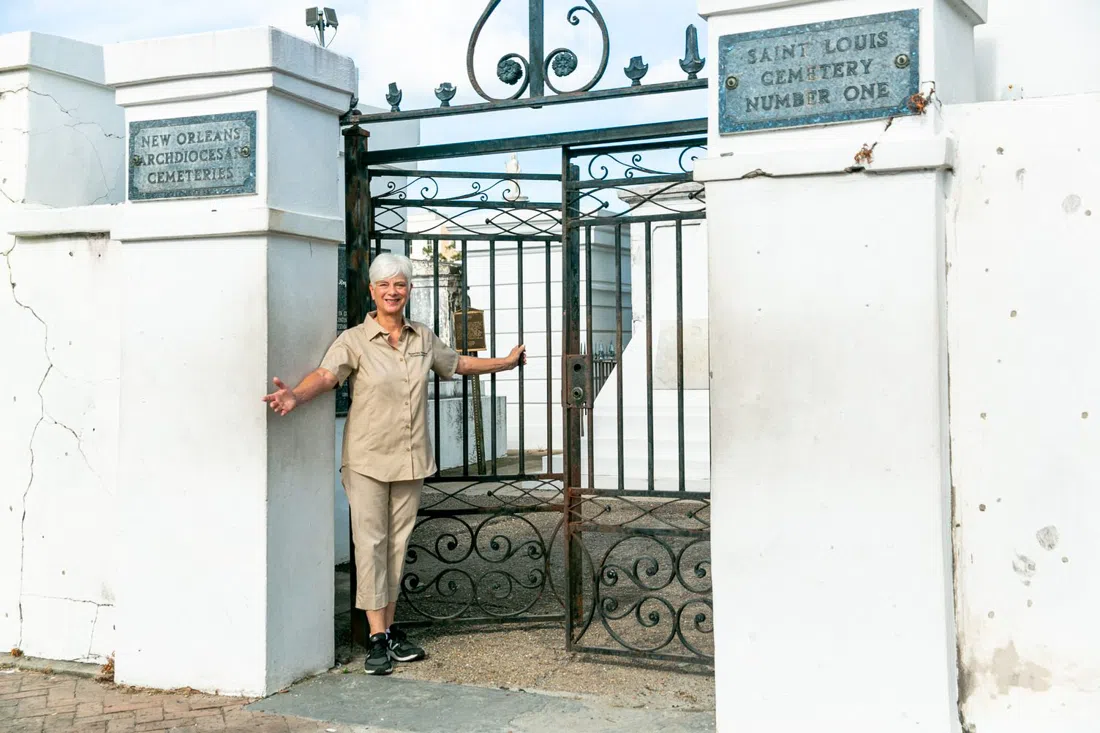
St. Louis Cemetery No. 1 (Basin Street, on the Tremé edge of the Quarter) is the oldest cemetery in the city and closed to unaccompanied visitors: a licensed guide is the only legal way through the gate, and nobody without a ticket gets in. Entry is timed every 15 minutes from 9:00 to 15:45, the guided walk lasts 40 minutes, and it costs around $25 for an adult. Proceeds from the Save Our Cemeteries walks go back into tomb restoration, which is the reason the place is still standing. Groups must pre-book, and late-October slots go early.
For the stories rather than the stonework, French Quarter Phantoms (French Quarter) runs history-led tours with licensed guides on four separate routes (ghost and vampire, cemetery, Tremé, and true crime) at around $30 a head, departing nightly at 6pm and 8pm. Private bookings for parties of seven or fewer go at a flat rate; larger groups are quoted by phone. Both departure times collide head-on with the parade, so put the tour on a different night of your trip and book it weeks out, because Halloween week fills.
After the last float
Once the route clears, the Quarter is loud and full. Where you go depends on how much of that you still want.
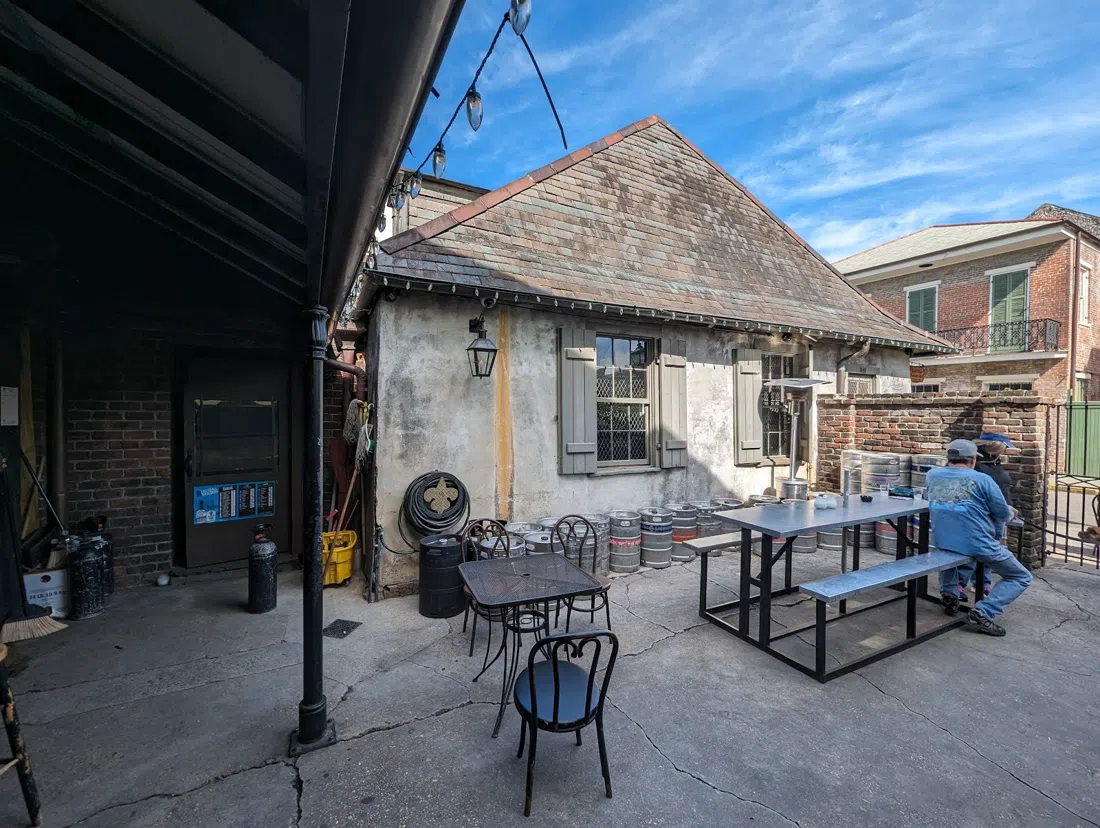
Lafitte's Blacksmith Shop Bar (lower Bourbon Street, French Quarter) is ten minutes' walk from the route and one of the oldest surviving buildings in the city, still lit by nothing but candle flame. No reservations, no door policy, cash-friendly, cramped and loud, open until 3am most nights. Two or three of you will find a corner; a party of eight will end up on the pavement outside, which is a fine place to be but is not what you walked over for.
The Carousel Bar & Lounge at Hotel Monteleone (Royal Street, French Quarter) has been revolving on 2,000 steel rollers since 1949, a real landmark rather than a gimmick, with cocktails at $16 to $22. The seats on the carousel itself are first-come and fiercely fought over; you need to be there before 5pm for a realistic chance, which rules out parade night entirely. Come on another evening, or take a booth in the adjoining lounge, where there is live music nightly and enough space for a group to actually sit together.
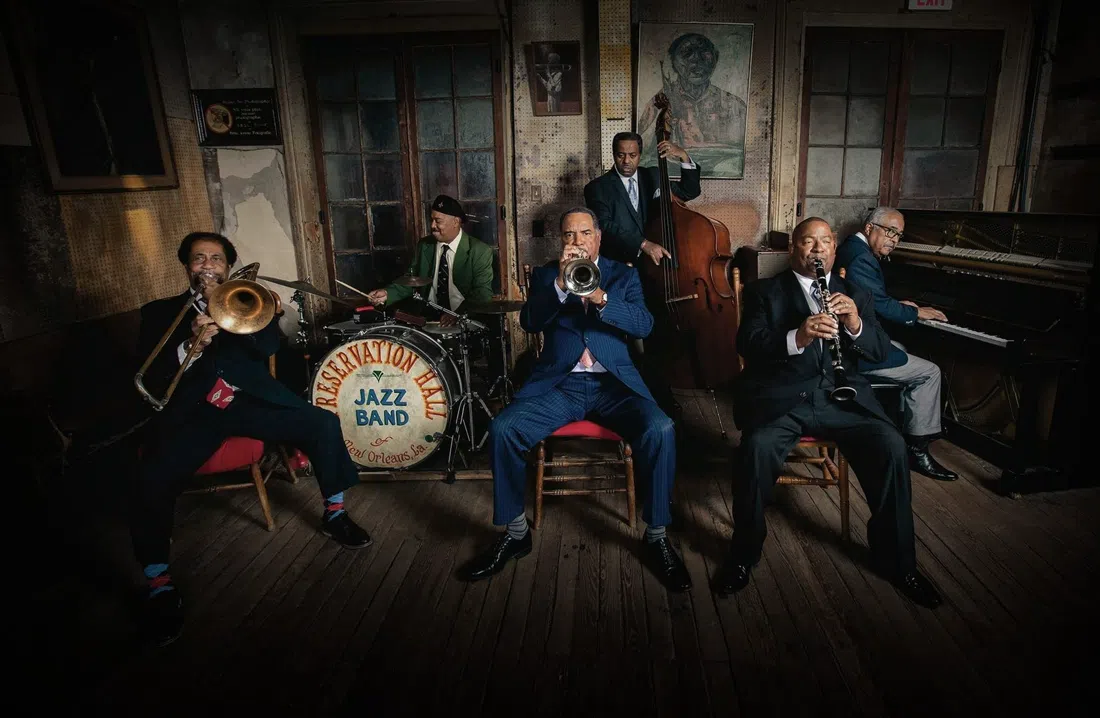
Preservation Hall (St Peter Street, French Quarter) is the deliberate opposite of parade night: acoustic traditional jazz in a room holding barely a hundred people, 45-minute ticketed sets, no drinks and no talking, from around $25 to $50 depending on the set. Standing room is limited and capacity is tiny, so buy online in advance, especially for a group. Save it for the night before or the night after. It deserves ears that are not still ringing.
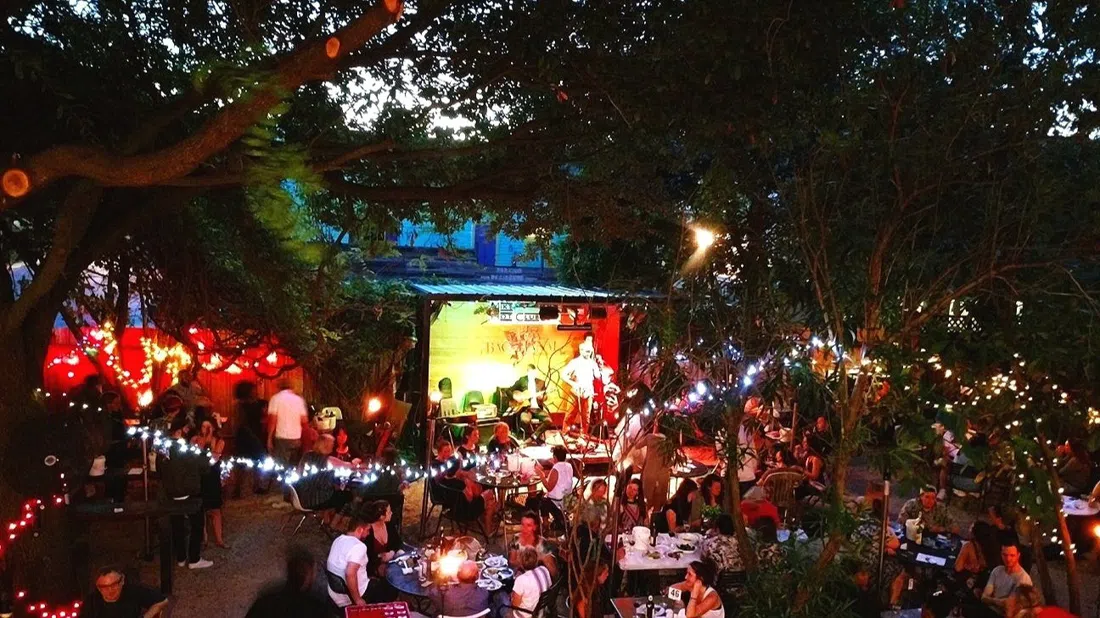
If you want to sit down and hear your own table, go to Bacchanal Wine (Bywater), twenty minutes from the Quarter. You choose a bottle inside at shop price, from $25, add a cheese or charcuterie plate at $15 to $30, and drink it in the backyard, where there is live music every night and no cover. Walk-ins and reservations are both fine, and the yard swallows a large group without anyone having to shout. It opens from noon at weekends, which also makes it a soft landing the next day.
One dinner worth dressing for
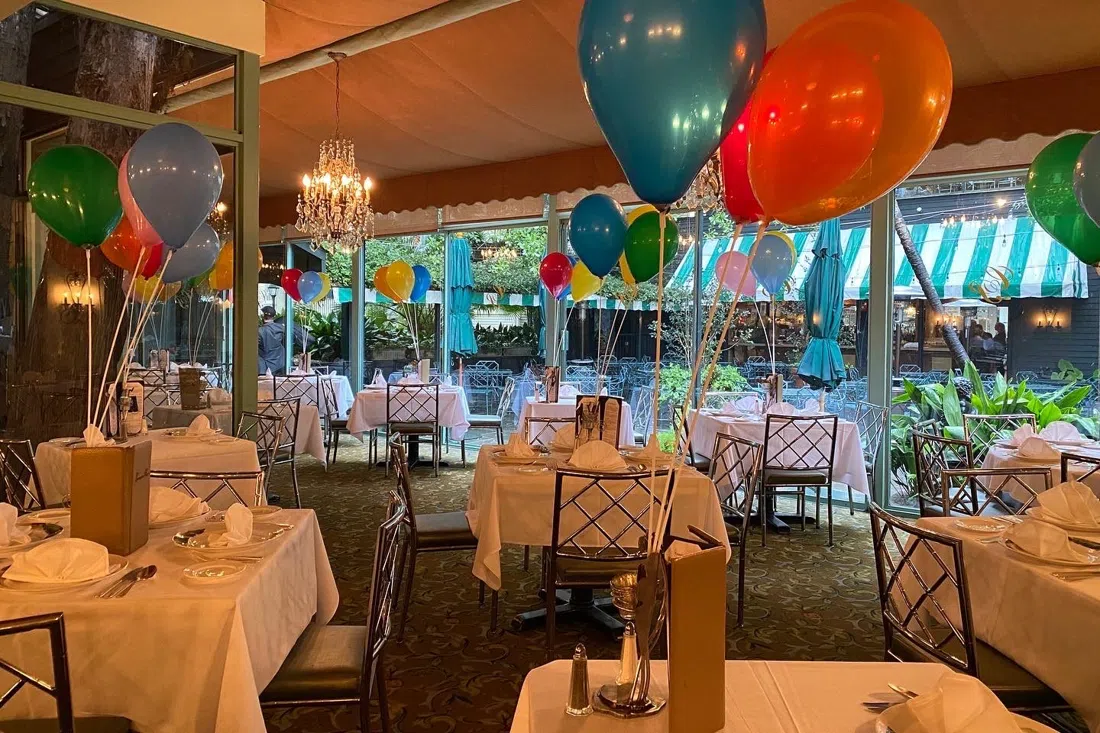
Commander's Palace (Garden District) is the benchmark Creole dining room and a short ride out of the Quarter on the St Charles streetcar. Dinner runs $80 to $120 a head; the weekday lunch, with its 25-cent martinis, is a fraction of that and the better-value way in. Reservations are essential through Tock or Resy, and private dining rooms are available for larger parties. The dress code is real: business attire, jackets preferred for men, no shorts and no trainers. Tell your group before they pack, not when they are standing in the lobby. Book weeks ahead for late October.
Practical notes for parade weekend
Transport. The whole route is walkable end to end, and on parade night walking is the only reliable option: rideshare surges hard and the closures cut across the Quarter for hours. Use the free Mardi Gras World shuttle in the morning, the St Charles streetcar for the Garden District, and your feet for everything in between. Book a bed on or near the route rather than solving it with cars. The New Orleans hotel search will show you what is left in the Quarter and the Warehouse District.
Cash. Carry some. Lafitte's is cash-friendly, the cover at d.b.a. is quicker in notes, tips at music venues are cash, and market stalls at the French Market are small-ticket.
Timing. Mardi Gras World mid-morning on a pre-booked slot, the French Market between 11am and 4pm, an early dinner, in position by 6pm, floats from 6.30pm, and you are free again by around half past eight. Both museums close at 6pm, and the cemetery's last entry is 15:45, so they belong to the other days of your trip, not this one. You will be standing outside for two hours after dark, so bring a layer.
Budget. A lean parade day (museum entry, market food, a kerbside spot, a couple of drinks afterwards) lands around $60 to $80 a head. Add an official balcony and you are at $250 to $350 before dinner. Add Commander's Palace and Preservation Hall on other nights and the weekend settles somewhere near $500 a head, which is a real number worth planning around rather than discovering on the Monday. For the rest of the city beyond parade weekend, start with the New Orleans guide.