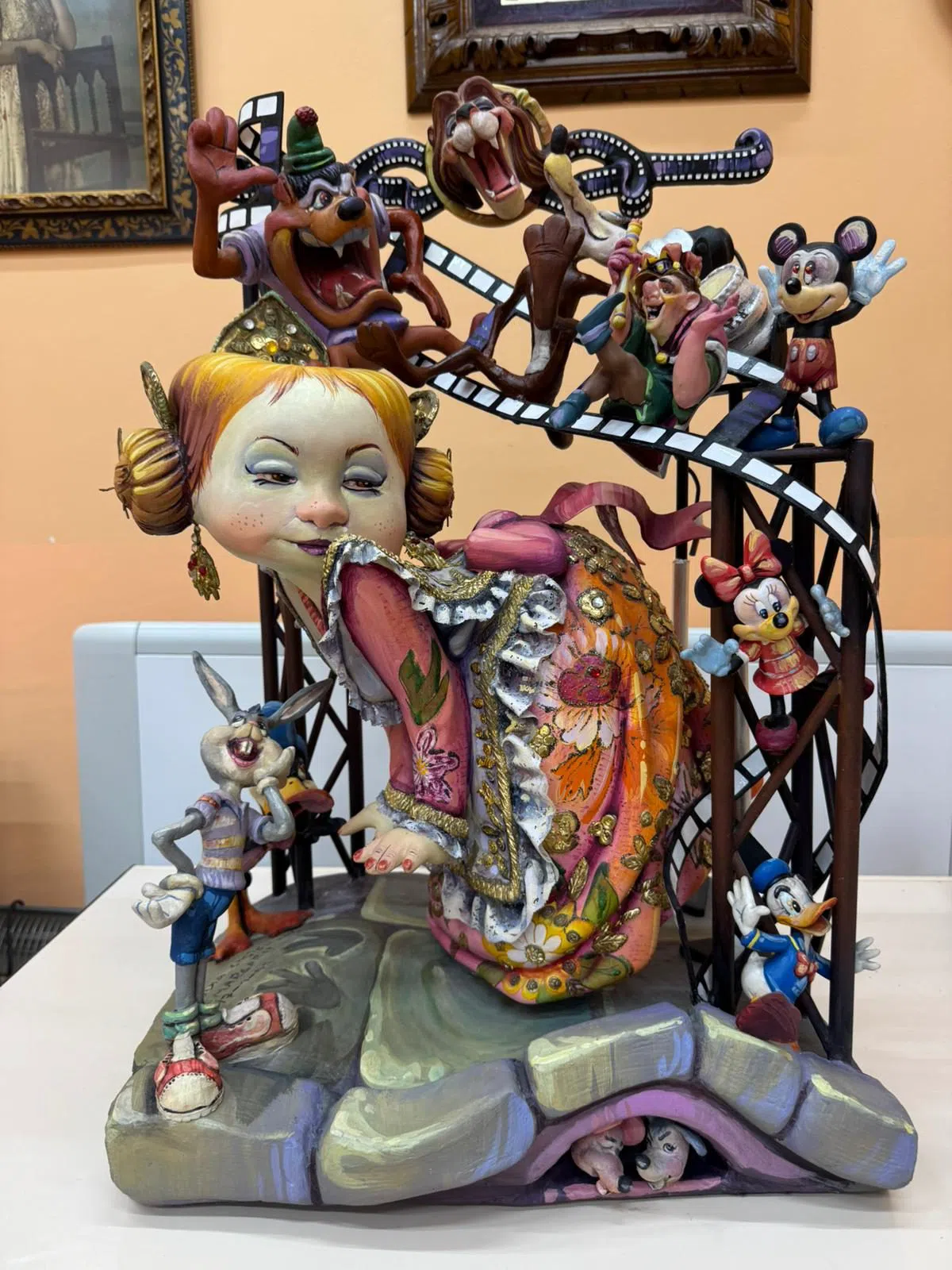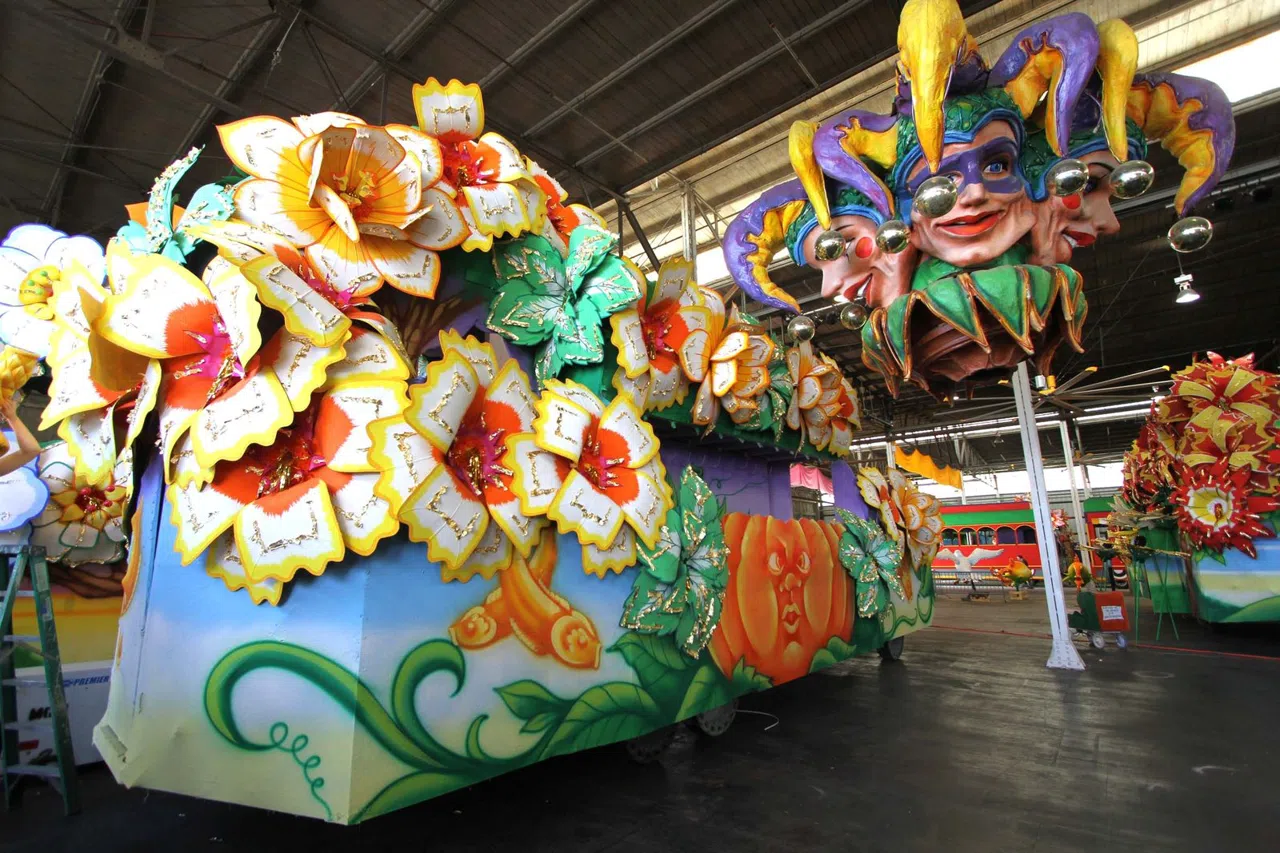

The first thing you notice inside the warehouse is the scale: a fifteen-foot papier-mâché head stares down from a shelf next to a half-painted dragon, both waiting their turn on a float that hasn't been built yet. Outside, New Orleans goes about its ordinary Tuesday. Inside, it is always a little bit February. This is the paradox at the heart of the city's Carnival economy — a 500-floats-a-year industry that never stops, tucked into warehouses, back rooms, and shopfronts that most visitors walk straight past.
Mardi Gras is famous as three weeks of parades. It is actually a year-round manufacturing operation, and for the first time in its history, a global audience can walk directly into the middle of it. This guide follows the supply chain — from the float den where sculptors work in the open, through the museums that hold Carnival's institutional memory and its scrappier private collections, and out to the shops where working krewes still buy their trim by the yard.
The Anchor: Inside a Working Float Den
Mardi Gras World (Central Business District, on the river near the Convention Center) is the reason this article exists, and it earns the position. Founded in 1947 as Kern Studios, it is the largest float-building operation in the city, producing roughly 500 floats a year for New Orleans' Carnival krewes and for parades and events well beyond Louisiana. Unlike almost every other "behind the scenes" attraction in any tourist city, this one is not staged for visitors — you walk into an actual working warehouse where sculptors, painters, and welders are mid-project, floats from last season sit half-stripped for rebuilding, and giant foam heads dry on racks waiting for their next coat of paint.
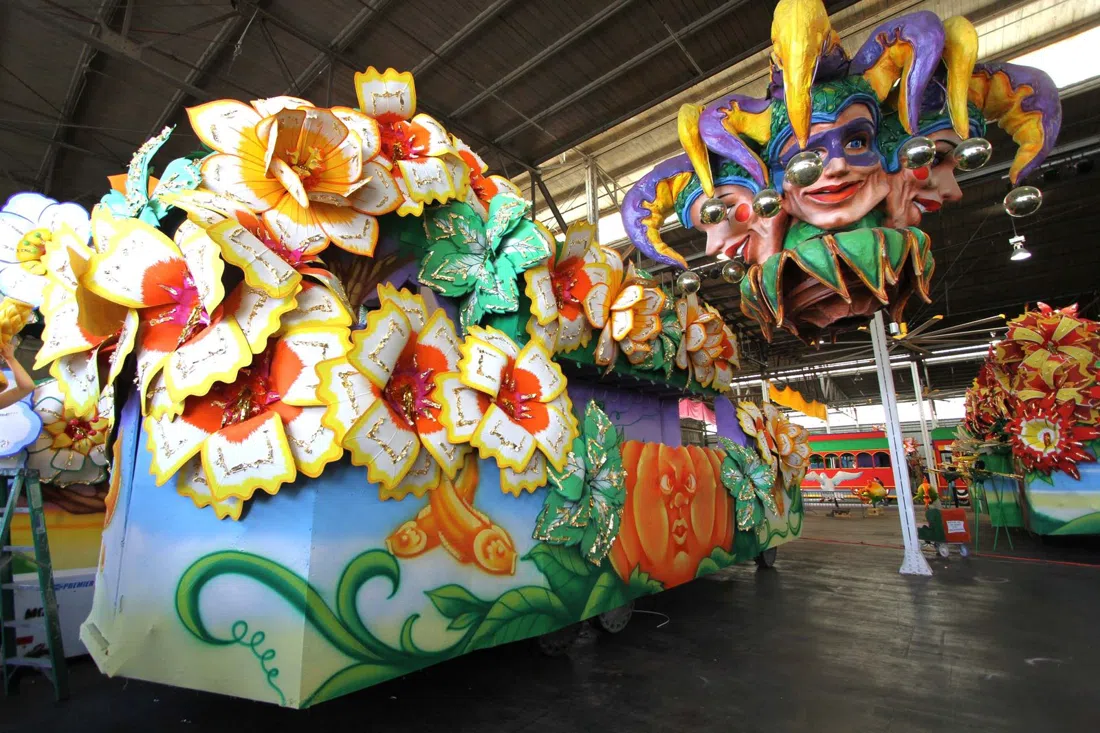
General admission runs roughly $25–28 for adults and includes a guided walk through the studio floor, a short film on Carnival history, and — depending on the day — a chance to see artists actually working. Where Mardi Gras World distinguishes itself from a typical museum stop is its group infrastructure: it was built for groups. There's a dedicated group and team-building booking system, corporate mask-making workshops, and mini-float-building packages priced separately from general admission, which makes it one of the few Carnival attractions in the city genuinely equipped for a 40-person conference group as easily as a family of four. Book ahead for anything beyond general admission — the workshop packages fill around convention season and major corporate off-sites.
The Institutional Record: The Presbytère
If Mardi Gras World shows you the craft, The Presbytère (French Quarter, on Jackson Square) shows you why it matters. Run by the Louisiana State Museum, its permanent exhibit "Mardi Gras: It's Carnival Time in Louisiana" is the definitive institutional counterpart to the warehouse experience — the costumes, krewe history, and ritual context that explain what all those floats are actually for. Expect glass cases of historic krewe regalia, king cake traditions, and the split between New Orleans' Uptown parade culture and rural Louisiana's older, stranger Courir de Mardi Gras traditions.
Admission is inexpensive, around $8–10 for adults, and the museum runs standard state-museum group ticketing, which makes it easy to slot into a guided or self-guided group itinerary alongside Mardi Gras World. Pair the two on the same day if you can — the warehouse gives you the how, the Presbytère gives you the why, and doing both back to back is the single best orientation to Carnival culture available to a first-time visitor.
Two Private Collections, Two Different New Orleanses
Away from the state museum's polish, New Orleans keeps its Carnival memory in a handful of private collections, each telling a different, more personal version of the story.
The Mardi Gras Museum of Costumes & Culture (French Quarter) is the collection of one man, Carl "The Xylophone Man" Mack, and it feels like it — a scrappier, more hands-on space than the state museum, built from decades of personal collecting rather than curatorial mandate. Tours run small-group and interactive, with admission on a donation basis around $10–15. It suits couples and small groups well; if you're bringing a larger party, call ahead, since the space is intimate and not built for coach-tour numbers.
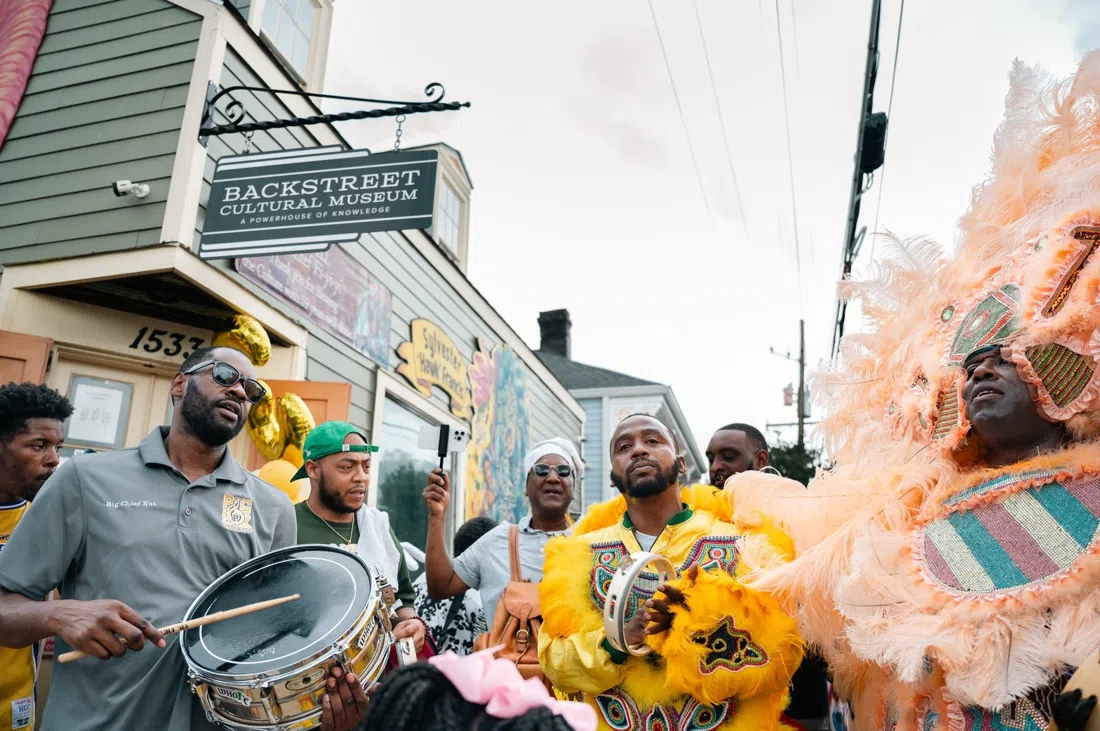
A short trip away in Treme, the Backstreet Cultural Museum is the essential counterweight to everything Kern Studios represents. Where Mardi Gras World is commercial float-building on an industrial scale, the Backstreet Cultural Museum documents Black Carnival culture — the Mardi Gras Indians and the Social Aid & Pleasure Clubs — who build their own regalia entirely by hand, stitch by hand-sewn stitch, often over the course of an entire year for a single suit. The museum occupies genuinely small rooms and works best for groups under about 15 people; suggested donation is $20, and it's open Tuesday through Saturday. This is not a polished stop, and it isn't meant to be — it's one of the only places in the city where you can see this side of Carnival's material culture up close, and it deserves unhurried time rather than a quick photo pass.
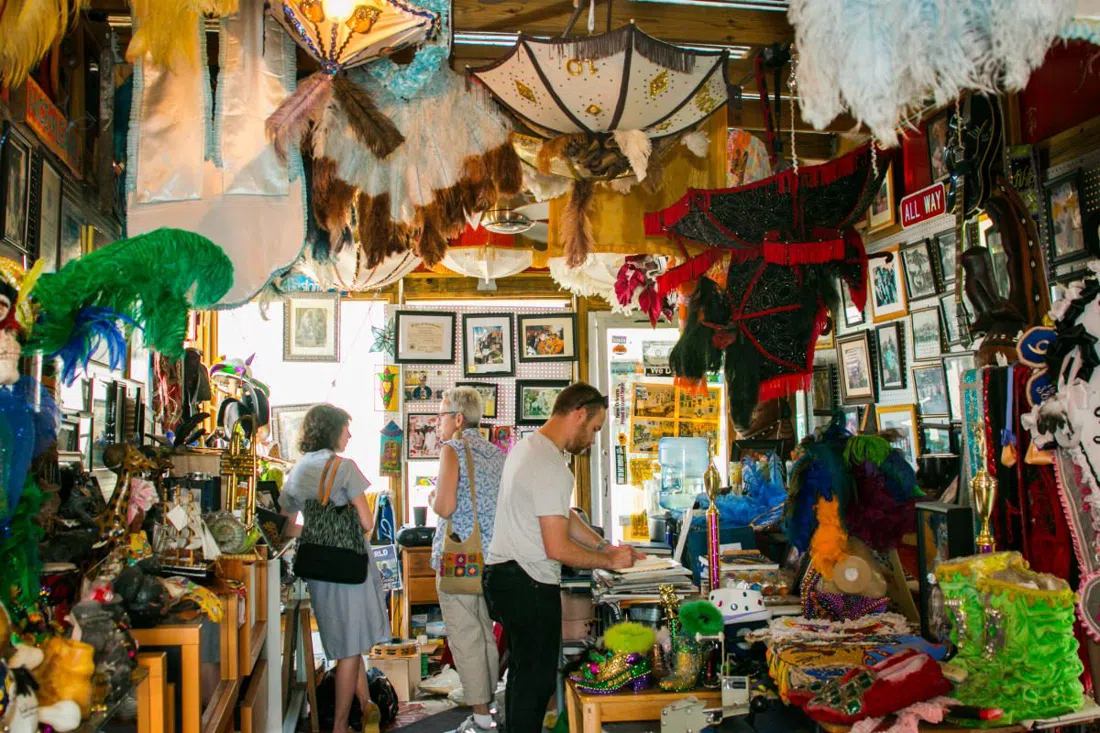
For readers willing to go further off the tourist track, House of Dance & Feathers in the Lower Ninth Ward is a backyard museum in the truest sense — appointment-only, run out of a very small, informal space, and not designed for coach tours or large parties. It suits pairs or very small groups who call ahead and want the unpolished, community version of Carnival's prop culture, built by people who make it, not people who curate it. Treat the appointment requirement as non-negotiable; showing up unannounced isn't an option here.
An Unexpected Detour, Mid-Meal
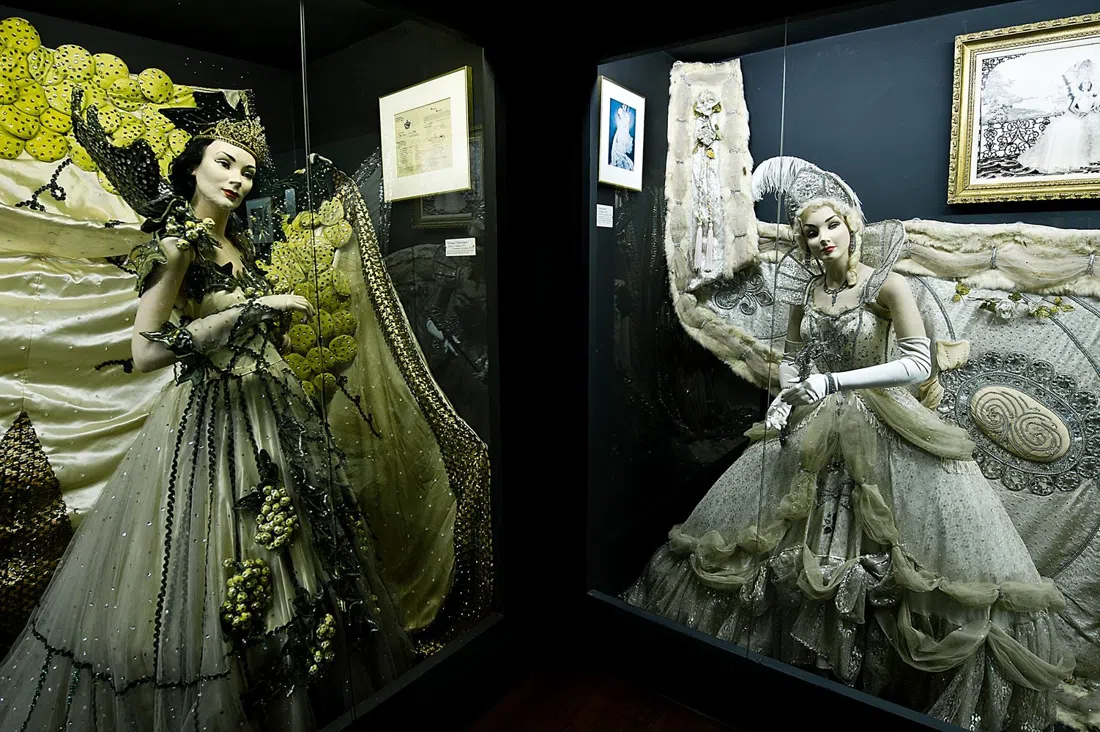
One of the best surprises in this entire circuit isn't a museum at all. Arnaud's Germaine Wells Mardi Gras Museum sits inside Arnaud's, a working fine-dining restaurant in the French Quarter, and houses the personal costume collection of Germaine Wells, daughter of the restaurant's founder and a Carnival queen an astonishing 22 times over her life. Viewing is free and self-guided during restaurant hours — just ask the host on your way in or out — which makes it an easy, no-cost add-on for a group of any size, whether or not you're eating there. After the industrial scale of the float den, the intimacy of one queen's actual gowns, ball costumes, and crowns is a good beat of contrast, and it's the rare Carnival stop that costs nothing at all.
Where Carnival Shops for Itself
The float den gets the attention, but Carnival's material culture runs on a whole retail economy that operates quietly year-round, and it's genuinely interesting to see where the pieces come from.
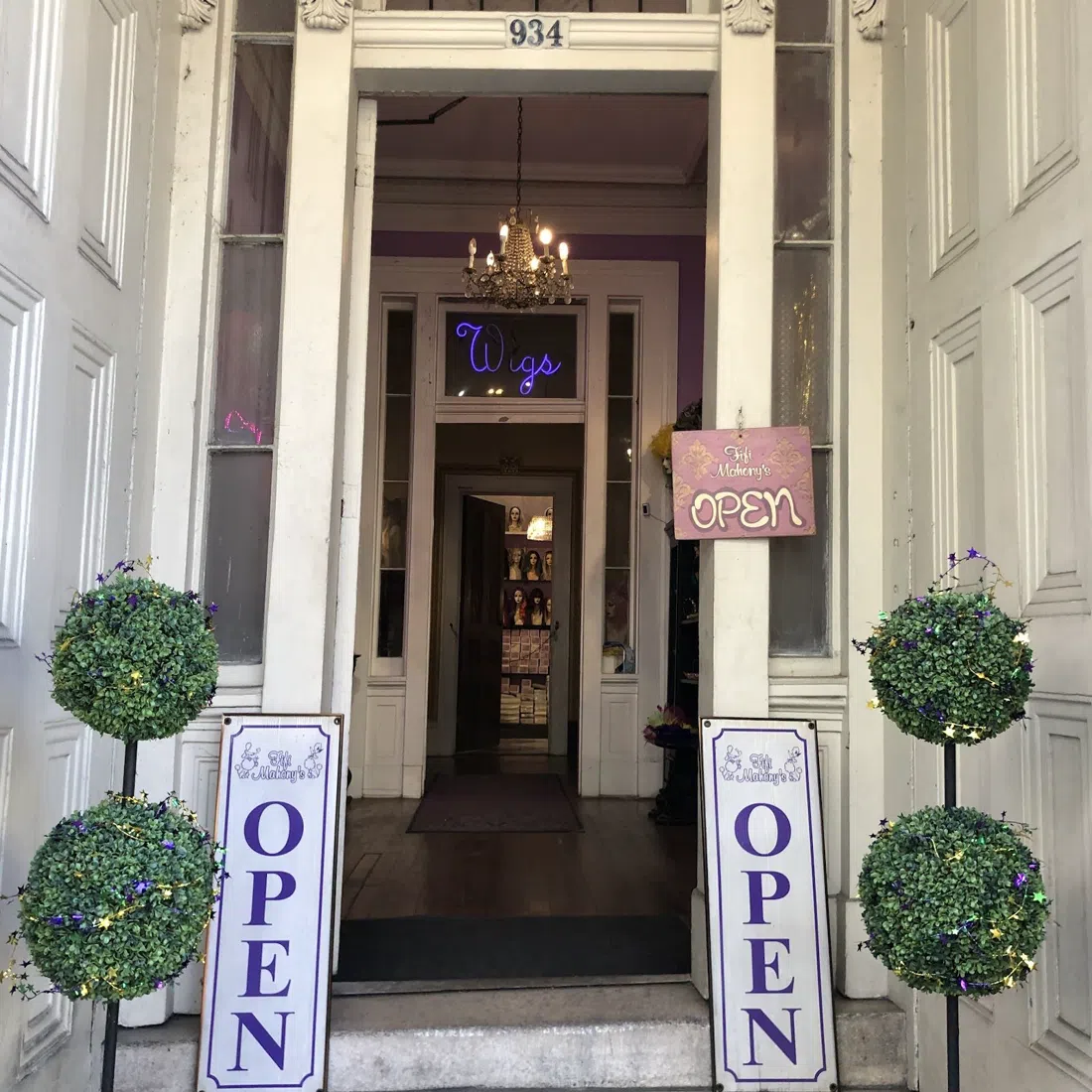
Fifi's Custom Wigs, known locally as Fifi Mahony's (French Quarter), is where the costume supply chain gets its most theatrical final layer. Walk-ins are welcome for browsing and off-the-shelf pieces from around $50, while full transformation services and custom pieces — priced higher — run by appointment and can accommodate small groups. It's loud, colorful, and a genuinely fun stop for a global audience unfamiliar with just how seriously New Orleans takes a wig.
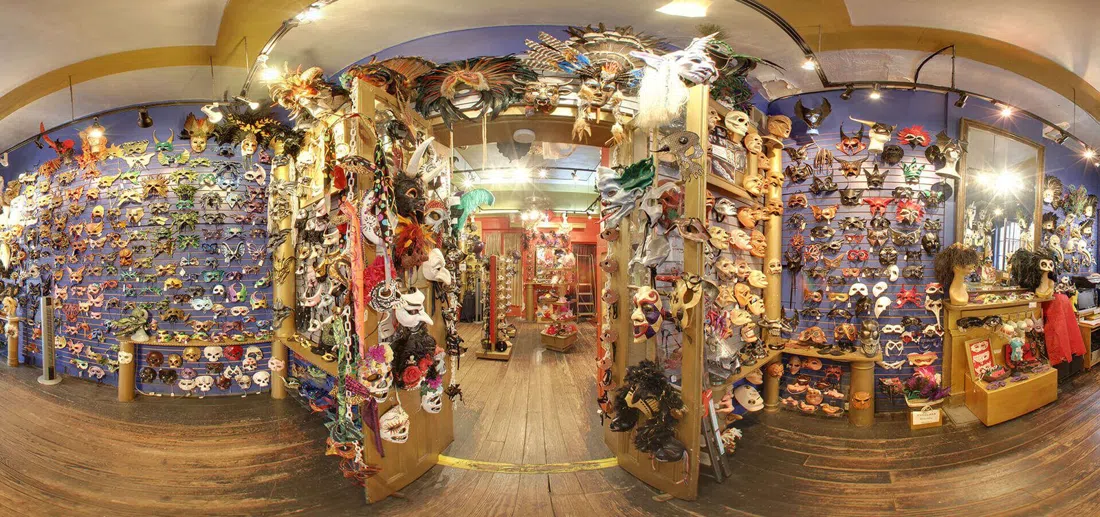
A few blocks away, Maskarade on Royal (Royal Street, French Quarter) is the individual-disguise counterpart to Mardi Gras World's industrial float production — a working craft-retail shop where hand-made masks, from roughly $20 up past $200 for elaborate leather and feather pieces, are still made and sold much as they always have been. It's walk-in retail and handles browsing groups easily, making it a natural stop between museum visits.
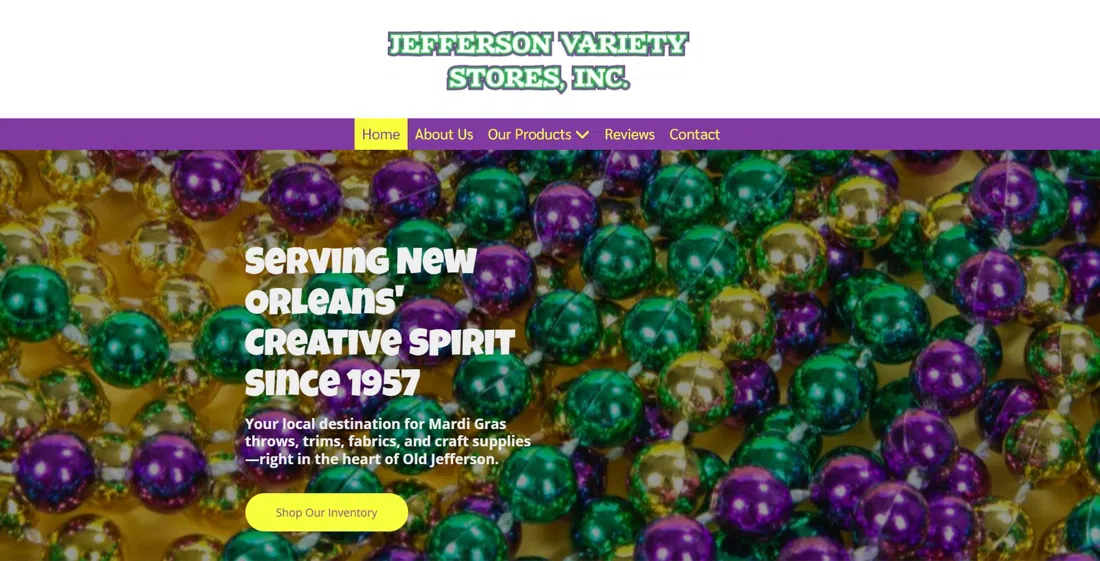
Further out, in Metairie just beyond the city line, Jefferson Variety Store is the unglamorous end of the whole operation: a wholesale showroom for Mardi Gras trim, beads, and fabric where actual working krewes buy their materials by the dozen or in bulk. It's open to the public as well as krewes, free to browse, and runs extended hours during Carnival season — worth the detour for anyone who wants to see where the raw materials for everything else on this list actually come from, priced the way a real krewe pays rather than the way a gift shop prices things.
A Free, Quiet Bookend
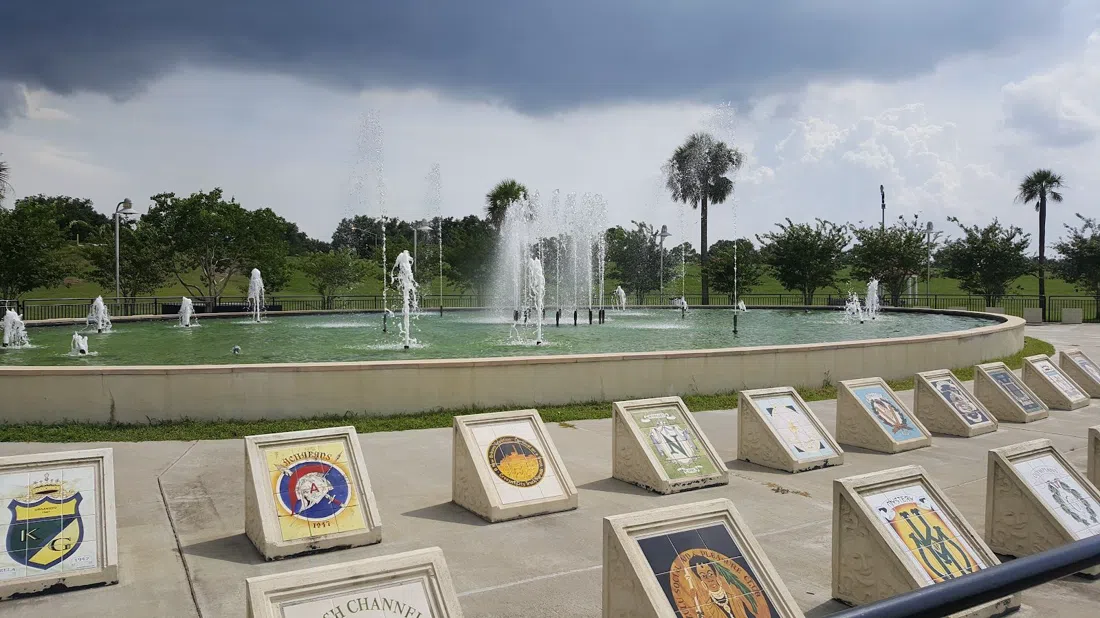
End the circuit at the Mardi Gras Fountain in Mid-City, near City Park — a free public landmark ringed with the emblems of the city's krewes, best visited after dark when it's lit. There's no admission, no booking, no group size limit, and after a day spent among warehouses, museum cases, and shop counters, it's a genuinely photogenic, unhurried place to end things — a reminder that for all the industry behind it, Carnival is still, at bottom, a shared civic ritual rather than a product.
Planning the Trip: Transport, Cash, Timing, Budget
Most of this circuit clusters in two zones: the French Quarter (The Presbytère, Arnaud's museum, Fifi's, Maskarade on Royal) is entirely walkable in a day, while Mardi Gras World sits across downtown on the riverfront and is a short rideshare or streetcar-plus-walk from the Quarter. Treme (Backstreet Cultural Museum) and the Lower Ninth Ward (House of Dance & Feathers) both require a car or rideshare — neither is a walking add-on from the Quarter, and House of Dance & Feathers specifically requires calling ahead for an appointment before you go. Jefferson Variety Store, being in Metairie, is easiest by car or rideshare as well.
Carry some cash: several of the smaller, independent collections — the Mardi Gras Museum of Costumes & Culture, the Backstreet Cultural Museum, House of Dance & Feathers — run on donation-based admission, and a card reader isn't always guaranteed in these small, community-run spaces. A reasonable day's budget for one adult covering Mardi Gras World, The Presbytère, and one or two of the smaller museums lands somewhere around $50–70 in admissions alone, before food, transport, or any purchases at the shops.
On timing: Mardi Gras World, The Presbytère, and Maskarade on Royal keep standard daily hours year-round, so this whole itinerary works in any season — you don't need to be in town for Carnival itself to see how it's built. The Backstreet Cultural Museum's Tuesday–Saturday schedule is the one fixed constraint worth planning around, and House of Dance & Feathers' appointment-only policy means it needs a phone call days rather than hours in advance. Jefferson Variety Store's extended hours specifically during Carnival season are worth checking if you're visiting in the weeks before Fat Tuesday, since hours tighten up the rest of the year.
If you're building a longer stay around this itinerary, start with the broader New Orleans guide for orientation on neighborhoods and logistics, and sort accommodation through New Orleans hotel search — staying anywhere in or near the French Quarter or the Central Business District keeps most of this circuit within an easy rideshare of your hotel.