
The dead of New Orleans do not lie beneath you here — they rise around you, in rows of whitewashed stone houses with their own doors, roofs, and family names cut deep into marble. Walk into any of the city's old cemeteries and the layout reads less like a graveyard than a miniature, silent city: streets between the tombs, corner plots, even the odd wrought-iron fence marking a family's front yard. New Orleanians call them Cities of the Dead, and in 2026 that phrase is still the only honest way to describe what you're looking at.
The reason is practical before it is poetic. New Orleans sits below sea level in places, on a water table so high that early burials had a habit of floating back to the surface after heavy rain — coffins working loose from waterlogged ground was a real and recurring problem in the city's first cemeteries. The above-ground tomb, borrowed from French and Spanish Catholic tradition and adapted with local ingenuity, solved it. But the tradition outlasted the problem it solved, because it gave New Orleans something else: a system where a single family tomb could be reused for generations, the remains of the last occupant swept down into a lower chamber to make room for the next, and where All Saints' Day each November still brings families out to whitewash, repair, and decorate the stone houses of their dead. This is a city that maintains its cemeteries the way other places maintain gardens.
The Ticketed Icon: St. Louis No. 1
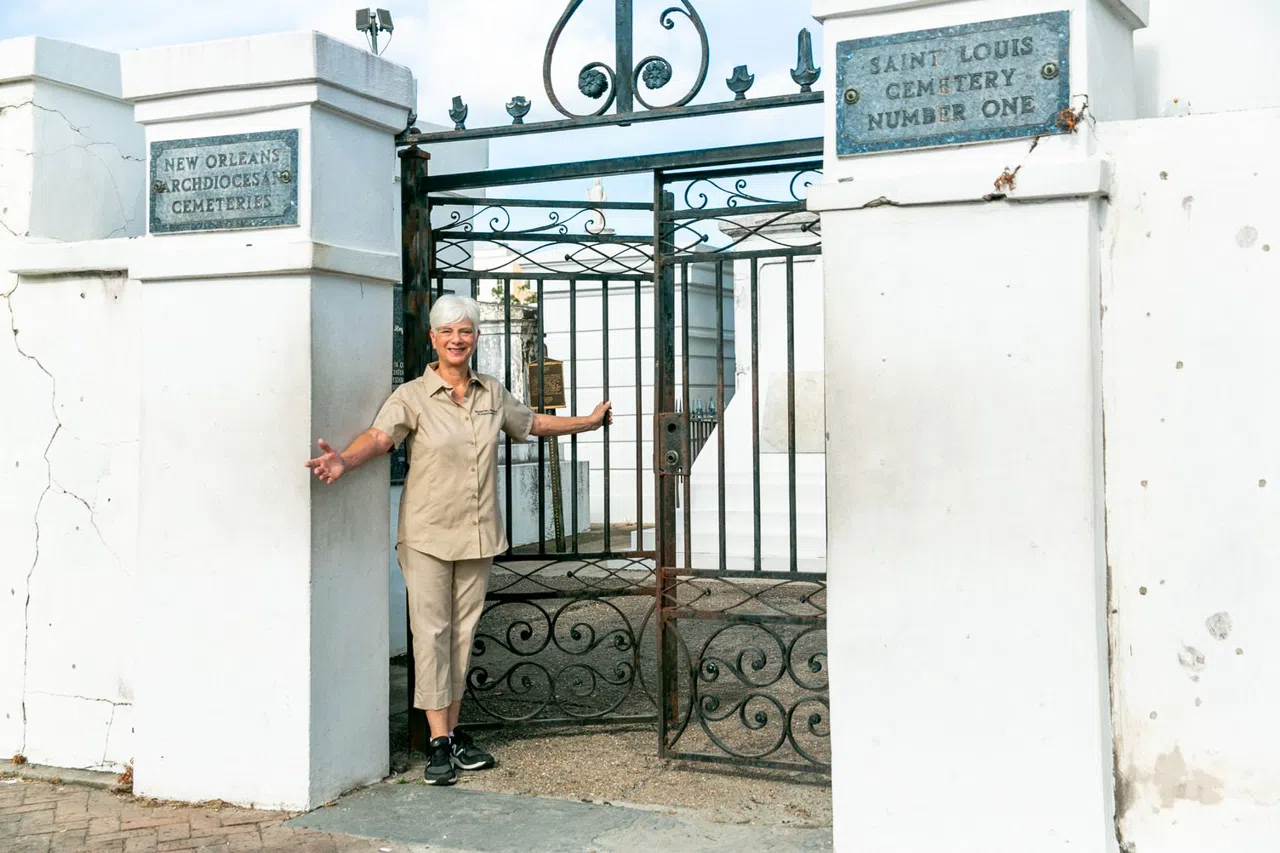
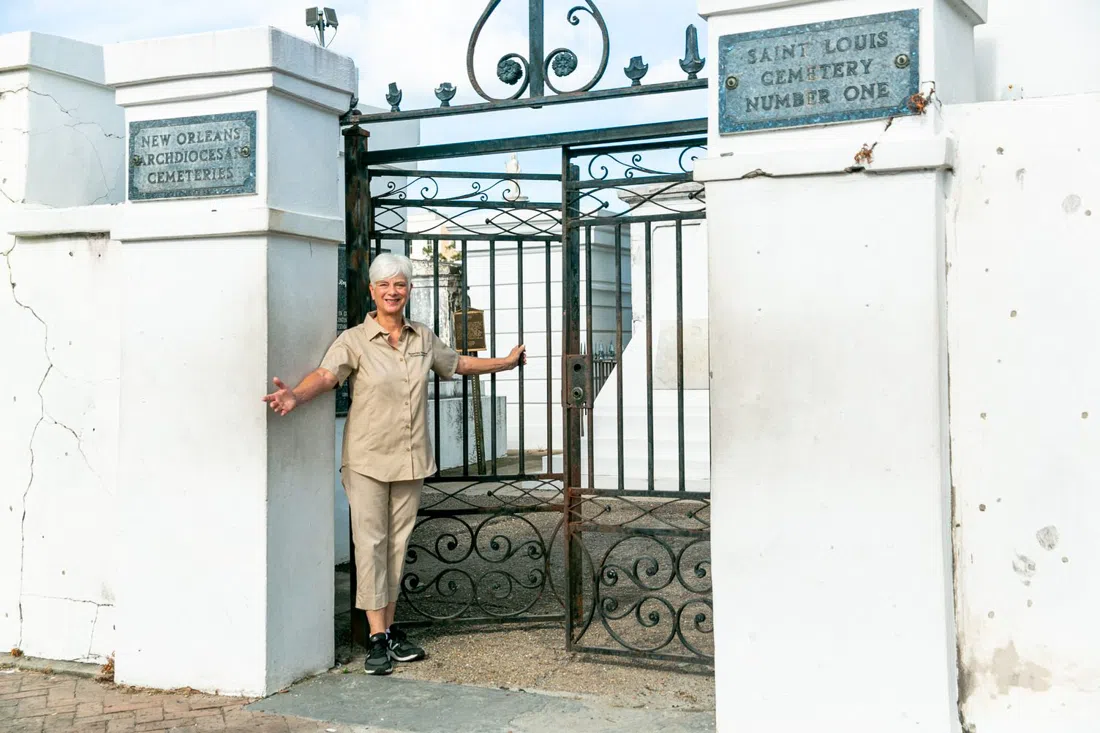
St. Louis Cemetery No. 1 (Treme, just outside the French Quarter) is the cemetery most visitors picture when they picture New Orleans at all — narrow lanes between crumbling marble, the stepped tomb said to hold Marie Laveau, the Voodoo Queen, still marked with offerings left by visitors. It is also the one cemetery on this list you cannot simply walk into. Since 2015 the Archdiocese of New Orleans has required a licensed guide for every visitor, a rule put in place after years of vandalism and theft, and there is no solo wandering here regardless of what an old guidebook or a rideshare driver tells you. Official tours run in capped groups of roughly twenty and cost $29 for adults and $22 for children; Save Our Cemeteries, the city's nonprofit preservation group, runs its own version for around $25–27 per person and is generally the better-paced option for couples or small parties rather than a bus-sized crowd. Either way, book ahead — this is the single most in-demand cemetery visit in the city, and turning up at the gate without a reservation means turning around.
The Calm Alternatives: Metairie and St. Louis No. 3
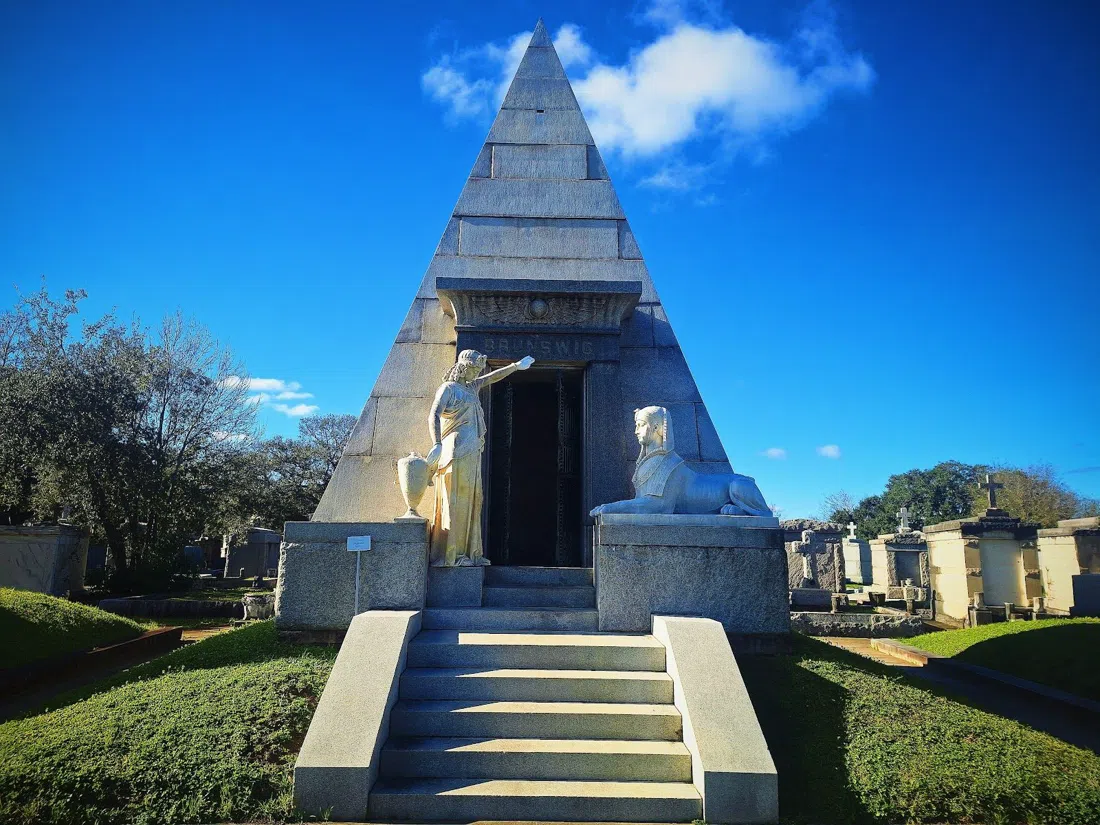
If St. Louis No. 1 is the icon everyone photographs, Metairie Cemetery (Lake Lawn Metairie, on the city's western edge) is the one that actually rewards unhurried time. It's free to enter, needs no reservation, and its most striking feature is structural rather than sentimental: the cemetery was laid out on the oval track of a former racecourse, so the main roads curve in a long racetrack loop lined with grand society mausoleums and family monuments on a scale the Quarter-adjacent cemeteries can't match. It's the grandest of the group and, being further from the tourist center, consistently the least crowded — a rare above-ground cemetery where you can bring a large school or tour group without anyone tripping over anyone else. Save Our Cemeteries books private and school-group tours here for about $25–30 per person, but plenty of visitors simply walk it alone.
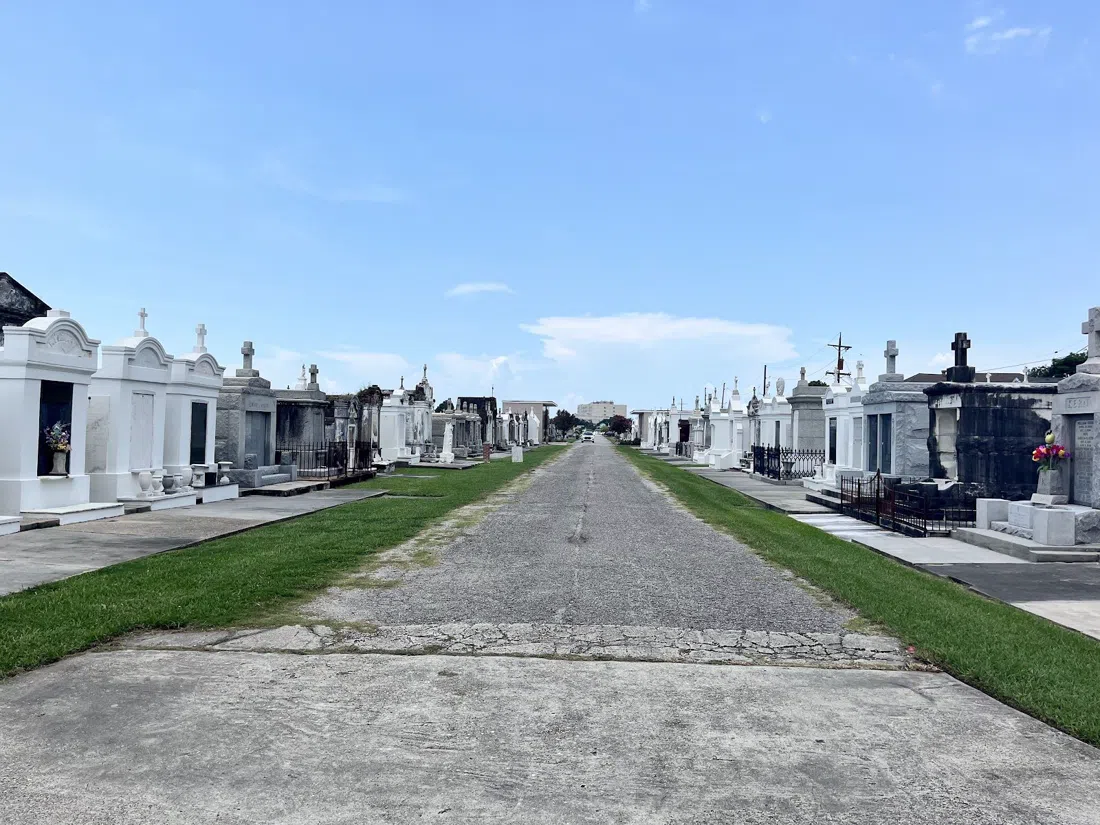
St. Louis Cemetery No. 3 (on Esplanade Avenue in Mid-City) is the practical middle ground between the ticketed drama of No. 1 and the wide-open scale of Metairie. Gates open daily for free self-entry — no guide required by law here — and it is noticeably calmer than its more famous namesake, making it the sensible choice for a group working to a schedule or anyone who simply wants to walk without commentary. Save Our Cemeteries runs guided tours on Monday, Wednesday, and Saturday mornings at 10am for about $25, useful if you want the historical detail without the No. 1 crowds. One date to avoid: there are no tours on All Saints' or All Souls' Day, when the cemetery is given over to the families tending their tombs.
Garden District Grandeur: Lafayette No. 2
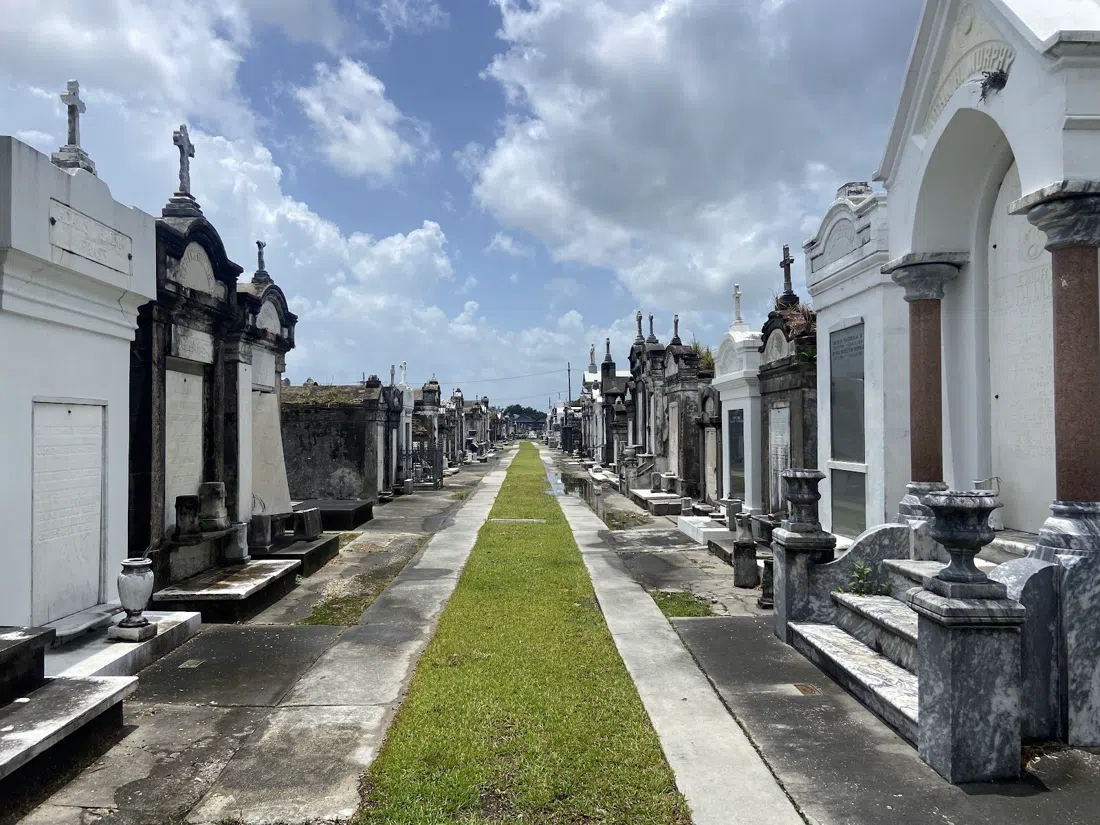
Most guidebooks still send readers to Lafayette Cemetery No. 1 for the Garden District's society-tomb architecture, but that cemetery has been closed to the public since 2019 for structural repairs — and remains closed in 2026, with no reopening date announced. Lafayette Cemetery No. 2, a few blocks away, delivers essentially the same experience: the same raised society tombs built by 19th-century benevolent associations, the same wrought-iron and weathered stone against Garden District oak canopy, and genuinely free, self-guided access Monday through Saturday with no booking required. It suits a casual small group or a couple better than a formal tour — there's no guide service running fixed departures here, so you set your own pace.
Egyptian Gates and Volunteer Firemen: Greenwood and Cypress Grove
Greenwood Cemetery (Mid-City, near City Park) and Cypress Grove Cemetery sit close enough together that most visitors do both in one outing, and the pairing is worth the extra half-hour. Greenwood is free to enter and its defining story is one of civic memory rather than individual grandeur: several of its grandest monuments were raised by volunteer firemen's benevolent associations, a reminder that tomb-building here was often a collective act — a company or society paying for a shared resting place for its members rather than any single family footing the bill. Red Sash Tours and Save Our Cemeteries both run guided 2.5-hour group walks for roughly $25–30, long enough to take in the scale of the place properly. Next door, Cypress Grove's free-entry gate is arguably the single most striking structure in any New Orleans cemetery — an Egyptian Revival entrance, all battered pylons and lotus-column detail, built when Egyptian motifs were fashionable for cemetery architecture across the Atlantic world. Neither cemetery restricts entry, so this pairing works equally well as a self-guided couple's walk or a booked group tour.
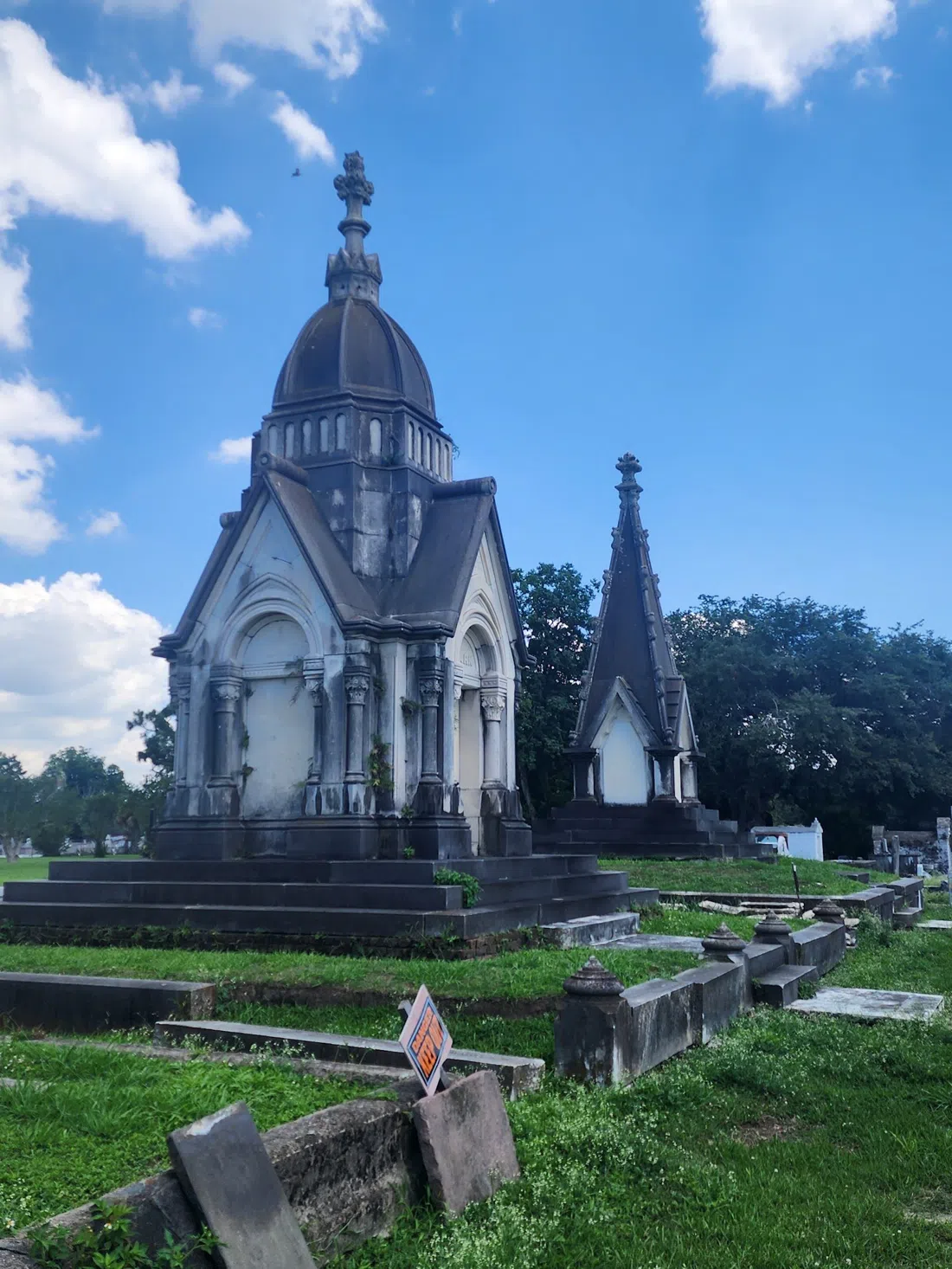

The Chapel of Lost Causes: St. Roch
St. Roch Cemetery & Chapel (St. Roch, on the edge of Bywater) is the strangest stop on this list and, for the right visitor, the most memorable. The cemetery grounds are open daily from 8:30am to 4pm, free, no booking needed — but the chapel itself, a small votive shrine built after the neighborhood's Catholic community credited St. Roch with sparing them from a yellow fever epidemic, is normally locked. It opens to the public only on the first Friday of each month, from 11am to noon, or via the monthly Save Our Cemeteries tour for about $25. Inside, the walls are lined with plaster casts of hands, feet, and other body parts, left by petitioners over more than a century as thanks for prayers answered — one of the most photographable, and genuinely strange, interiors anywhere in the city. Plan around that narrow window; turning up on a random Tuesday afternoon means seeing the cemetery grounds but not the chapel that makes the detour worthwhile.
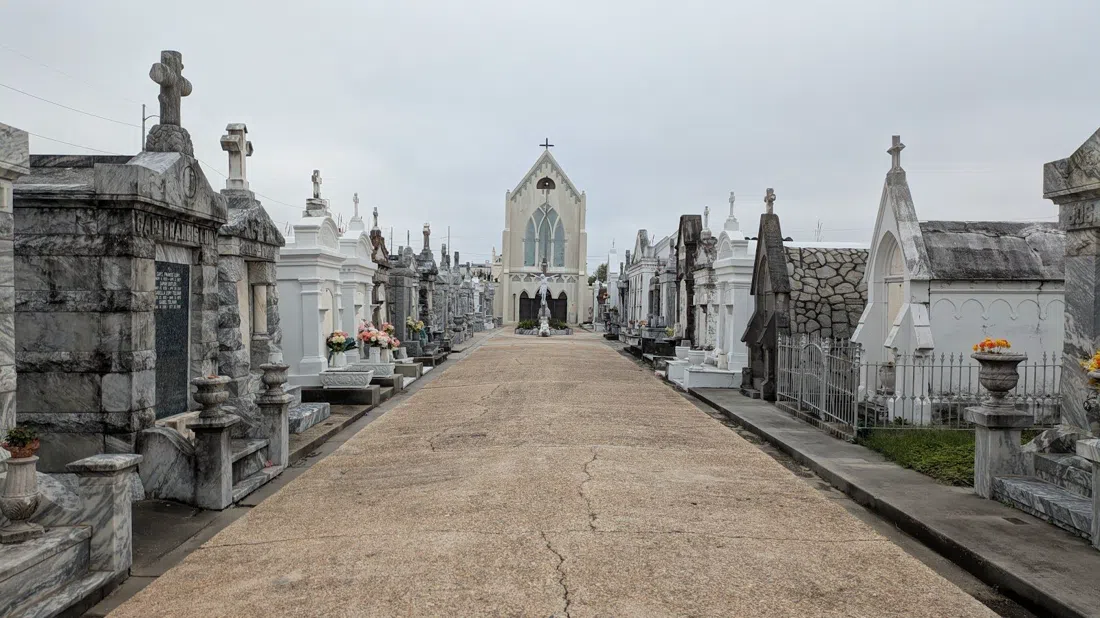
Off the Main Circuit: St. Patrick's, Carrollton, and St. Vincent de Paul
Three cemeteries here reward readers who've already done the marquee stops and want New Orleans's cemetery culture without the tour buses. St. Patrick Cemeteries Nos. 1–3 (Mid-City), open daily from 8am to 4:30pm with free self-entry, tell an Irish-immigrant story that sits apart from the Creole and French Catholic narrative dominating the cemeteries closer to the Quarter — guided walking tours cover all three sections plus the neighboring Katrina Memorial grounds for visitors who want the context. Carrollton Cemetery, further upriver in the Carrollton neighborhood, is free and unguided by design — there's no tour service running here, and it shows: rougher-edged and still doing ordinary neighborhood work rather than performing for visitors, it's best suited to a small, independent visit rather than a group booking. St. Vincent de Paul Cemetery on Louisa Street, near Bywater, is the same kind of place — free, self-guided, no organized tours — and works well as an add-on for couples or small groups already in the Bywater area, offering the neighborhood-tomb experience without St. Louis No. 1's ticketed lines.
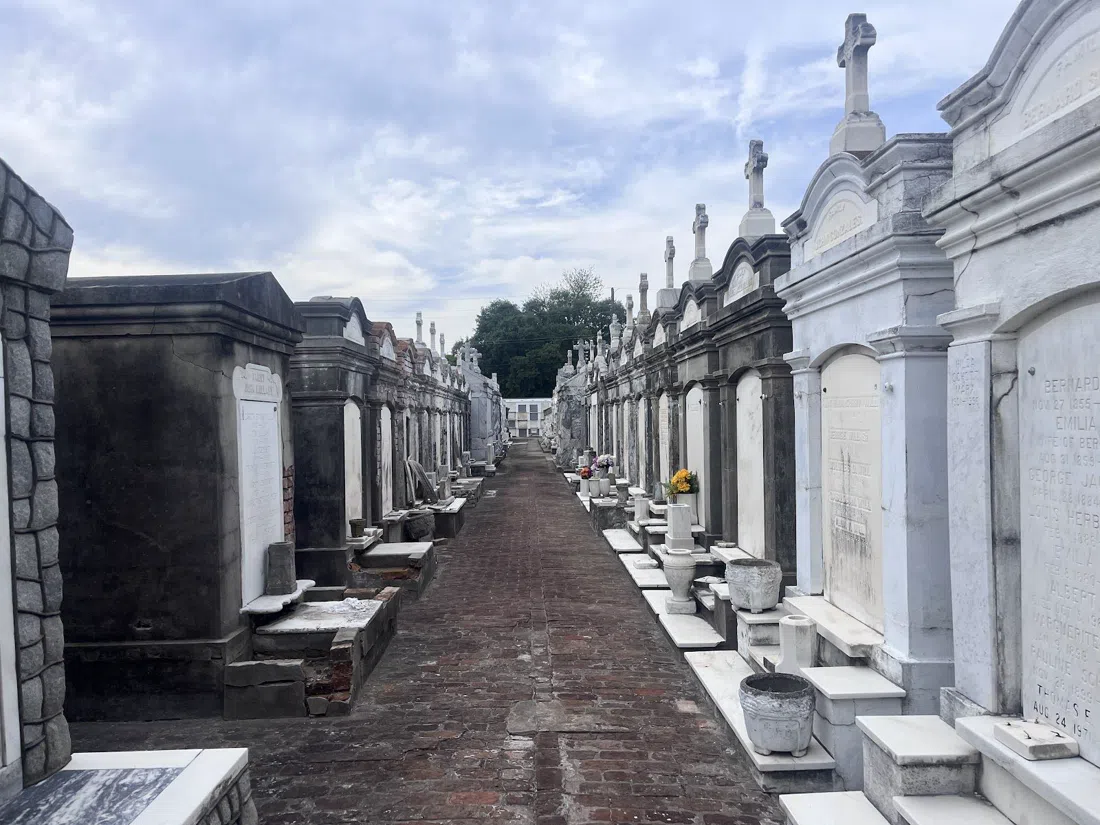
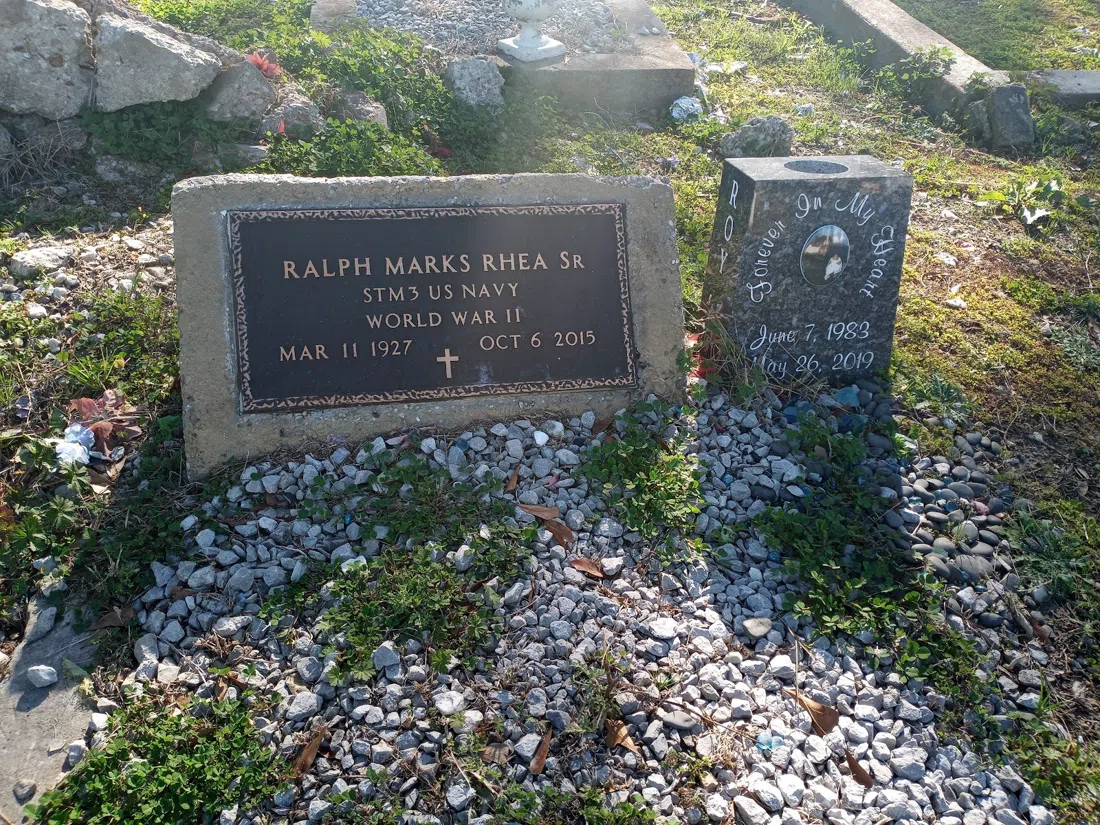
The Newest Stone House: Charity Hospital Cemetery and the Katrina Memorial
It's worth ending where the tradition is still being written. Charity Hospital Cemetery, now also known as the Katrina Memorial, is open daily from 8:30am to 4:30pm, free, with no booking required, and welcomes respectful visitors including groups. Established originally as a burial ground for the city's unclaimed and indigent dead, it became the resting place for many of the unidentified victims of Hurricane Katrina, marked with a memorial mausoleum in a style that consciously echoes the stone-house tradition running through every cemetery on this list. It's a fitting closing stop on a cemetery day: proof that New Orleans still builds tombs, not graves, for its dead — a 21st-century continuation of a practice that started with a flooding problem and became a civic identity.
Planning Your Cemetery Days
Getting there: Most of these cemeteries sit outside easy walking distance of each other, so plan by cluster rather than trying to cover the whole city in one day. St. Louis No. 1 is walkable from the French Quarter; Lafayette No. 2 sits inside the Garden District streetcar loop; Greenwood, Cypress Grove, and St. Louis No. 3 cluster together near City Park and are easiest by rideshare or the Canal Street streetcar; Metairie Cemetery is a short rideshare or drive from Mid-City. St. Roch, St. Vincent de Paul, and Charity Hospital/Katrina Memorial each sit in their own pocket of the city and are best treated as standalone stops.
Cash and tickets: Book St. Louis No. 1 in advance online — this is the one cemetery where showing up without a reservation genuinely fails. Everywhere else is free to enter, so budget only for the guided tours you choose to add, typically $25–30 per person through Save Our Cemeteries or Red Sash Tours. Carry a little cash for tour tips even where cards are accepted for the ticket itself.
Timing: Mornings are cooler, quieter, and better for photography, especially between May and September when afternoon heat and humidity in an open, shade-light cemetery can be genuinely uncomfortable. Avoid visiting on All Saints' Day (November 1) or All Souls' Day (November 2) expecting a normal tour experience — cemeteries across the city are given over to families tending tombs, which is a remarkable thing to witness respectfully from a distance but not a day for a scheduled guided walk.
Budget: A single guided visit to St. Louis No. 1 plus one or two self-guided stops costs nothing beyond that first ticket. A fuller day covering a guided Metairie or Greenwood walk alongside free entry to St. Louis No. 3 and Lafayette No. 2 runs somewhere between $50 and $80 per person, tours included. If you're building cemeteries into a longer stay, it's worth sorting accommodation first via New Orleans hotel search — the Garden District and Mid-City both put you within easy reach of several sites on this list — and pairing the visit with the rest of the New Orleans guide for what to do between cemetery stops.