
New Orleans sits inside a hairpin bend of the Mississippi so tight that the city's nickname — the Crescent City — is really a description of the river, not the town. Every wharf, warehouse and grid of streets south of Canal Street exists because steamboats once stopped here to trade cotton, sugar and timber before the railroads took over, and in 2026 you can still get out on that same water, on a genuine steam-driven paddlewheeler, for less than a nice dinner costs. This is a guide to doing that properly — from the full jazz-band production down to the $2 ferry crossing nobody markets as a tourist attraction at all.
The Full Production: Steamboat Natchez
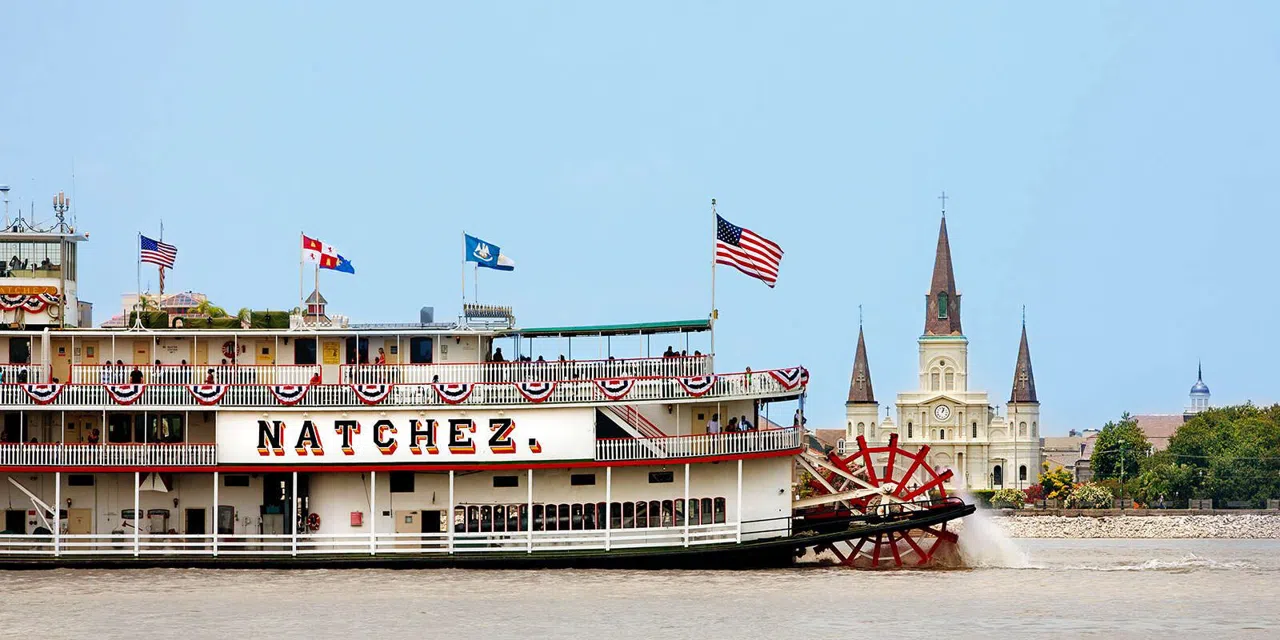
The Steamboat Natchez (French Quarter riverfront, foot of Toulouse Street) is the boat people picture when they picture New Orleans and the river together. It's a genuine steam-driven sternwheeler — one of the last still working the Mississippi — and it announces itself before you even board: a calliope on the top deck plays a set of steam-whistle tunes over the wharf as passengers gather, worth arriving fifteen or twenty minutes early to catch. Once underway there's a live jazz band on board for the length of the cruise, which is the point of the Natchez over a plainer sightseeing boat — you're not just looking at the river, you're hearing the city's other export while you do it.
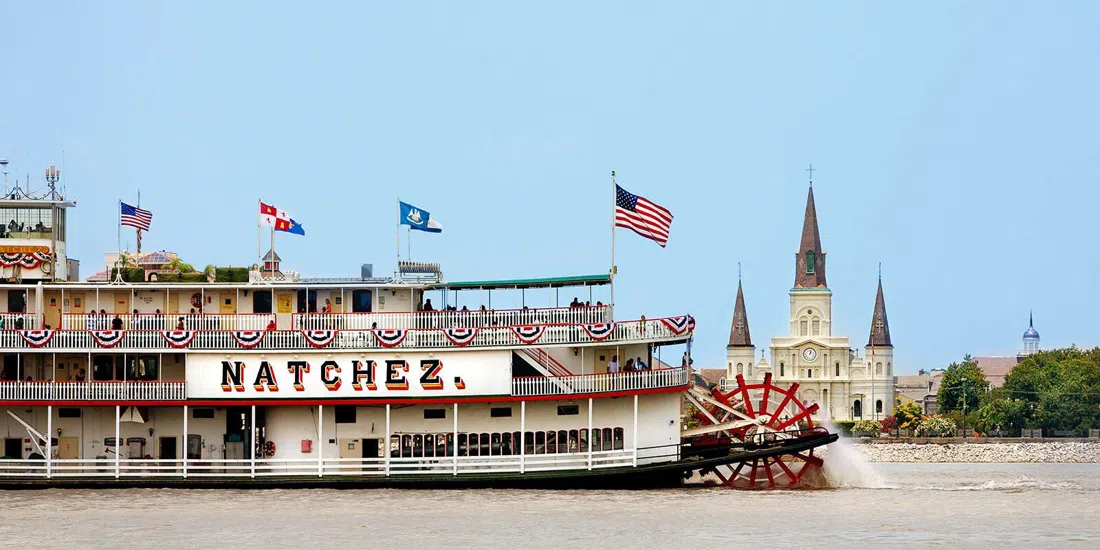
Sightseeing cruises run $25.75–$68 depending on time slot and season; add a meal and you're looking at $65–$137.50 for the jazz dinner or jazz lunch cruises, which include a full seated buffet alongside the band. The Natchez is built for volume and handles it well — it regularly takes large tour groups and private charters, and any group of 10 or more gets an automatic 10% discount, which makes it one of the more sensible river options for a school trip, a work outing, or a family reunion trying to keep everyone in one place for two hours. Book the dinner cruise ahead, especially around weekends and Mardi Gras season; the sightseeing-only slots are easier to walk up to.
What it isn't: quiet, or intimate. If you want the river without a band and a few hundred fellow passengers, keep reading.
The Cheaper Lap, and the One That Lets You Off
Two other boats work the same stretch of river and do different jobs. The Riverboat CITY of NEW ORLEANS (departs the French Quarter riverfront, same wharf area as the Natchez) is run by the same New Orleans Steamboat Co. and is best understood as the budget, no-frills version — a 75-minute narrated sightseeing cruise with no live band and no dinner service, priced around $25–$45. It's the right call if what you actually want is the skyline and the bends of the river explained clearly, not a two-hour production, and it carries the same 10-or-more-passengers 10% group discount as the Natchez, so it's worth comparing both before you book a group outing.
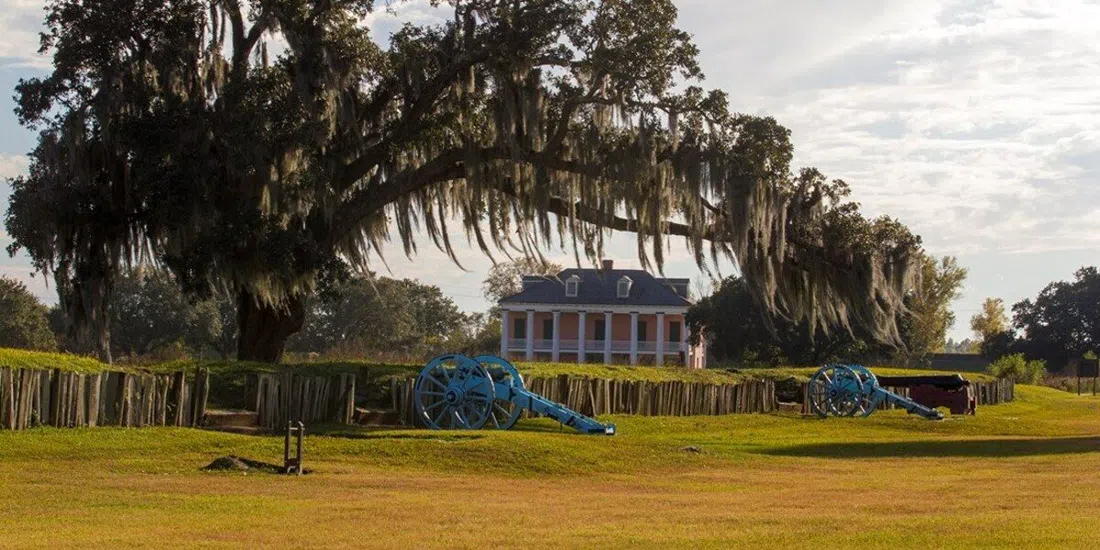
The Paddlewheeler Creole Queen (departs Poydras Street Wharf, Central Business District) does something neither of the other two can: its Historic Cruise actually docks and lets passengers off, at Chalmette Battlefield, part of the Jean Lafitte National Historical Park, for a ranger-led tour of the War of 1812 battlefield where Andrew Jackson's forces beat the British in January 1815. That makes the Creole Queen genuinely river-dependent rather than just river-adjacent — without a car, this boat is the only practical way to reach the battlefield. Chalmette itself is a free NPS site with effectively unlimited outdoor capacity for a walk-up tour group; boat transport to get there is priced separately from park entry. Creole Queen fares run roughly $40–$85 depending on which cruise you pick — the historic day cruise sits at the lower end, the jazz dinner cruise at the top — and the company runs a dedicated groups program that regularly handles school trips, corporate outings and tour buses, so a coach group won't be an unusual sight on board.
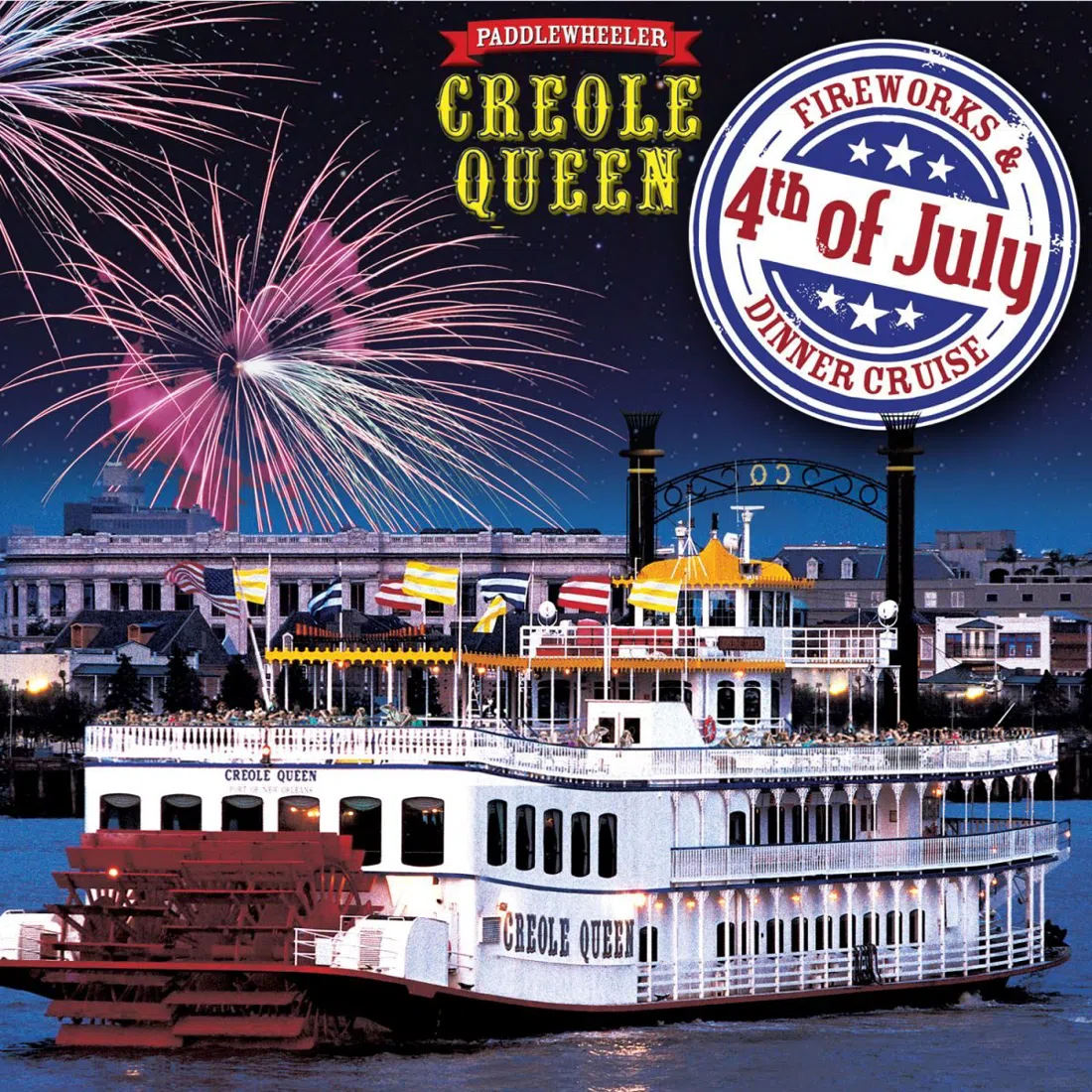
Pick the City of New Orleans for a short, honest look at the river on a budget; pick the Creole Queen if the history on the bank matters as much as the water under the hull.
The $2 Way to Actually Be on the River
If you'd rather skip the narration and the band altogether, the Algiers Point–Canal Street Ferry is the plainest, cheapest and in some ways most honest way to cross the Mississippi. It's a pedestrian-only public ferry — not a tour boat dressed up as transit — that has run this crossing since 1827, connecting the foot of Canal Street in the Central Business District to Algiers Point on the West Bank. There's no booking, no dress code, and no capacity limit for a walk-up group; you tap $2 through the RTA Le Pass app or pay exact change, with reduced fares for youth, seniors and passengers with disabilities. What you get for that $2 is the same skyline the tour boats sell as a highlight, seen from open deck on a working commuter vessel, plus a reason to wander Algiers Point itself, a quiet Victorian-cottage neighbourhood most river-cruise passengers never set foot in. It's not a spectacle and it doesn't try to be one — which is exactly its appeal after a Natchez cruise full of jazz and buffet trays.

Walking the Water's Edge Between Boats
Not every stop on the river needs a ticket. The Moonwalk & Goldring Woldenberg Riverfront Park (French Quarter/CBD riverfront, behind Jackson Square) is the free public promenade the whole New Orleans river experience is really built around — open 24 hours, no capacity limit, and as of a $30 million Audubon-led expansion completed in spring 2026, now continuously linked to Woldenberg Park next door rather than the two feeling like separate strips of pavement. It's the obvious default stop between boat departures, or the place to just stand at the rail and watch the barges and the Natchez itself go by, for nothing.
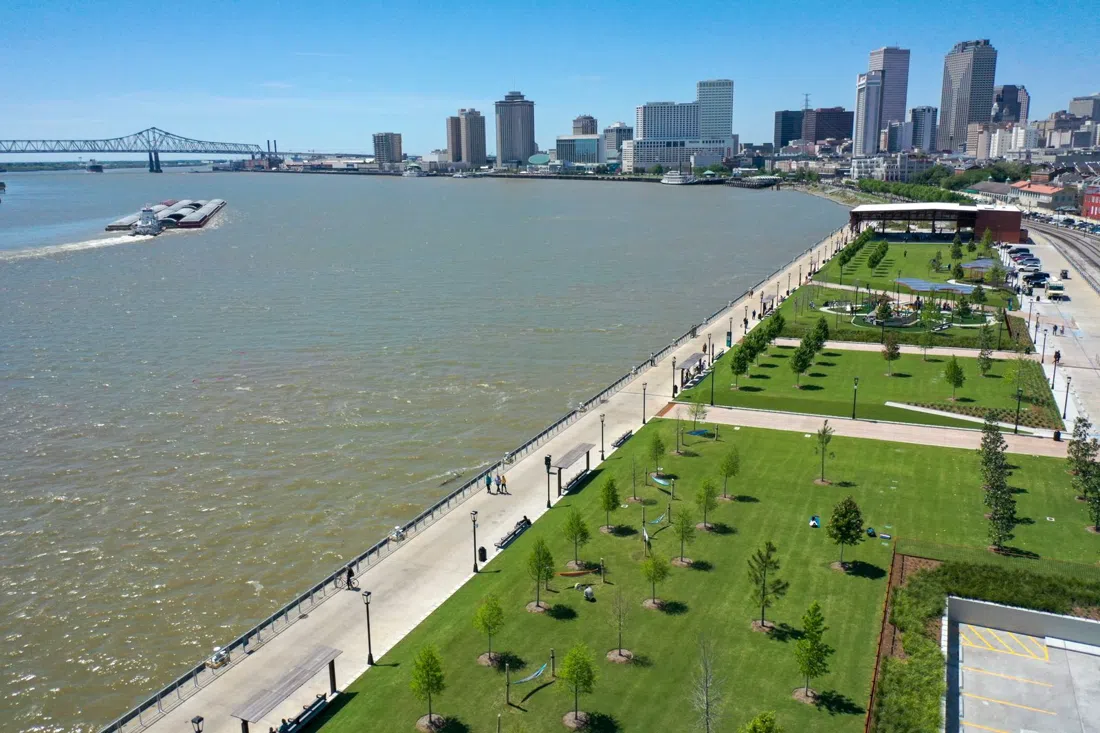
Follow the river downriver from there and, thanks to that same 2026 park-link opening, you can now walk in one continuous shot into Crescent Park (Bywater/Marigny), a free public park with no group-size limit that gives a grittier, far less touristy stretch of riverfront than the postcard view from the Quarter — worth building into a walking tour as deliberate contrast rather than an afterthought. For covering ground between the French Market, the Moonwalk and the Riverwalk shopping area without walking the whole distance in New Orleans heat, the Riverfront Streetcar Line (RTA Line 49, French Quarter to Warehouse District) is public transit at $1.25 one-way, no reservation needed and cheap enough per head to move a large tour group along the water in stages.
What's Actually Living in the River
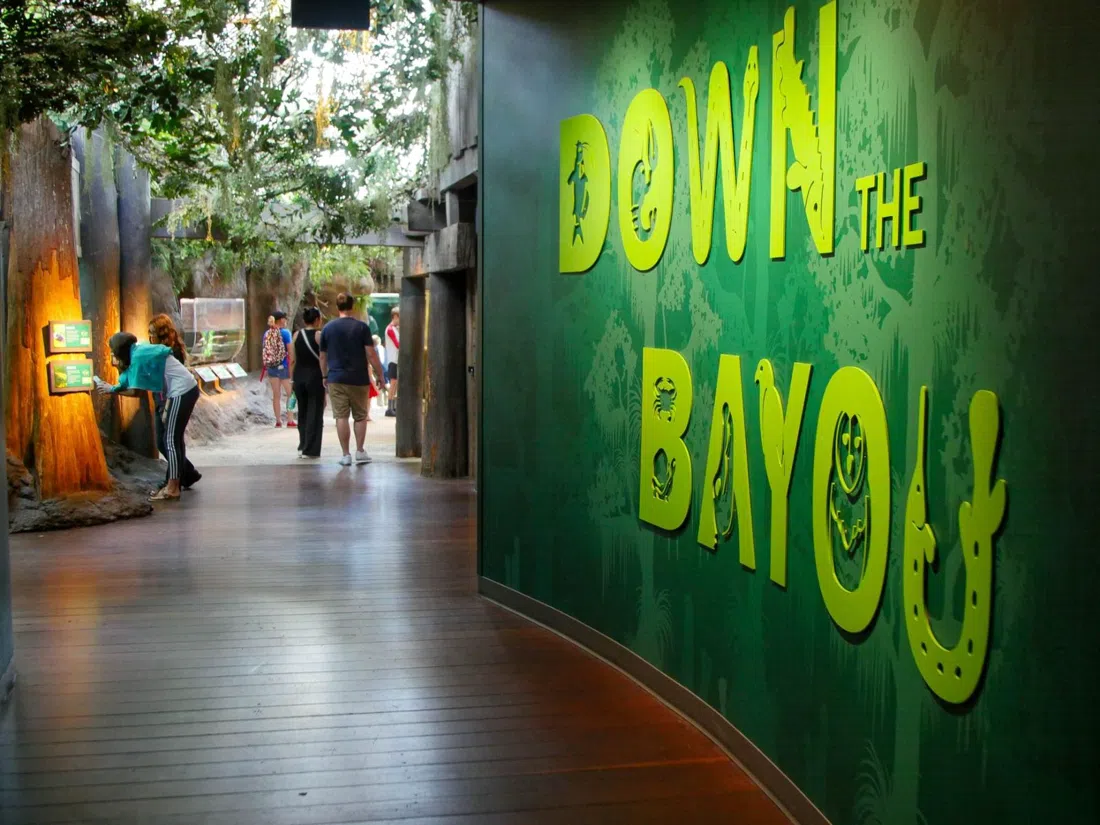
For a complement to all this rather than filler, the Audubon Aquarium of the Americas (CBD riverfront, next to Woldenberg Park) is worth folding into the same day. Adult admission runs roughly $30–$45, and it operates standard museum-style group ticketing and school-group programs, so it slots easily alongside a boat cruise for a tour itinerary. Its Mississippi River gallery is the direct, verifiable payoff to everything you've just floated over or ferried across — a chance to see what's actually in the water rather than just its surface.
The View Looking Back
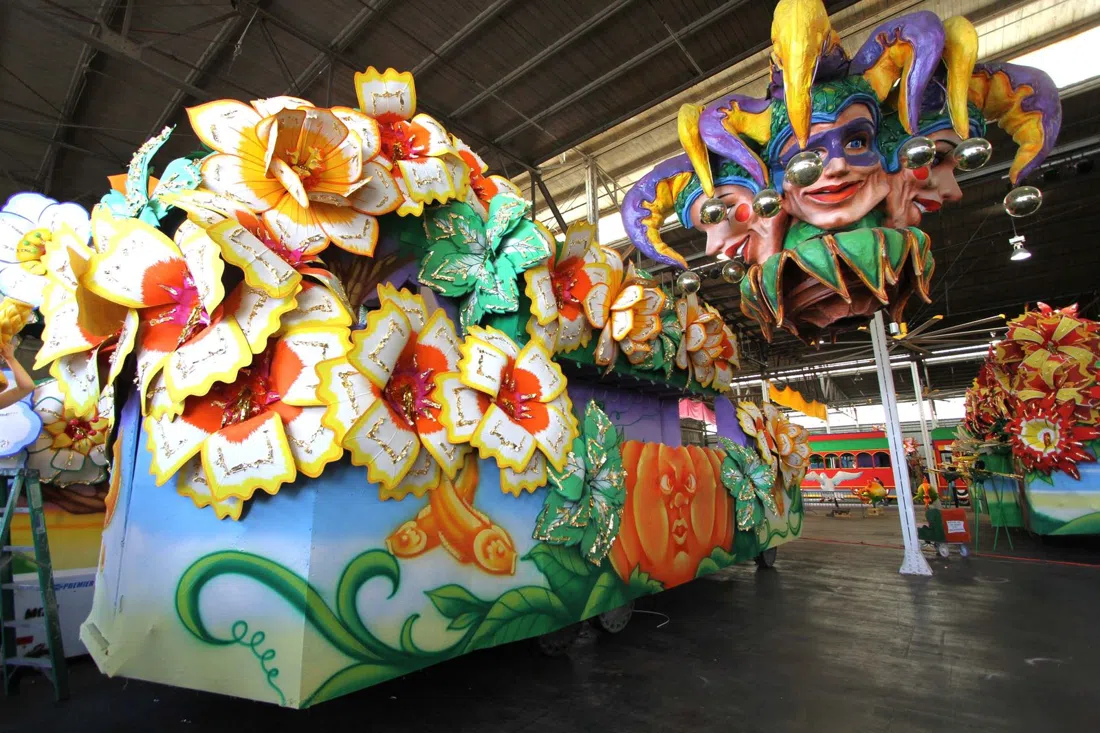
Almost everything above looks out from downtown toward the West Bank. Mardi Gras World (Algiers, West Bank) flips that view — its riverfront porch is one of the few spots to look back across the water at the downtown skyline, a genuinely different angle from anything the boat cruises offer, since they're mostly moving past the Quarter rather than facing it. It's not a boat ride itself, but it pairs naturally with a French Quarter riverfront walk on the opposite bank, and the venue is built to handle both ends of the visitor spectrum: individual visitors get a free downtown shuttle for their booking, while private and corporate groups are handled separately for events. Adult admission runs around $28–$32.
Going Further: A Week Instead of an Afternoon
Everything so far is an afternoon or a morning. For readers who want the steamboat idea taken seriously rather than sampled, American Cruise Lines runs 7- to 8-night Mississippi River cruises out of New Orleans, confirmed operating throughout 2026, with round-trip and one-way itineraries reaching Natchez, Vicksburg or Memphis. It's the real deep-dive version of \"the river that built the city\" — sailing the same water trade route New Orleans existed to serve, rather than a two-hour loop past it — and the line handles private group and charter bookings alongside individual cabins. Expect to pay roughly $2,500–$5,000-plus per person depending on itinerary length and cabin category; this is a deliberate splurge, not an add-on to a city-break itinerary, and worth deciding on before you book a hotel for just a long weekend.
Practical Notes
Timing: the Natchez and Creole Queen both run narrower schedules than a hop-on ferry — check departure times before you plan a day around them, and arrive at least 20 minutes early for the Natchez if you want to hear the calliope. The Algiers ferry and the Riverfront Streetcar run all day with no booking required, so they're the flexible connectors between fixed-time cruises.
Cash and cards: the ferry runs on the RTA Le Pass app or exact change — it's worth having the app loaded before you get to the wharf, since not every crossing has a staffed booth. The boat cruises and attractions all take cards.
Budget: a genuinely cheap river day is the $2 ferry plus a free walk through the Moonwalk and Crescent Park; a full production day is the Natchez jazz dinner cruise plus the Aquarium, which will run well over $100 a head; the multi-day cruise sits in an entirely different bracket and needs booking months out.
Groups: the Natchez, City of New Orleans and Creole Queen all have real, working discount structures for groups of 10 or more or dedicated tour-bus programs — worth calling ahead rather than booking individual tickets if you're travelling with a party. The ferry and the free parks have no group limits at all.
Where to stay: staying within walking distance of the French Quarter riverfront puts the Natchez, the Moonwalk, the ferry landing and the Aquarium all within about fifteen minutes on foot of each other — start your search with the New Orleans hotel search, and see the full New Orleans guide for everything else beyond the water.