
New Orleans announces itself in wood and iron before it says a word. Every residential block outside the tourist strip is an argument with heat, water, and land taxes that the city has been having with itself for over two centuries — narrow shotgun houses set shoulder to shoulder, low Creole cottages tucked close to the ground, camelback additions hiding a second floor from the street, double-gallery townhouses laced in cast iron. None of it is decoration for its own sake, and the house museums, archives, and walking tours below are the clearest way to read the argument room by room.
The French Quarter: Where the Argument Started
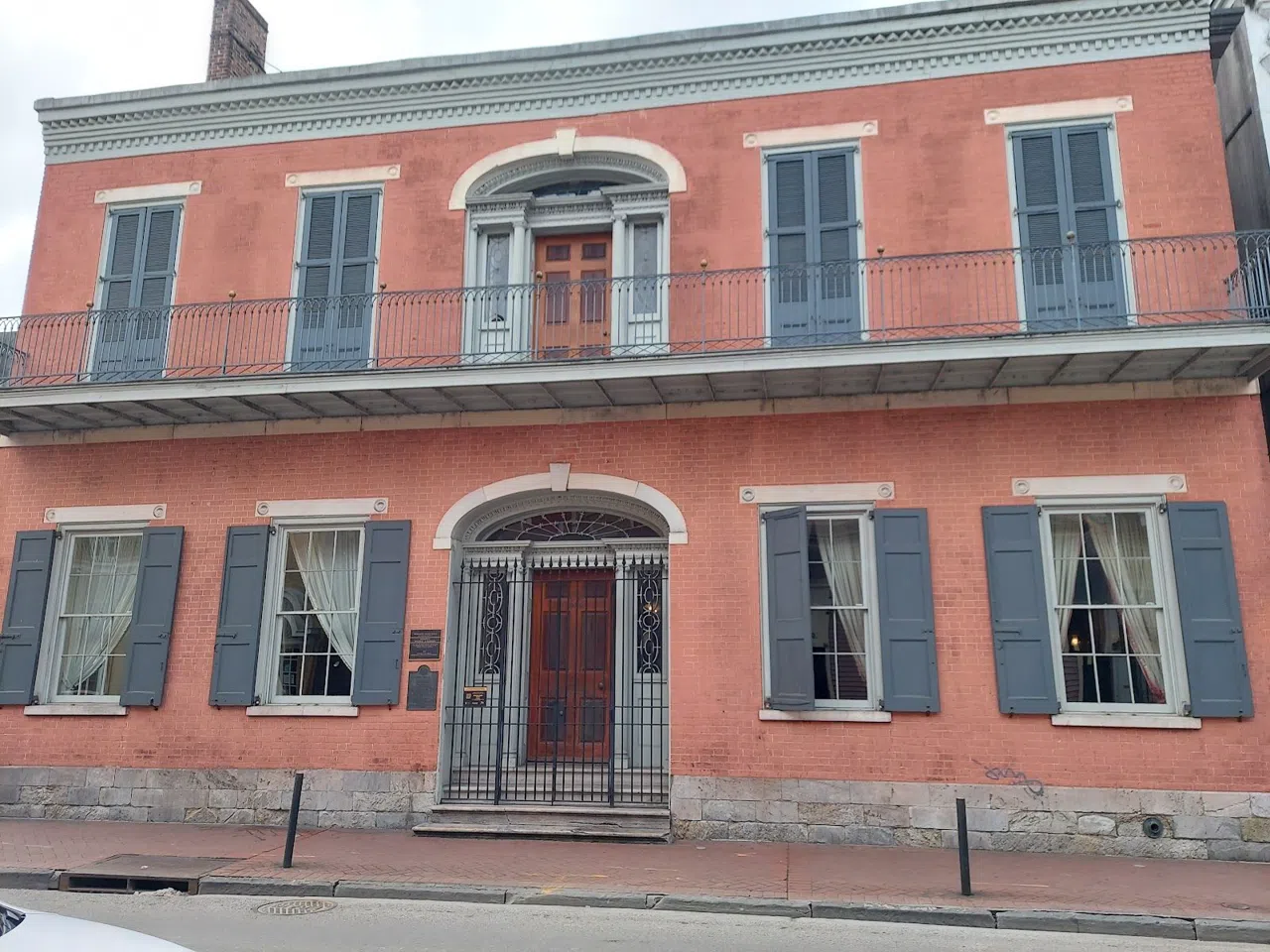
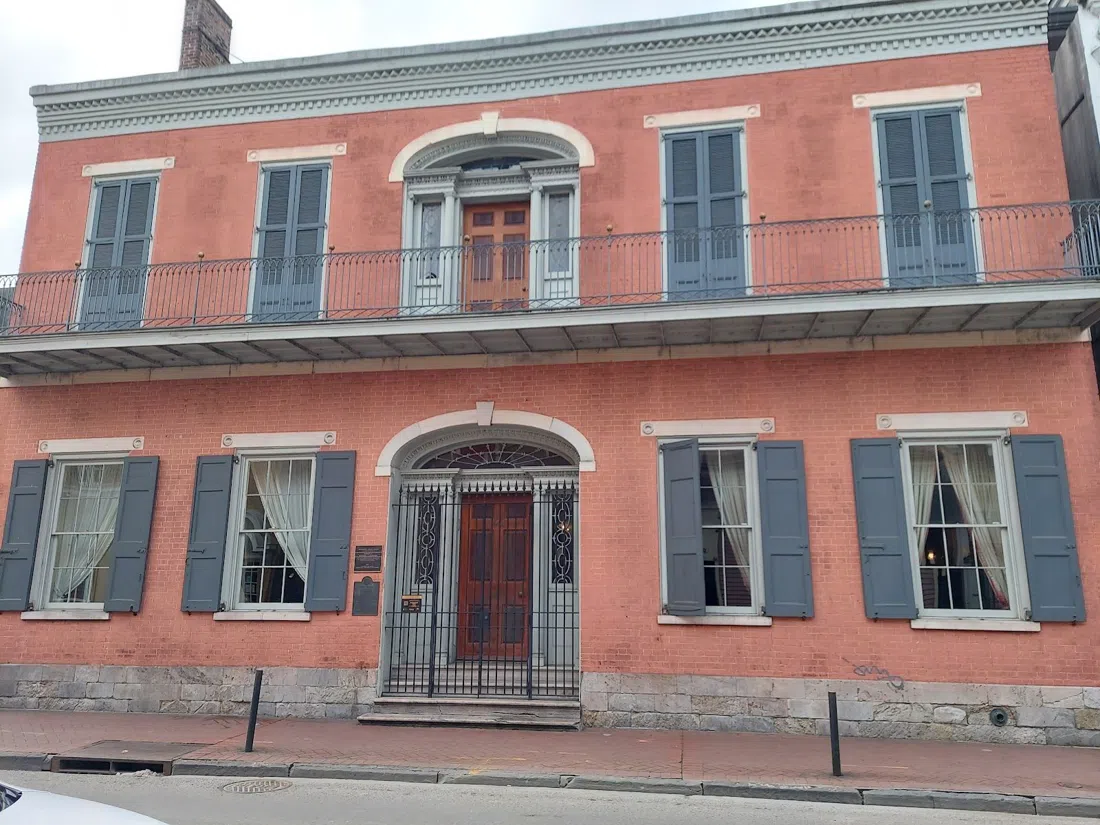
Start where the city itself started. The Hermann-Grima + Gallier Historic Houses (French Quarter) are sold as a single ticket by the same nonprofit, and that's the point — walk them back to back and you get the whole transition in about ninety minutes. Hermann-Grima House, on St. Louis Street, went up in 1831 in a plain Federal style: symmetrical brick facade, working courtyard kitchen, a Creole merchant family's idea of American respectability. A few blocks away on Royal Street, Gallier House arrived thirty years later, in 1860, designed by architect James Gallier Jr. for his own family — a Victorian townhouse with plumbing and ventilation tricks that were genuinely advanced for the period. Seeing them on the same afternoon is the fastest way to feel the city's architecture shift from Creole restraint to American display in one generation. Both are docent-led only, reservations are encouraged if your group is larger than a couple of people, and tickets run roughly $14-16 per house.
Two blocks toward the river, the 1850 House Museum (Pontalba Buildings, French Quarter) is the building that arguably set the whole downtown streetscape in motion. Baroness Micaela Almonester Pontalba built the matching Pontalba rows flanking Jackson Square between 1849 and 1851, and in doing so introduced cast-iron galleries to New Orleans for the first time — the wrought and cast ironwork that now reads as the city's signature became fashionable because of this one real-estate bet. The museum itself is a self-paced walk through a furnished 1850s row unit, no tour-size restrictions, and it's effectively bundled free if you buy the Friends of the Cabildo walking tour ticket below — worth timing the two together.
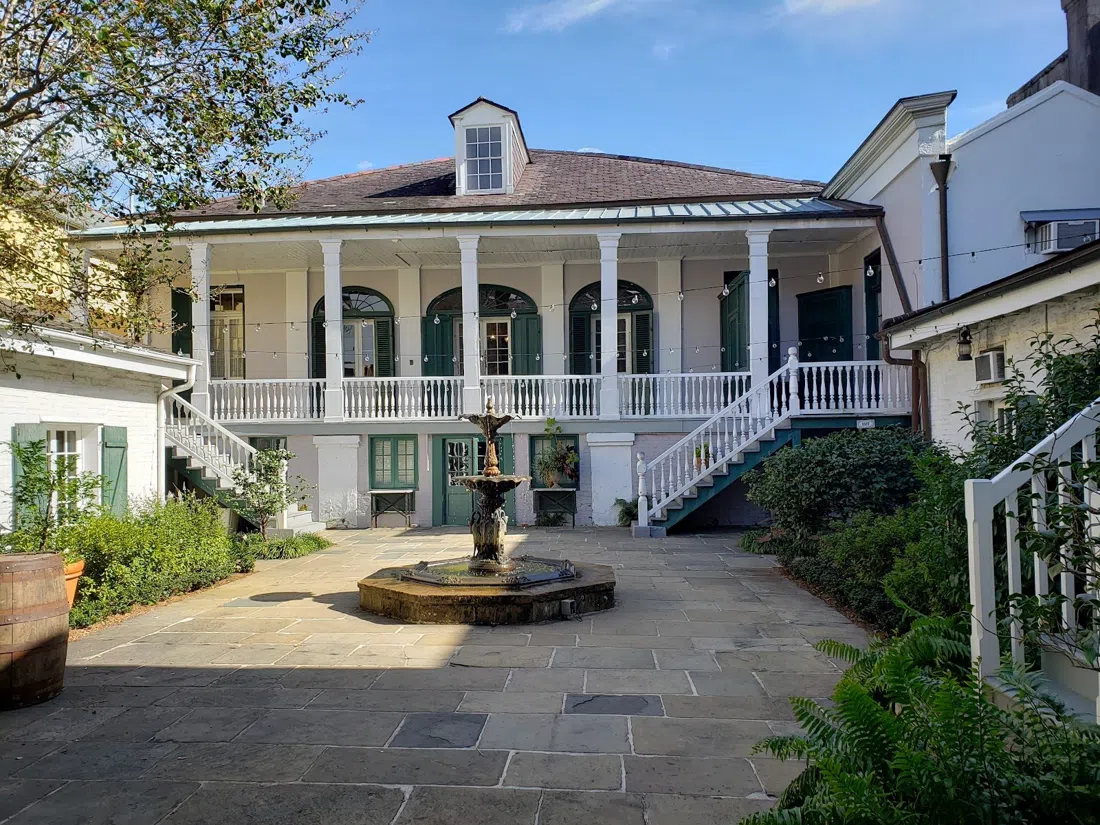
For the counterpoint, the Beauregard-Keyes House and Garden (French Quarter) on Chartres Street shows what money bought when it didn't have to build narrow. Built in 1826 as a raised center-hall villa blending Creole and American detailing, it later housed Confederate general P.G.T. Beauregard and then novelist Frances Parkinson Keyes — but the architectural lesson is simpler than either resident: this is what a wealthy Quarter household built when flooding, not lot width, was the design constraint. Guided tours run on the hour and small groups are easily accommodated; figure on $10.
Out to the Bayou: The Form Before the Cottage
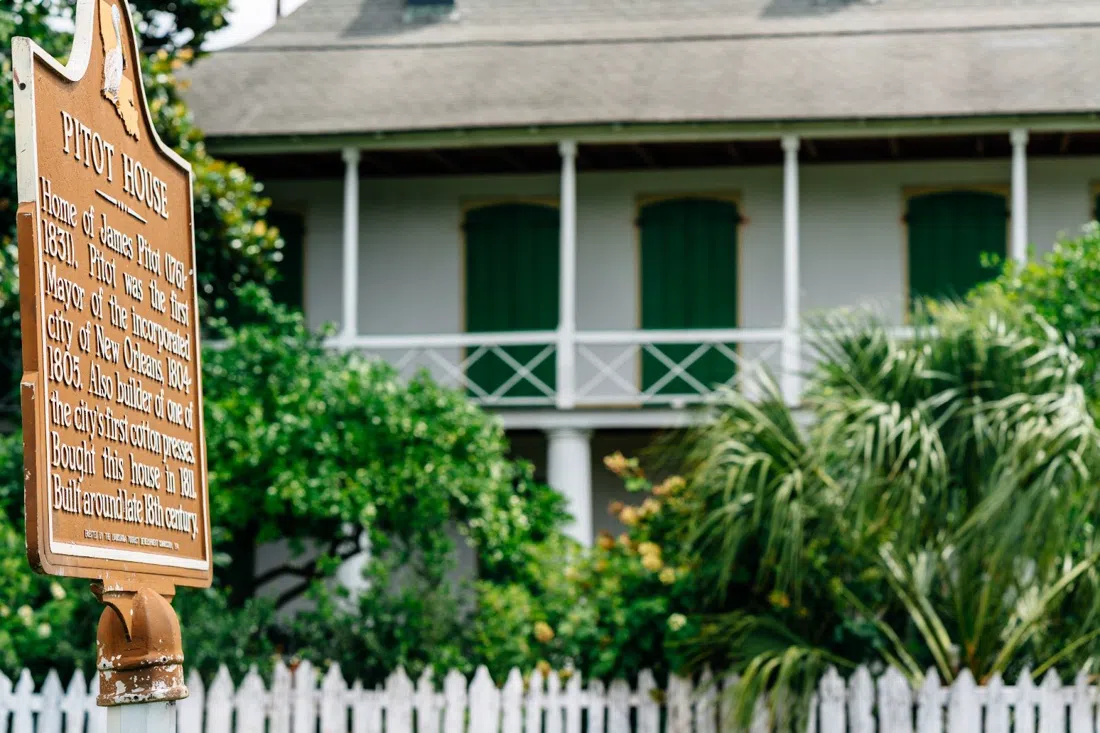
Everything in the Quarter descends from a form most visitors never see, because it isn't in the Quarter anymore. The Pitot House (Faubourg St. John) started life on the banks of Bayou St. John in 1799 and was moved a short distance to its current Moss Street lot in the 1960s to save it from demolition — it's the only Creole colonial country house of its kind still open to the public in New Orleans. Stucco over brick-between-post construction, a double-pitched hipped roof, deep galleries wrapping the ground floor: this West Indies colonial form is the direct ancestor of the raised Creole cottage, built for a semi-tropical climate decades before "New Orleans architecture" meant anything more specific than "buildings that survive here." It's worth the walk (or short ride) out from the Quarter precisely because it's quiet — regular tours run Wednesday through Friday, and groups of six or more should email ahead to [email protected]. Around $10.
Esplanade Ridge: American Grandeur, and Who Actually Built It
Esplanade Avenue is where the Creole city and the American city meet at an angle, and two houses on the same ridge tell two halves of that story.
The Degas House (Esplanade Ridge) went up in 1852 for developer Benjamin Rodriguez, originally in a plainer Greek Revival, then remodeled with the Italianate detailing you see today in the 1880s. It's famous as the home of the Musson family — Edgar Degas's mother's Creole relatives — where the painter spent five months in 1872-73 during his one visit to his mother's home city. Architecturally it's useful precisely because it's American-era Italianate sitting a few blocks from the older French Quarter Creole stock: same street, different decade, different grammar. It runs guided tours daily and also operates as a small B&B, so groups should arrange ahead; $18-25.
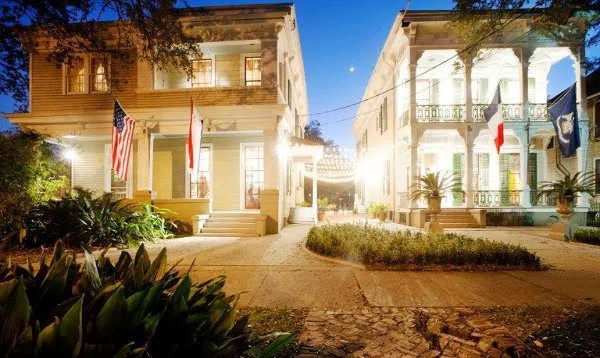
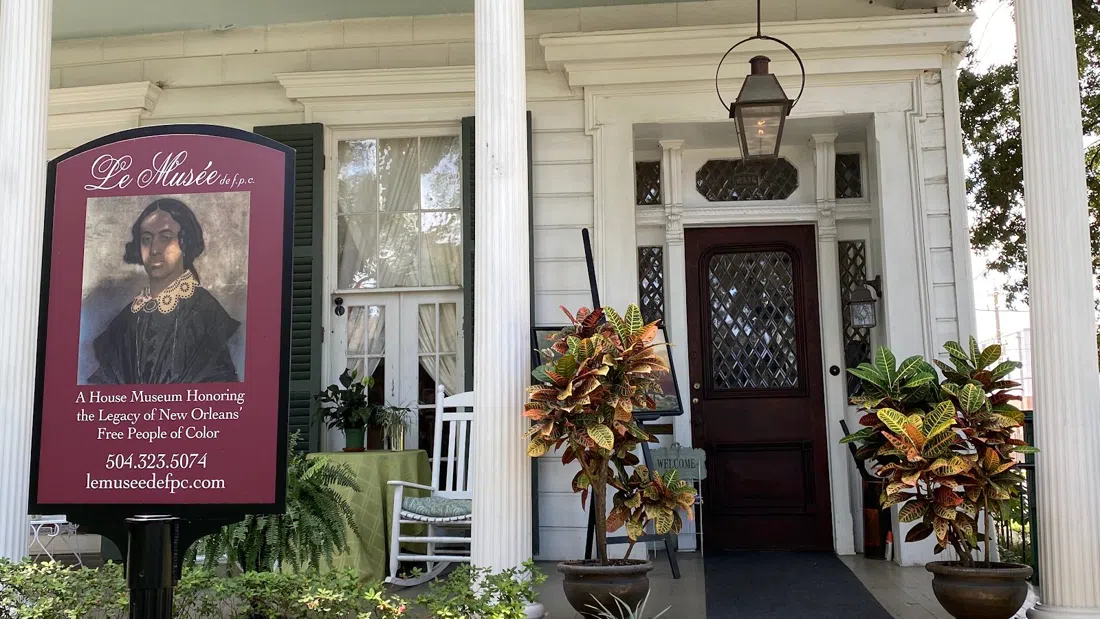
A few doors down, Le Musée de f.p.c. (Esplanade Ridge, bordering Treme) is the Greek Revival house at 2336 Esplanade that supplies the layer most architecture tours skip entirely: this ridge was built, owned, and lived in by a substantial free community of color in the decades before the Civil War, not just inherited by them later. The museum's guided tours — for individuals, schools, and private groups — put the actual builders and owners back into a story that's too often told as if wealthy white Creoles were the only clients. At roughly $25 for the guided tour, it's the single stop on this list that turns "look at this pretty house" into "here's who paid for it and why that mattered."
Lakewood, on a Different Scale
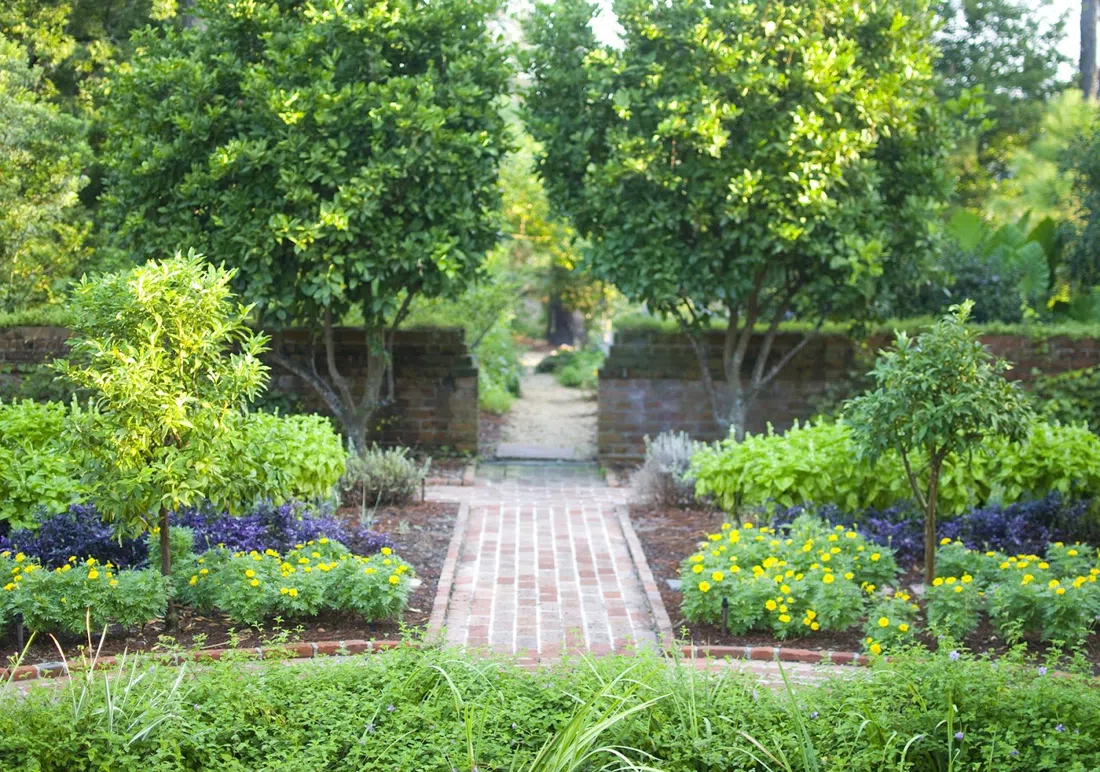
Not every New Orleans house had to negotiate a narrow lot. Longue Vue House and Gardens (Lakewood, near City Park) was built for Edgar and Edith Stern between 1939 and its completion in 1942, a Classical Revival estate on grounds laid out by landscape designer Ellen Biddle Shipman. It's the useful outlier on this itinerary: twentieth-century wealth building outward across a full suburban lot instead of stacking upward and inward on a Creole-era sliver, which is exactly the logic that produced the shotgun house everywhere else in the city. Gardens are self-walkable and groups are welcome without booking; house tours run on a set schedule. Garden admission is $15-17, more with the house tour added.
Grounding It: The Historic New Orleans Collection
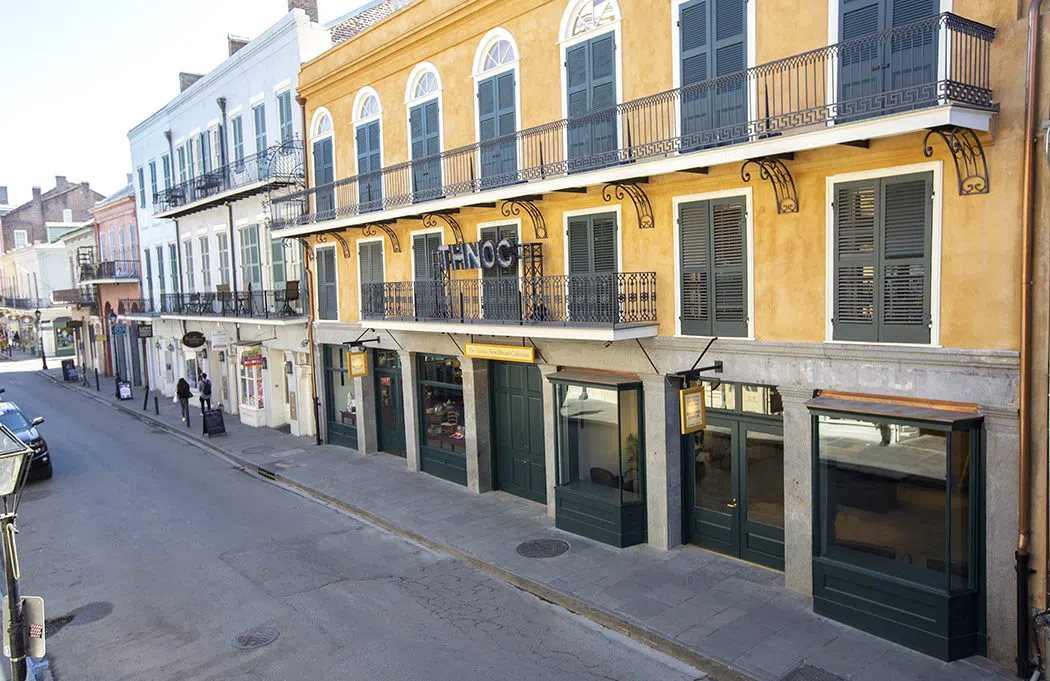
If you want dates and provenance beyond what a guide tells you on the sidewalk, the Historic New Orleans Collection (French Quarter), known locally as THNOC, is the citable source. It's a research center and museum with free admission (you still need a timed ticket), fully self-paced, and happy to host groups. Their archives are where several of the facts above ultimately trace back to, and a stop here before or after the house museums gives the rest of the walk real footing rather than tour-guide folklore.
Walking It Yourself: Guided Tours Across the City
House museums show you one building each; a good walking tour reads a whole block at once, which is where the shotgun house — this list's most important form and the one no single museum owns — actually gets explained.
The Friends of the Cabildo French Quarter Walking Tour (French Quarter) is the long-running, non-profit, license-tested option, small guided groups, roughly $25 and includes 1850 House admission, which is why pairing the two makes sense logistically as well as architecturally. It's the most reliable general history-and-architecture walk of the Quarter itself, though it isn't built specifically around residential form.
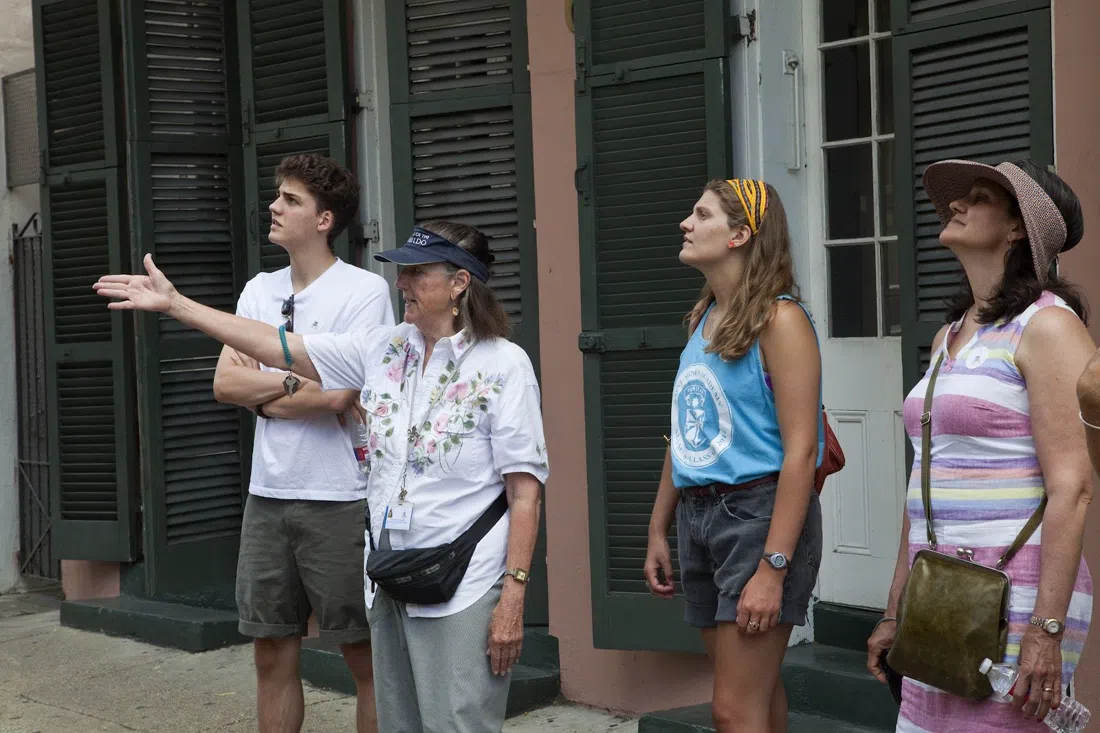
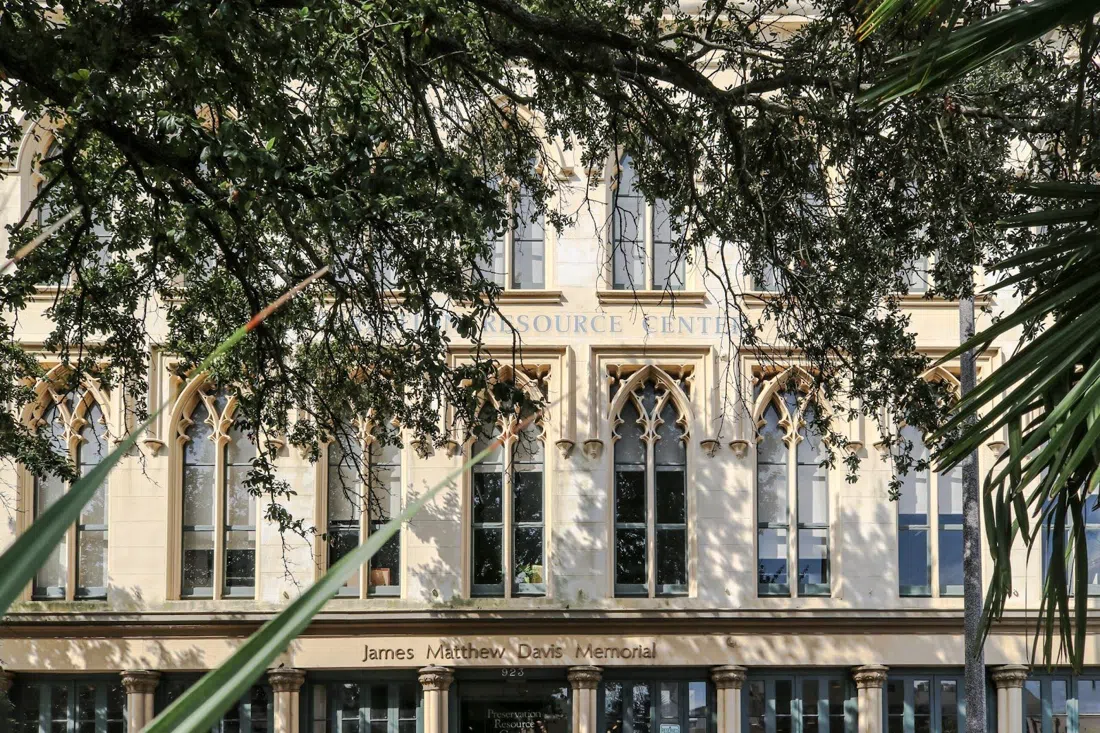
For that, go to the Preservation Resource Center of New Orleans (PRC), the city's own preservation authority, whose guides can actually explain why these forms exist rather than just naming them. The shotgun house — one room wide, three or four rooms deep, no hallway — kept a facade narrow enough to dodge a street-frontage tax and let a Gulf breeze move front door to back door in a pre-air-conditioning city. The Creole cottage sits low and close to the sidewalk, its steep side-gabled roof and lack of a front gallery marking it as older and more urban than its raised, gallery-fronted country cousins. And the camelback — a second story tacked onto the rear of an otherwise single-story shotgun, invisible from the street — did the same tax-dodging trick a floor higher, adding bedroom space without the frontage a full two-story house would have declared. General walking tours run about $20 in small non-profit-run groups; the PRC's own Shotgun House Tour is ticketed separately and seasonal, so check current dates before building a day around it.
NOLA Tours (Marigny) is the closest match to this exact brief — a purpose-built architecture-literacy walk rather than a general history tour, capped at 14 people, no megaphones or memorized scripts, and it specifically covers the Faubourg Marigny's shotgun rows, which is where the form is easiest to see repeated block after block. Public tours run $40 per person; private tours start at $200 for a couple traveling together who'd rather not join a group.
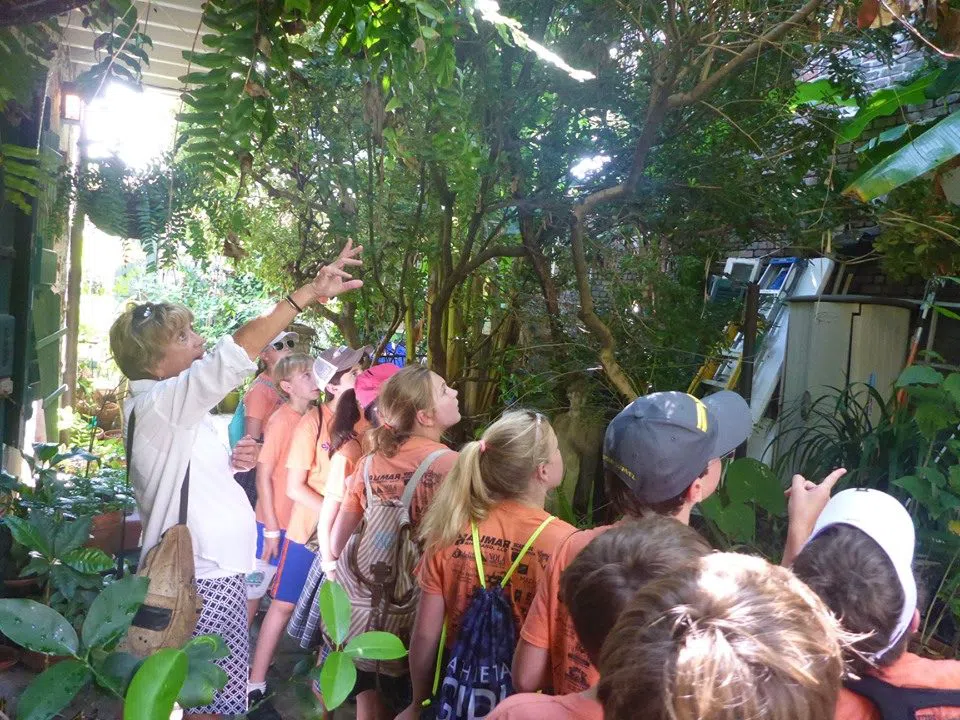
Skip Treme at your peril, though, because it's arguably the most important neighborhood on this entire list and the one general tours routinely leave out. Two Chicks Walking Tours (Treme) is the only verified operator running a dedicated walk through it — public tours in the $30-45 range, private groups up to 14 for about $518, larger groups handled with multiple guides. Treme's shotgun rows, some of the oldest surviving in the city, are where the form was built and lived in at real density by a free and freed Black population well before the Civil War; walking it with a guide who knows the street-by-street history is worth prioritizing over a second Quarter tour.
Practical Notes
Getting around: Everything above clusters into three walkable pockets — French Quarter (Hermann-Grima, Gallier, 1850 House, Beauregard-Keyes, THNOC, Friends of the Cabildo, PRC), Esplanade Ridge/Faubourg St. John (Degas House, Le Musée de f.p.c., Pitot House, a 15-20 minute walk or short rideshare between them), and Treme/Marigny for the shotgun-row tours. Longue Vue in Lakewood is the one outlier and is easiest reached by taxi or rideshare rather than on foot from downtown. The streetcar covers Esplanade and the edge of the Quarter reasonably well if you'd rather not drive.
Cash and cards: All the house museums and tour operators listed take cards; carry some cash anyway for tips to individual guides, which most of these small non-profits rely on more than a big-city tour company would.
Timing: Give the French Quarter cluster a full morning if you're doing more than two houses, since docent-led tours run on a schedule rather than on demand. Book Pitot House and Le Musée de f.p.c. ahead if you're traveling as a group of six or more. New Orleans heat is real from late spring through early autumn; mornings are kinder to a multi-stop walking day than afternoons.
Budget: A single house museum runs $10-25; stacking three or four plus one guided walking tour puts a reasonably thorough day at $80-120 per person, less if you catch the 1850 House bundled into the Friends of the Cabildo ticket. None of this requires a car or a big hotel budget — most of it is walkable from anywhere in or near the Quarter. For where to sleep while you do it, see the New Orleans hotel search, and for the rest of the city beyond its houses, the New Orleans guide covers the food, music, and neighborhoods this piece deliberately leaves out.