
The heat out here sits low over the cane. The first sound at Whitney is your own audio player clicking on, and the insects working the ditch beside the path. There are no ballgowns in this story and no staircase shot at golden hour. The site is arranged around the people who were owned, and it reads you their names. In September, with the school groups back in class and the sun still merciless, that arrangement lands harder than it does in spring.
What Whitney is built around
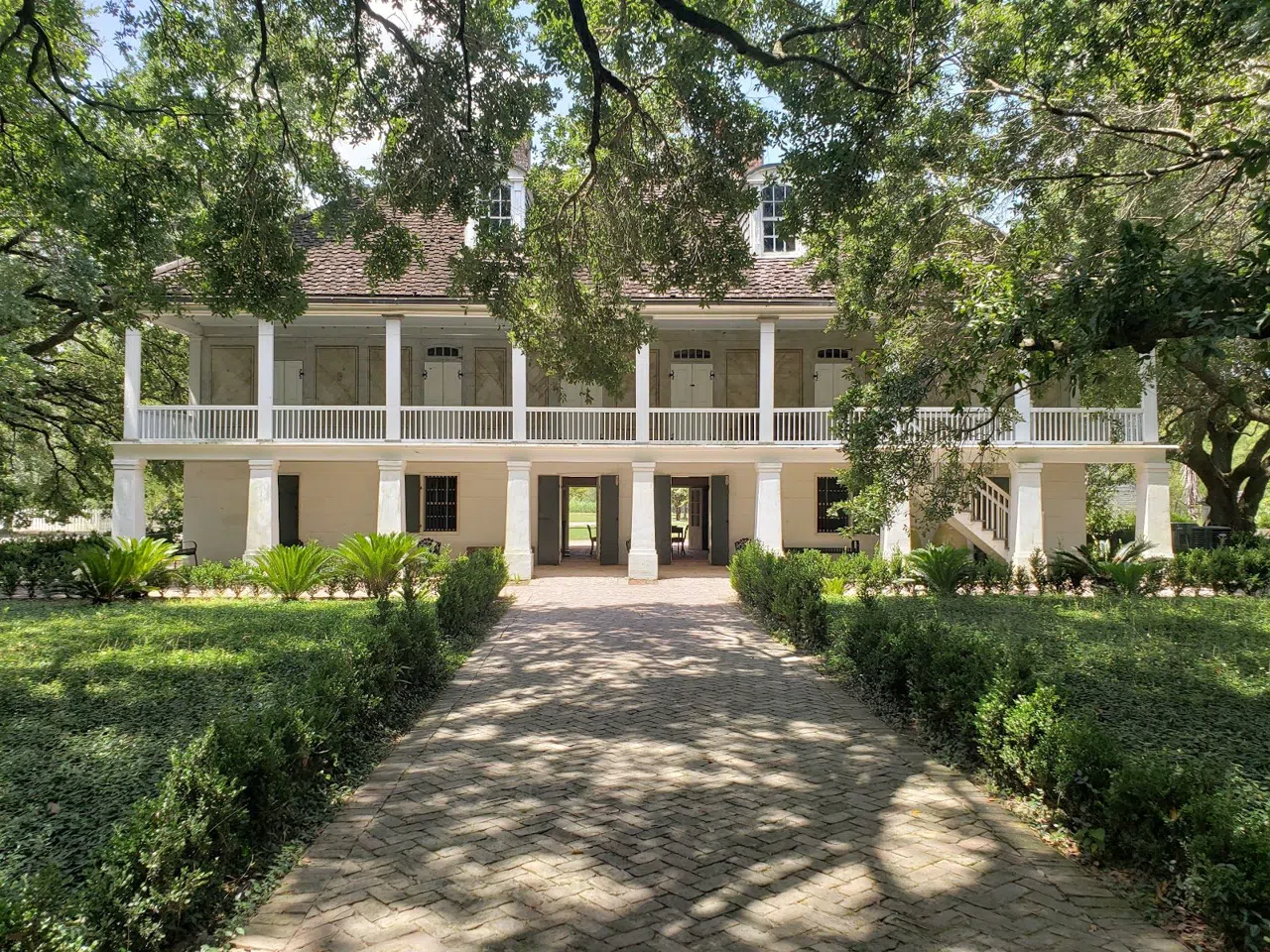
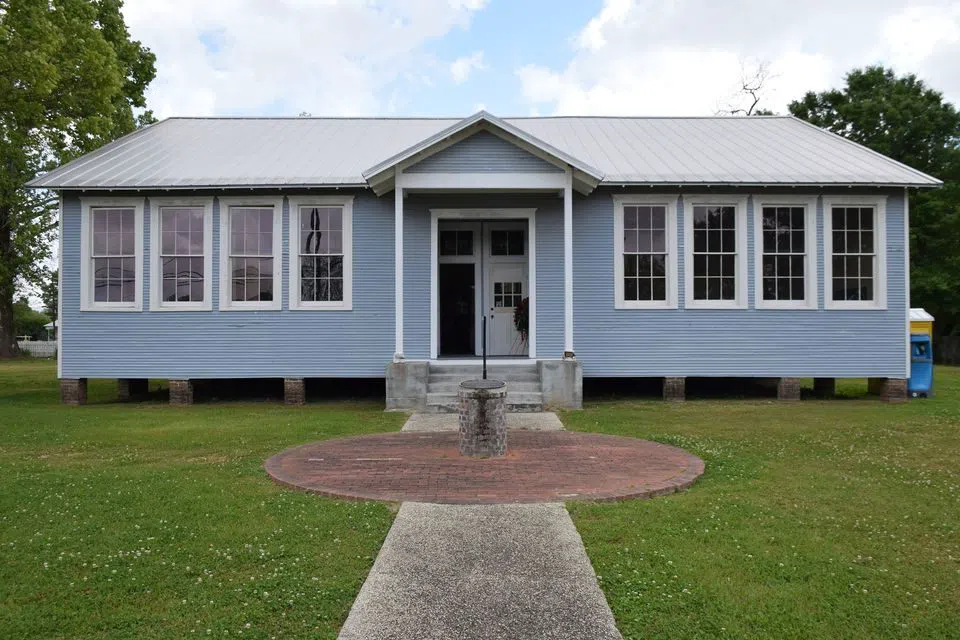
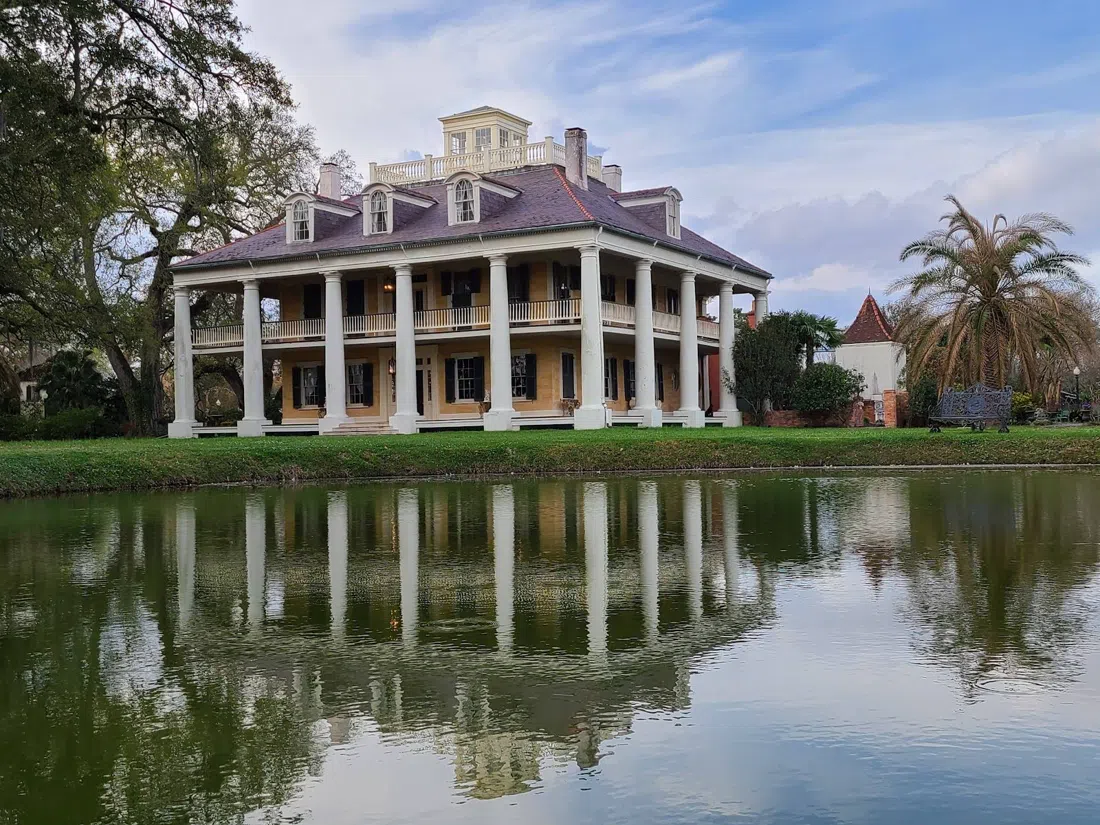
Whitney Plantation Museum (River Road, west bank, roughly an hour upriver from the city) is the only Louisiana plantation museum built entirely around the enslaved rather than the owners, and that one decision changes how the place feels. The Big House is present, but you do not meet it first: the route puts the memorials, the quarters and the working ground ahead of the architecture, and the interpretation is archival, built from names, records and testimony rather than anecdote. The Wall of Honor and the inscribed memorials are the spine of the visit, and they are why people come back out of the gate quiet.
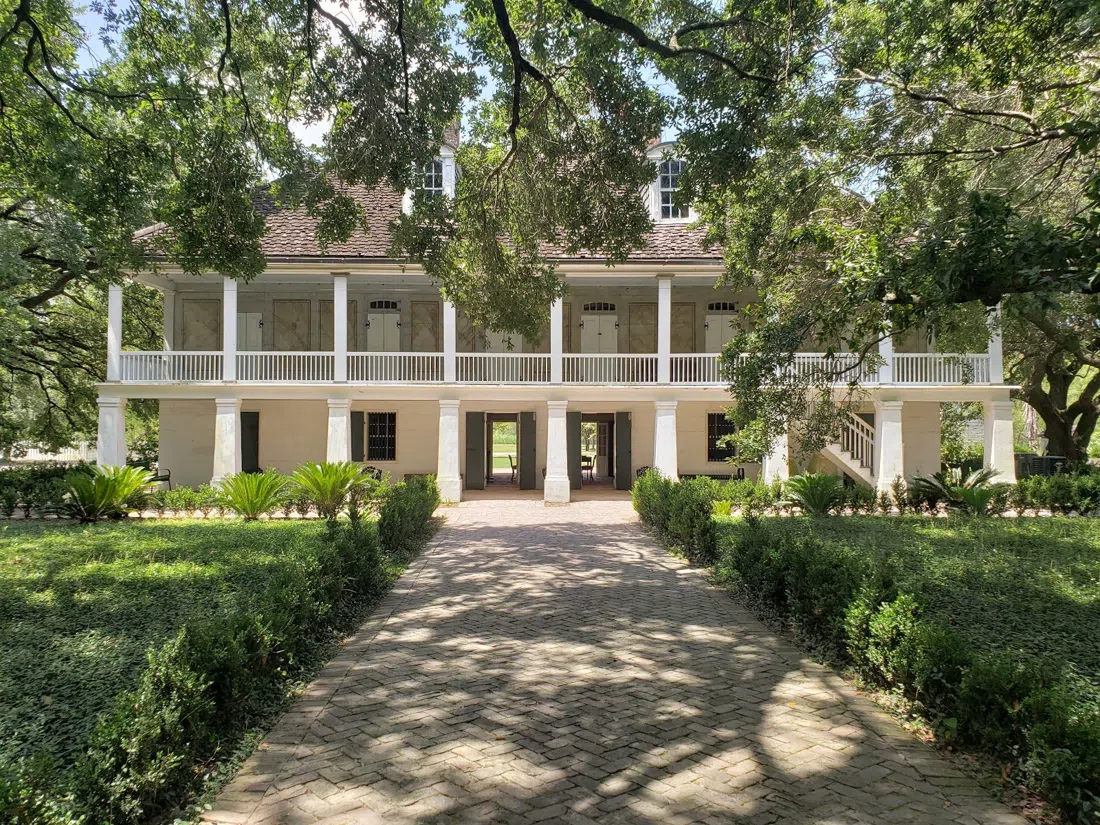
If you have done the other River Road houses, you will notice the inversion immediately. Elsewhere, slavery is a room or a panel inside a script about a family. Here, the family is the footnote. The two hours are uncomfortable and are not meant to be otherwise, but the tone is orientation rather than accusation: you are shown who was on this ground, how many, and what the paperwork recorded about them.
The shape of a visit
The standard route is a self-guided audio tour, fourteen stops and about an hour and ten minutes of recorded material. Most people stay around two hours, which is the honest number. The extra fifty minutes goes on standing still, reading names, and walking slowly between buildings because the ground is uneven and the air is thick.
Walk it in the order given. The stops are sequenced so the story builds, and the audio assumes you are where it thinks you are. You can pause and sit; there are shaded spots, and in September you will want them. There is no restaurant on site. The gift shop sells drinks and snacks and that is the whole food offer, so eat before you arrive or plan lunch on the drive back out.
The guided tour is a different proposition and worth understanding before you buy. It is the only way to get upstairs in the Big House, it runs hourly, and it is first-come rather than reserved. That combination is the one thing you can miss purely by arriving at the wrong hour, so if the interior matters to you, build the day around a guided departure and get there with slack.
Arriving early enough to get upstairs
Last entry is 3:00 p.m. and the museum is closed on Tuesdays. Those two facts undo more itineraries than anything else out here.
For a September visit, aim to be through the gate between 9:30 and 10:30. You get the cooler end of the day, the outdoor stops before the sun is directly overhead, and enough runway to catch a guided departure without watching the clock. Arrive at 2:30 and you are technically fine on entry, but you are walking fourteen outdoor stops in the worst heat of the day with the last guided hour possibly already full.
Midweek is calmer than the weekend, with the obvious exception of Tuesday. The organised day tours that run out of the city operate six days a week (Monday, Wednesday, Thursday, Friday, Saturday and Sunday), so the coach-borne share of the crowd tracks that same pattern, and Monday and Wednesday mornings are the thinnest realistic windows.
Tickets at the gate or a seat on a day tour
At the door, the self-guided audio tour is $25 for adults and $11 for ages 6 to 18. The guided tour is $32 adult and $15 for ages 6 to 18. Under-6s go free, as do residents of St John and St James Parishes. Those are modest numbers for what you get, and if you are already driving, buying at the gate is straightforward.
The alternative is a guided day trip with transport from the city, which starts from 89 USD per person and takes most of your day. The top-rated of those options carries a 4.6 out of 5 from 1,448 travellers, which tells you the format works for the people who choose it. What you are paying for is not better access to Whitney. It is the driving, the narration on the way, and not having to think about the return leg. If you do not have a car, or you do not want to drive River Road in an afternoon thunderstorm, that premium is rational. If you have a car and two hours of patience, it is not.
Whitney does not require you to book ahead as an individual, but booking ahead is still the safer habit in a month when weather can shuffle a day. Whichever route you take, do not treat the 3:00 p.m. last entry as flexible.
Access, groups and the rules that matter
The car park handles coaches and tractor-trailers, so nobody arrives here and finds they cannot park. Groups of 21 to 50 must book in advance with a 25% deposit two weeks out, and school and education tours run on a separate track. If you are a family of six wondering whether you count as a group, you do not.
Most of the visit is outdoors on packed ground and paths, and the pace is yours, which makes it more forgiving for slower walkers than a fixed 75-minute guided march. Two things are not forgiving: the heat and the upstairs. The Big House interior is reached only on the hourly guided tour, and stairs are stairs.
The site suits couples and solo visitors best, because it rewards being able to stop when a name stops you. Large parties fragment quickly on an audio tour, and if half your group wants to talk, you will spend the visit shepherding. Take the guided tour instead if you are a group that likes to move together.
September on the River Road
September is the trade-off month. The crowds are down, the school holiday churn is over, and you will have stretches of the route to yourself. In exchange you get heat, humidity that does not lift, and the back half of hurricane season, which in practice means fast afternoon storms far more often than anything dramatic.
Plan for it rather than around it. Go in the morning. Carry more water than you think you need, because the gift shop is the only source on site. Wear something with a brim; there is shade, but the memorial walks and the field stops are open. Watch the forecast the night before and, if a system is being discussed, keep the day loose, since the site is outdoors and a washed-out afternoon is a real possibility. September also puts the working landscape close to harvest, which makes the cane on the drive out taller and more legible than it is in winter.
The October weekend mourning tours at the cane estate next door are a genuine oddity, and a late-September trip sits just early for them.
The estates within ten minutes
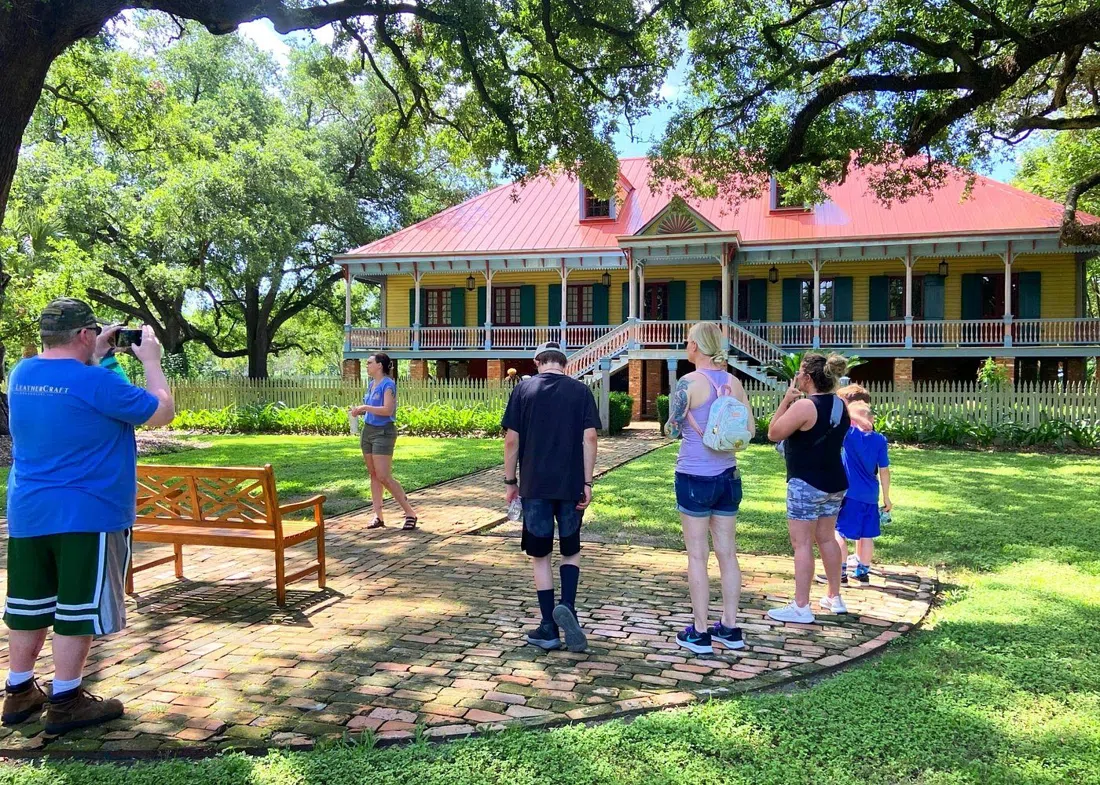
Laura Plantation (River Road, ten minutes from Whitney) is the natural pairing and the most complementary. Where Whitney is self-paced and archival, Laura is a 75-minute fully guided Creole narrative drawn from Laura Locoul Gore's memoir and estate documents. Tours depart roughly every 40 minutes, first at 10 a.m. and last at 4 p.m., so groups slot in without waiting; entry is about $28 adult, $20 for teens 13 to 17, $12 for ages 6 to 12, under 6 free. Group rates and themed tours run daily by reservation on (225) 265-7690.
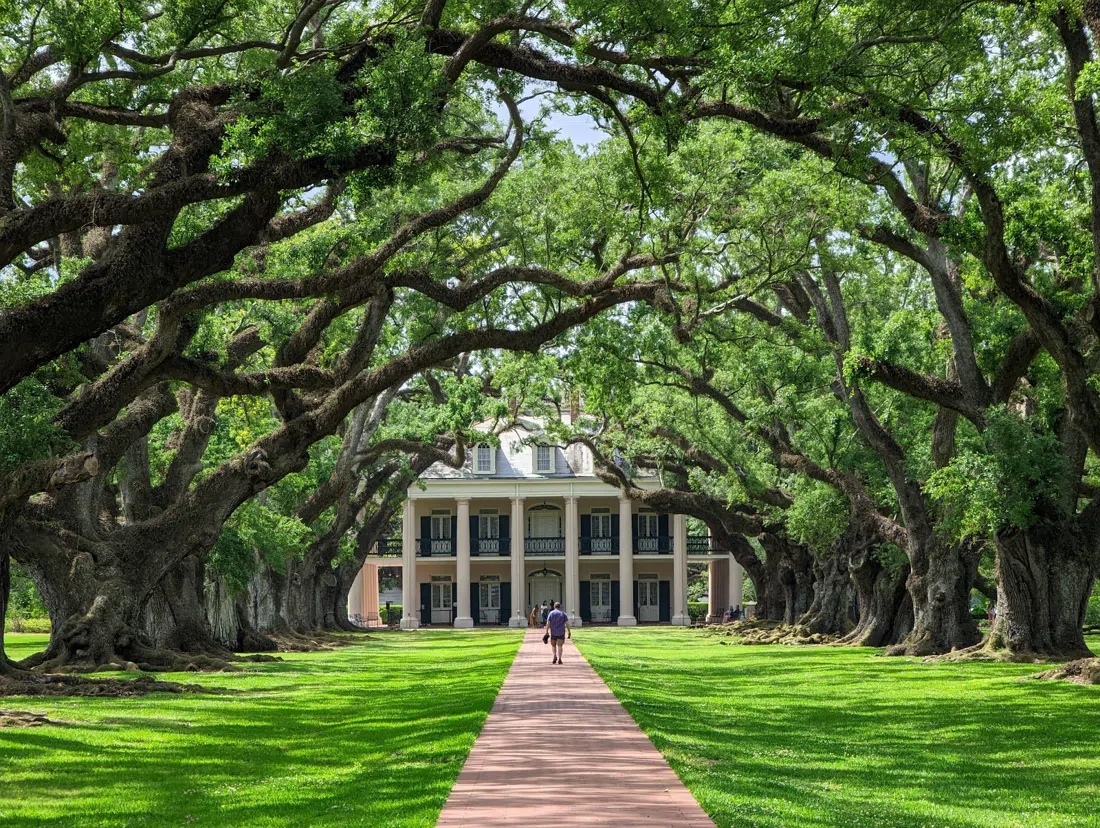
Oak Alley Plantation (River Road, upriver of Laura) is the photograph everyone has seen, the most photographed avenue of oaks in the South, and the area's only proper sit-down lunch attached to a plantation. Entry runs roughly $25 to $35 adult with restaurant mains around $15 to $25, open daily 8:30 a.m. to 4:45 p.m., with a large free car park. Its slavery interpretation is a side exhibit rather than the frame of the visit, so it works as a counterpoint to Whitney, not a substitute. The plantation warns there is no ride-hailing coverage out here, which matters if your plan depends on it.
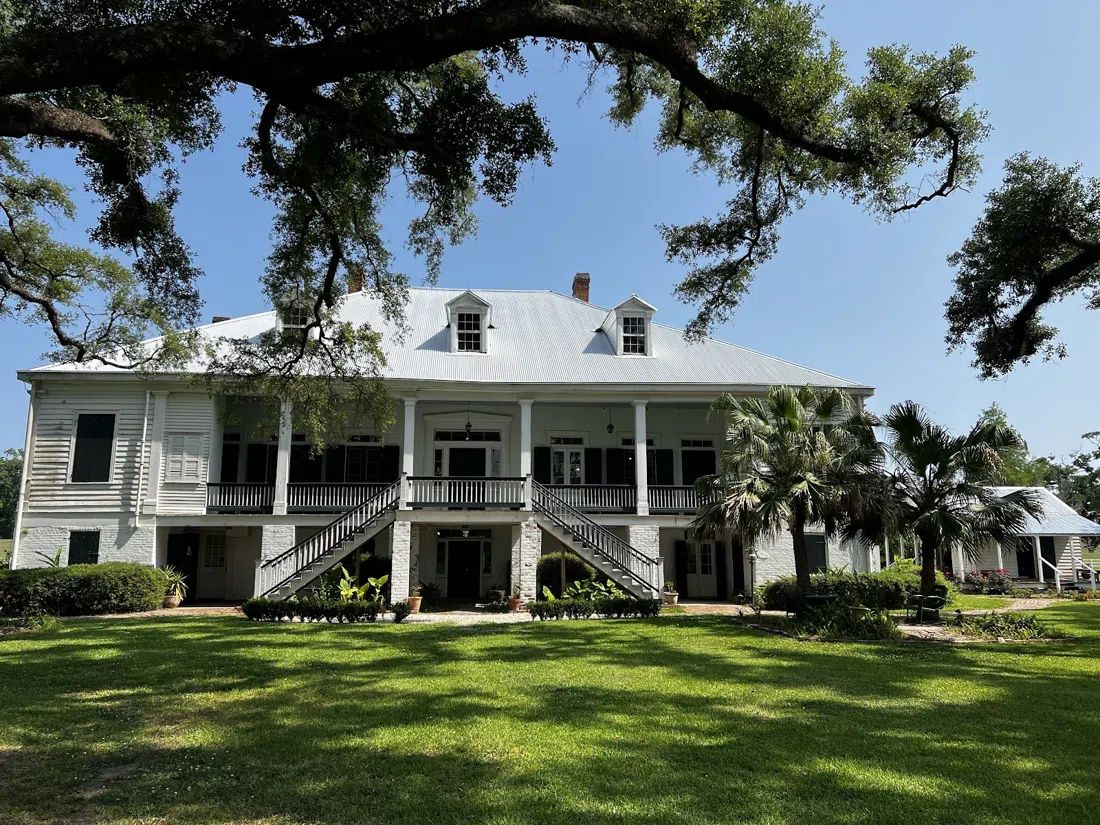
St. Joseph & Felicity Plantations (River Road, next door to Oak Alley) is the un-prettified option, a family-owned, still-farmed cane estate that gives you the most honest sense of a working plantation landscape. Up to seven departures a day means groups rarely wait; $24 adult, $22 senior, $17 college student, $12 youth 12 to 18, $8 child 6 to 12 plus tax, with group rates from ten people at around $16 each.
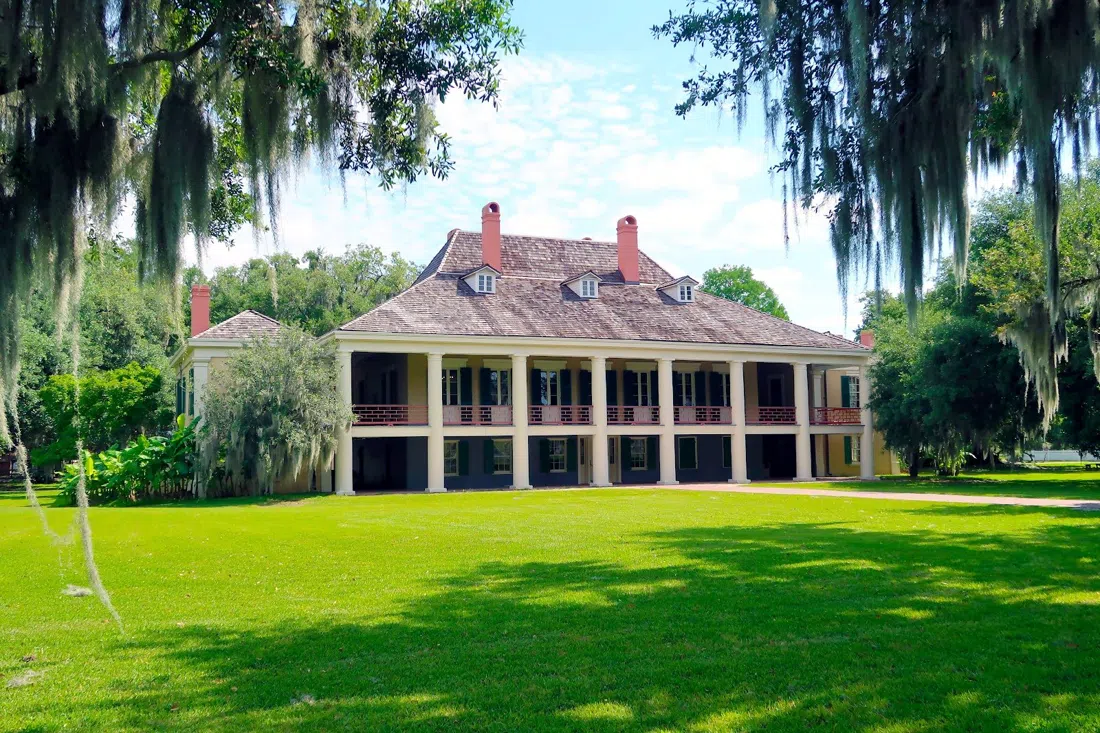
Destrehan Plantation (River Road, ten minutes from the airport) is the one to fold into an arrival or departure day rather than burning a whole one. It is strong on the 1811 German Coast Uprising and the Freeman Colony, with signed Jefferson and Madison documents on display; roughly $28 adult, open daily 9 a.m. to 5:30 p.m., free parking and free luggage storage, which is why it works on a flight day. Groups of 20 or more need a reservation.
River Road African American Museum (River Road) is the community-run counterpart to Whitney's archival approach, covering free people of colour, Black doctors and inventors, and the Reconstruction River Road. Admission is low single figures to around $10. It opens only Wednesday to Saturday, 10 a.m. to 5 p.m., which catches people out constantly. The rooms are small, so call (225) 474-5553 ahead for anything above about a dozen people.
Lunch, boudin and andouille
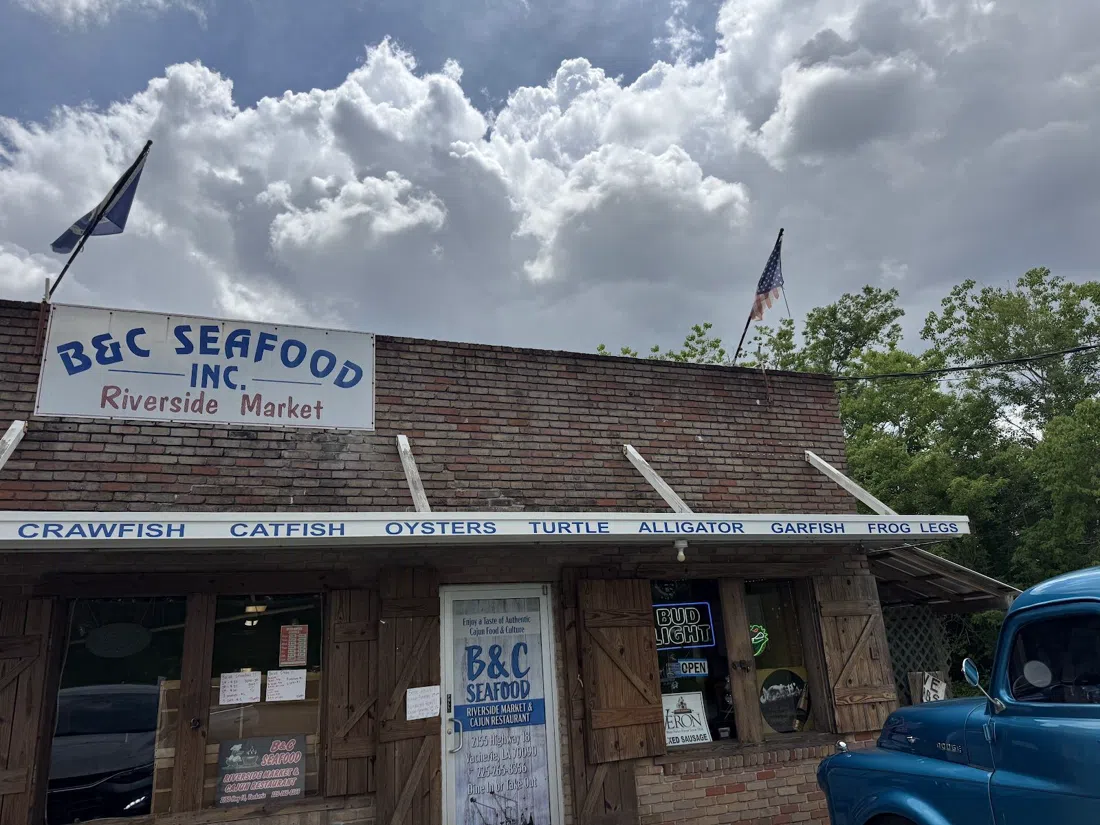
B & C Seafood Riverside Market & Cajun Restaurant (Great River Road, between Whitney and Oak Alley) is the obvious lunch and the closest thing to a café out here: a plain roadside room used to handling coach traffic, $12 to $25 a head, Monday to Saturday 10 a.m. to 4 p.m. and shut Sundays. Call (225) 265-8356 for anything large.
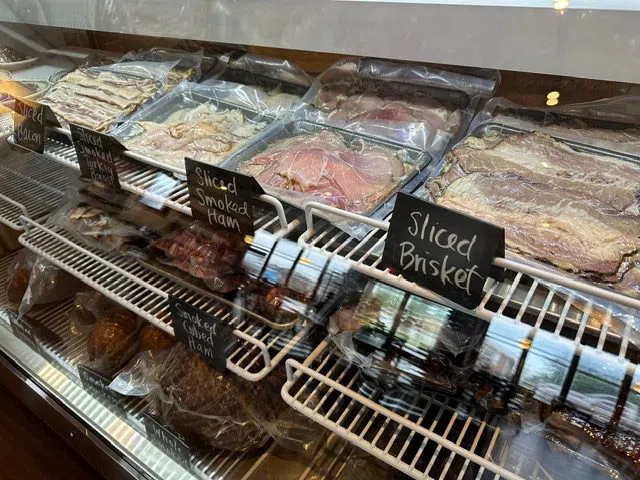
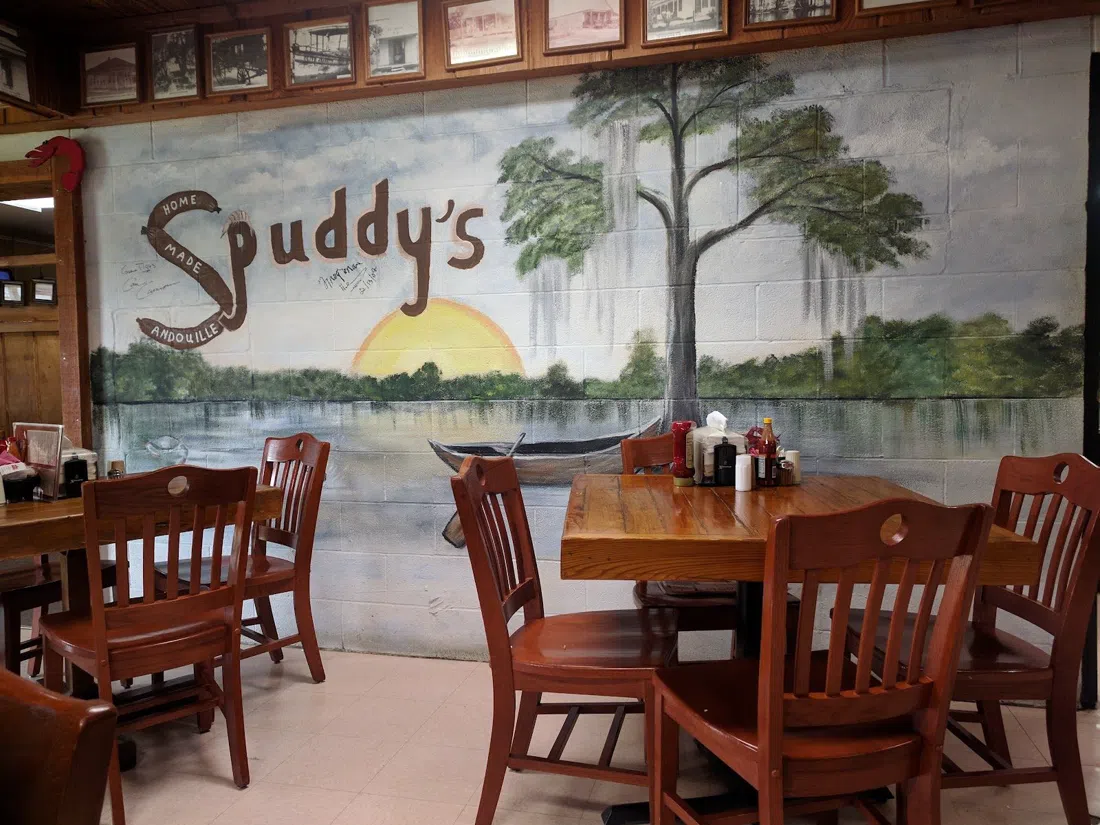
Wayne Jacob's Smokehouse and Restaurant (on the drive out of the city, in the self-declared Andouille Capital of the World) has been smoking meat since 1950. The shop is open daily 9 a.m. to 2 p.m. and sells sausage by the pound; the restaurant only serves Monday to Friday 11 a.m. to 2 p.m., and the dining room is small, so call 985-652-9990. Spuddy's Cajun Foods (same stretch, a tiny shop) does boudin links for a few dollars and a hands-on Cajun Cooking Experience built for small booked groups, priced on enquiry. It opens Friday and Saturday only, Friday 10 to 3 and Saturday 9 to 3. It either fits your plantation day or it does not.
Carrying it back into the city
Whitney ends at emancipation's doorstep; the city continues the story. New Orleans African American Museum (Tremé) sits in the oldest Black neighbourhood in America and carries the narrative from the cane fields into urban Black life; $20 general admission, free for New Orleans residents on the third Saturday of the month, open Thursday to Sunday 11 a.m. to 4 p.m. only. Email ahead for groups, since it is a campus of small buildings.
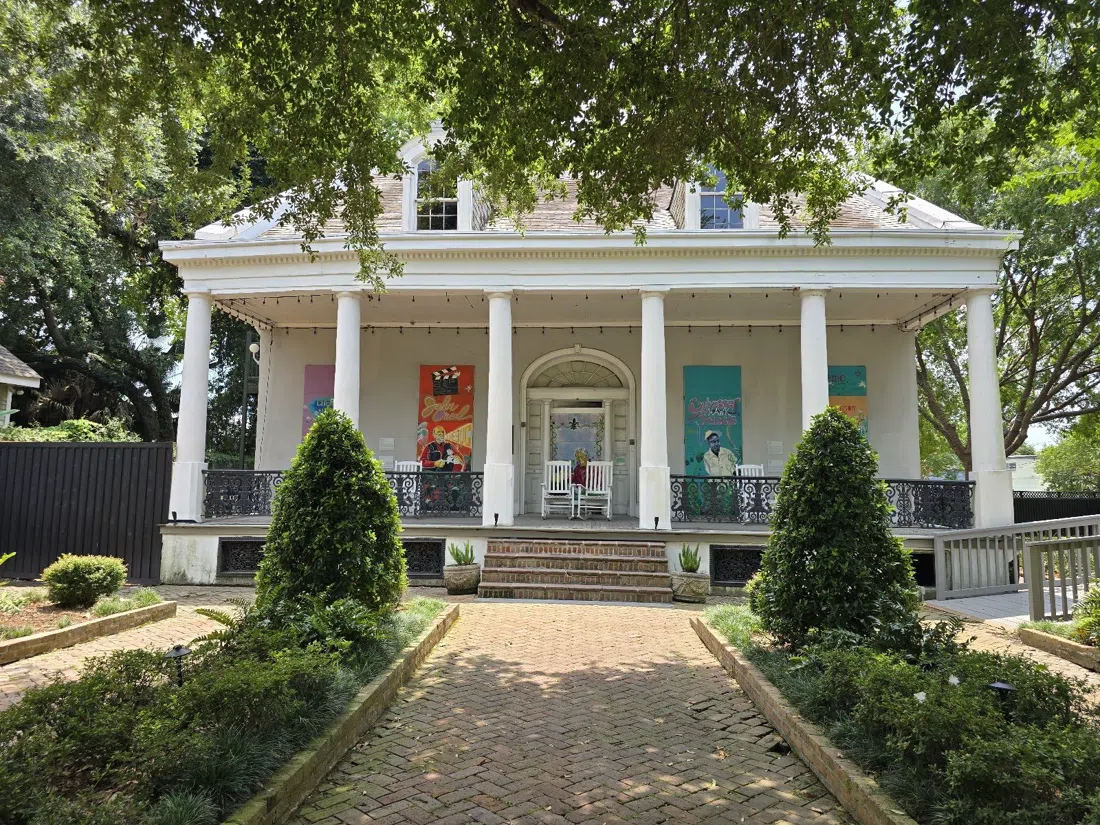
Le Musée de f.p.c. (Esplanade Avenue) fills the gap Whitney's audio tour can only touch: the free Creole population who owned property and, in some cases, people. It is entirely tour-led, $25 regular, $150 private or $100 per person for groups of four or more, by appointment in short windows, Tuesday to Friday and Sunday 1 to 4 p.m., Saturday 10 a.m. to 1 p.m. Never walk up.
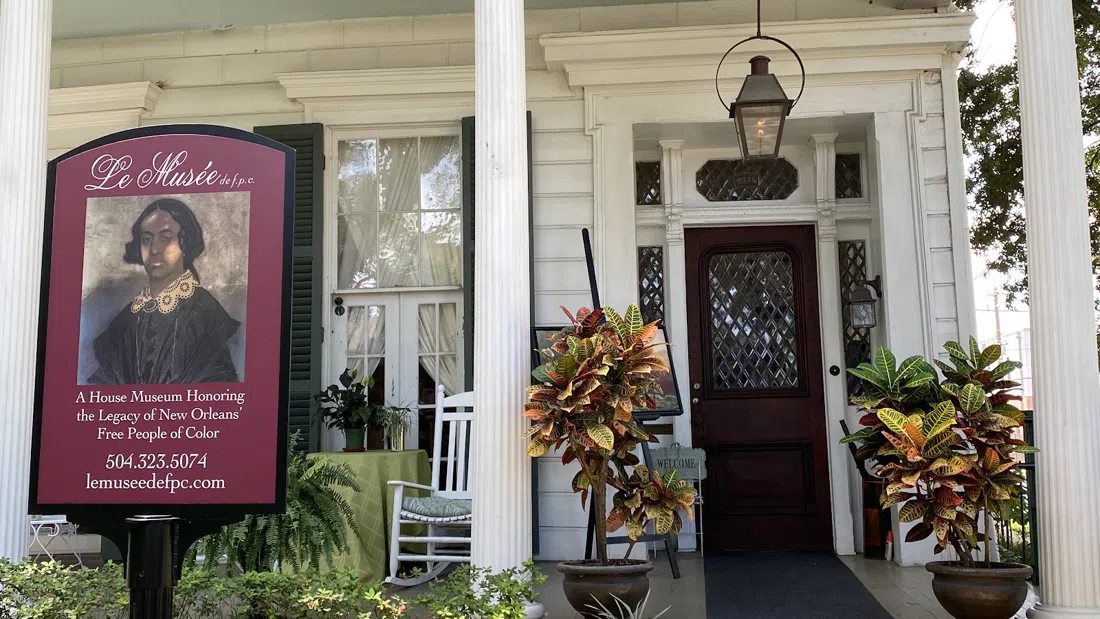
The Historic New Orleans Collection (French Quarter) is the documentary backbone of a serious River Road trip and costs nothing, though tickets are timed and group slots need booking. The museum runs Tuesday to Saturday 9:30 a.m. to 4:30 p.m. and Sunday 10:30 a.m. to 4:30 p.m.; the Williams Research Center at 410 Chartres closes Sunday and Monday. Check which exhibitions are up before committing an afternoon.
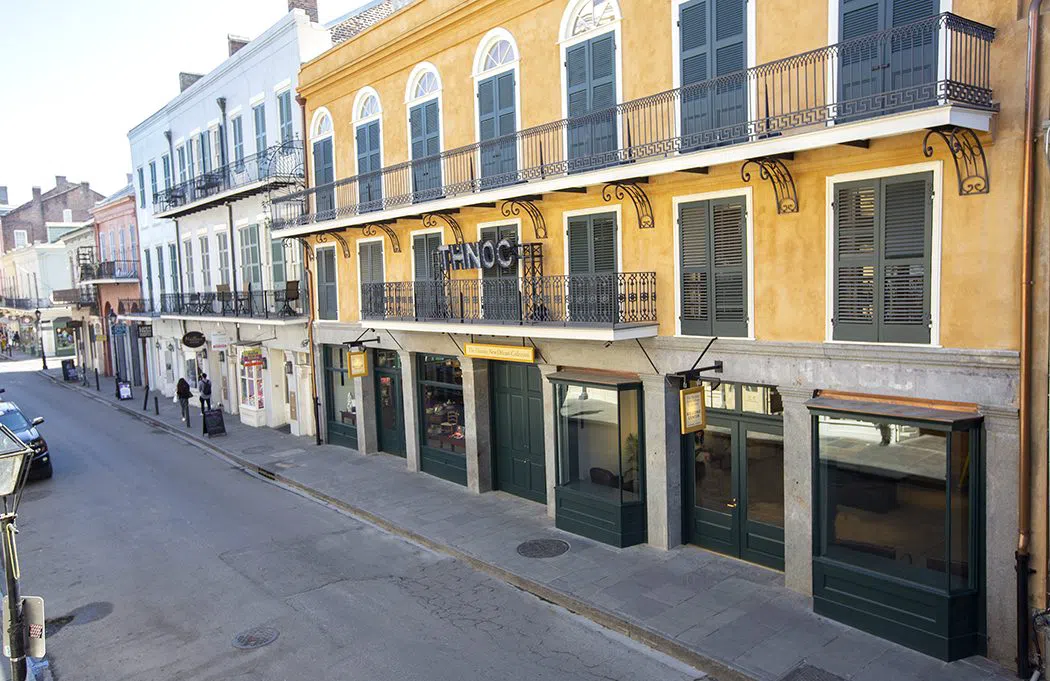
Backstreet Cultural Museum (Tremé) has been going since 1999 and now sits at 1531 St. Philip Street in the former Jazz & Blues Hall. The old Henriette Delille Street address is dead, so check the map twice. $25 adult, $20 senior, local, student or veteran, $15 for 12 to 16, $10 for 6 to 12, under 6 free, and $20 a head for groups of five or more; the room is small, so split large parties. Open Tuesday to Saturday, 10 a.m. to 4 p.m.
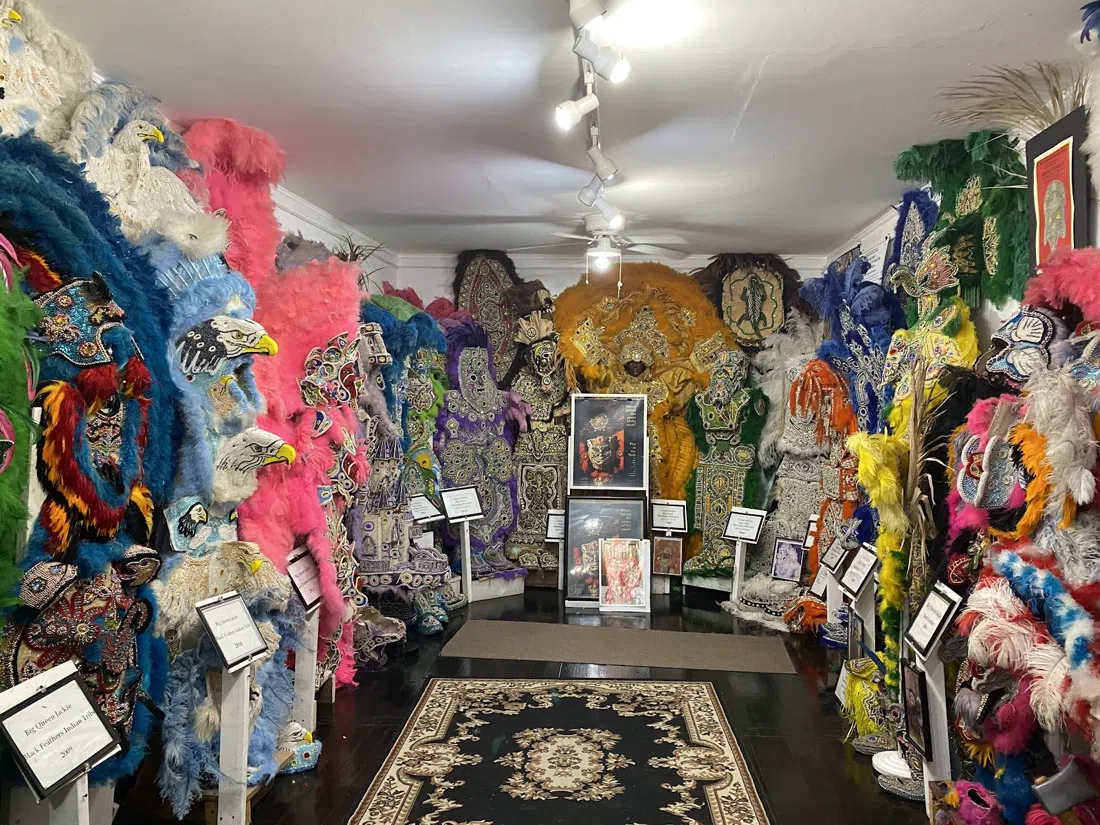
The right last stop is St. Augustine Catholic Church and the Tomb of the Unknown Slave (Tremé), the oldest African American parish in the United States, where free people of colour bought two rows of pews so enslaved people could worship. The chain cross outside is the most direct memorial in the city, it is outdoors and always visible, and it is free. This is a working parish rather than an attraction, so groups should contact the parish and keep clear of Mass times.
Is it worth it
Yes, and it is not a close call. Whitney is the only site on this stretch of river where the interpretation is not quietly organised around a house, and two hours there will reframe every other plantation you visit afterwards. It suits anyone who wants the record rather than the romance: solo travellers, couples, older teenagers, readers. It suits you less if you are hoping for a pretty morning, which this is not and does not pretend to be.
Skip it only if your day cannot accommodate the drive, or if you genuinely want gardens and dinner, in which case Houmas House Estate and Gardens (River Road, upriver) is the honest opposite: guided tours every half hour or hour, seven days a week from 9:30 a.m. to 7 p.m., roughly $29 to $40 adult, Carriage House mains $20 to $35 and a considerably pricier prix fixe at Latil's Landing. It is the only site out here that works late. Be clear with yourself that it sells the mansion, not the people who built it.
Practical notes
Transport. Drive if you can; there is no ride-hailing coverage on this stretch, so a car you arrived in is the only car that will take you home. Without one, a guided day trip with transport from the city is the sane choice, from 89 USD per person. Fuel up before you leave town.
Timing. Closed Tuesdays, last entry 3:00 p.m., guided tours hourly and first-come. Aim for a 9:30 to 10:30 arrival, allow two hours on site, and add ten minutes each way if you are pairing with the estates nearby. The River Road African American Museum runs Wednesday to Saturday only; the city-side museums cluster Thursday to Sunday. Build the week around those gaps, not the other way round.
Cash and cards. Cards are standard at ticket desks, but carry small notes for donations at the church and for the roadside butcher counters, and keep a few dollars for parking meters back in the city.
Budget. A self-driven day comes in around $25 to $32 for Whitney, another $28 if you add the guided Creole house ten minutes away, $12 to $25 for lunch and a tank of fuel. A guided day trip replaces most of that with a single per-person figure. Two city museums afterwards will run $20 to $25 each.
Beds. Stay in the city rather than out here; there is nothing resembling a hotel cluster on the River Road. Start with the New Orleans hotel search, and if you are still shaping the rest of the week, the New Orleans guide covers the neighbourhoods worth basing yourself in.
Water. Bring it. The gift shop is the only source on site, the September heat does not let up, and you will want to stand still longer than you planned.