The New Orleans issue
Swamp Boats and River Road Plantations Around New Orleans
How to get out of the French Quarter for a day, on Honey Island water and at a plantation that tells the story straight, with the timings, prices and door rules that decide whether the plan works.
By Robin de VriesThe city by streetcar line, block by block

The French Quarter measures thirteen blocks by six, and by your third morning you will have walked all of it twice. What the grid hides is how abruptly the city stops. Half an hour south of Canal Street the pavement runs out into cypress and black water, and an hour up the River Road the Mississippi runs past the sugar estates that paid for those iron balconies. Both trips fit into a single day, neither demands an early start, and both tell you more about where you are standing than another lap of Bourbon Street.
The swamp starts closer than you think
You can walk into a swamp for free. Barataria Preserve, part of Jean Lafitte National Historical Park (across the river on the West Bank, about thirty minutes from downtown) is a set of raised boardwalks over palmetto, bald cypress and slow brown water, unticketed and open to any size of group. Nobody takes your name or caps the party, so you can turn up with four people or fourteen.
Go at ten in the morning, Wednesday through Sunday, and you can join the ranger-led Wetlands Walk, the single best value in the New Orleans area: an hour with someone who can tell a water hyacinth from a duckweed mat and explain why the land here is sinking. Ten o'clock is also the last comfortable hour of a Louisiana summer morning; by noon the boardwalks are an oven with no shade and the mosquitoes have found their rhythm. Loop A of the Plantation Trail is closed for maintenance, so plan your route around the boardwalks that are open rather than arriving with a fixed loop in your head.
What Barataria will not reliably give you is alligators on demand, and it is not a boat. It is a walk. Treat it as the free version of the thing, an hour of standing still in wetland, and if that leaves you wanting the real backcountry, pay for a hull.
Plan your New Orleans trip
Live prices from our booking partners.
Free cancellation on many rooms. We may earn a commission when you book.
Choosing a boat on Honey Island
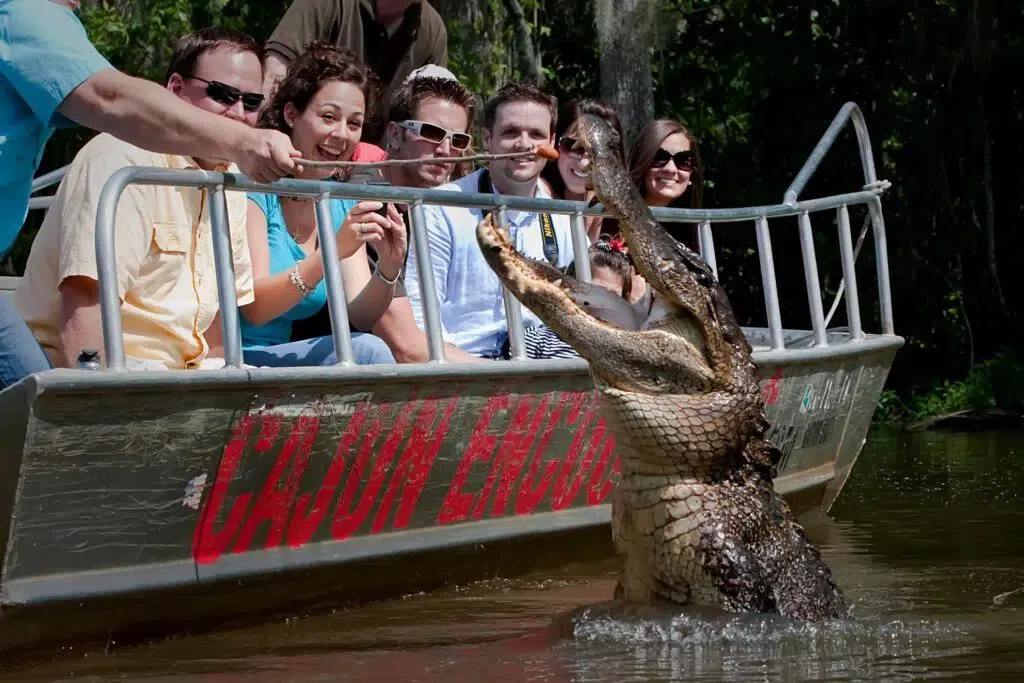
The swamp tour worth your money is Cajun Encounters Swamp Tour (dock at Slidell, on Honey Island, roughly forty-five minutes east of the Quarter). Some operators run a roadside pond behind a car park and some run genuine backcountry water. Honey Island is the second kind, and Cajun Encounters is family-run rather than a coach-fed conveyor belt.
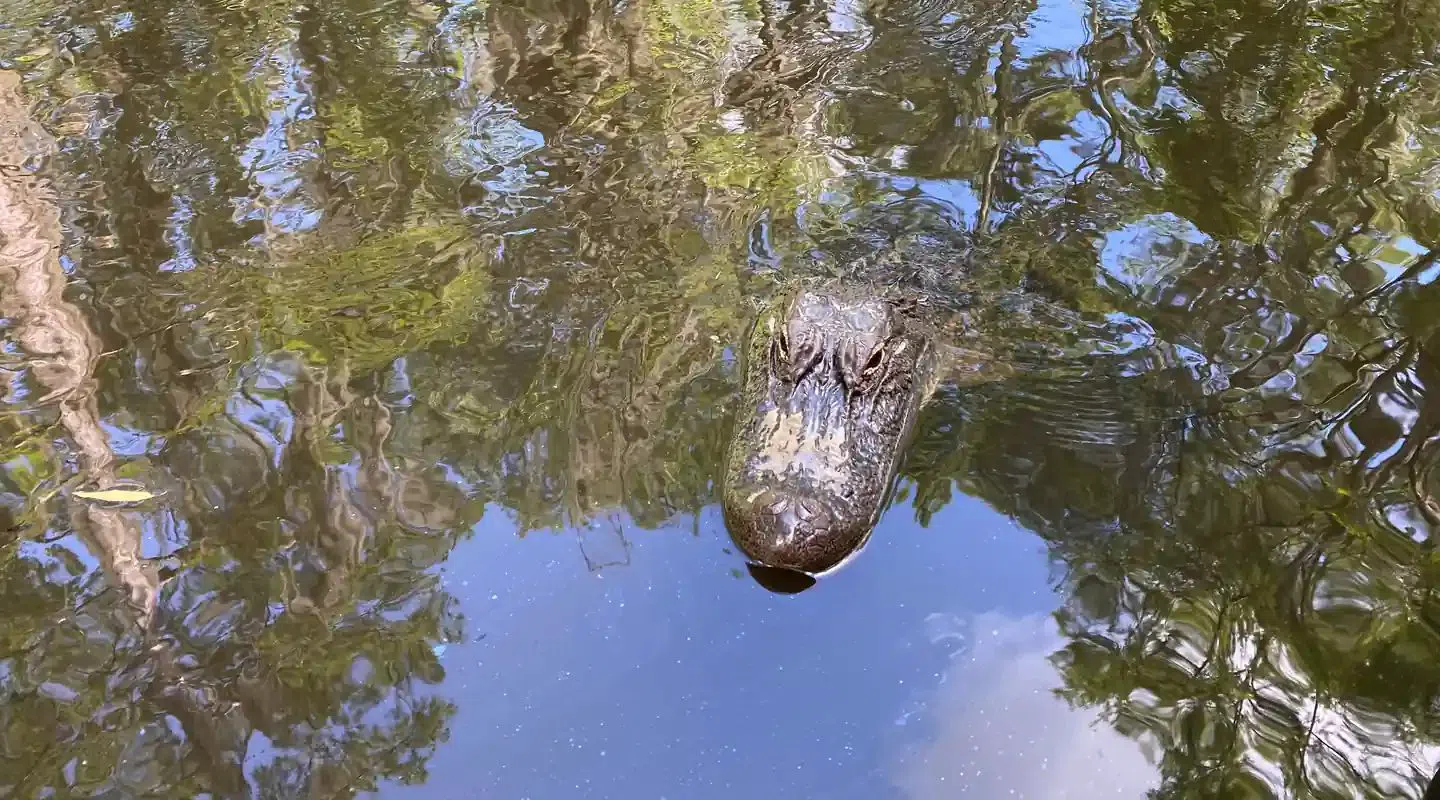
Two boats, two different days out. The Original boat carries up to 22 and costs $39.99 for about two hours on the water. That is the sociable, family-friendly option, and a group of eight or ten will all fit on one hull without splitting the party. The VIP small boat is $99.99, caps at 10 to 12 people and is 13-and-over only, which makes it the couples' choice and the photographers' choice: fewer heads in front of you, a shallower draft, and the ability to nose into narrower cuts. If you are two people who want quiet water, pay the difference. If you are a family with a nine-year-old, you cannot, and the Original boat is genuinely fine.
Alligator sightings peak March through October, and in warm weather ten to twenty-plus per trip is normal rather than a brochure promise. In the cold months the animals are torpid and largely invisible, so a December swamp tour is a bird-and-cypress trip, still worth doing, but adjust what you are expecting. Whatever the season, take the 5pm departure if it is offered: the light is better, the heat has broken, and you are back in town in time for a late dinner.
If you have no car, hotel pickup from the French Quarter is bookable as an add-on, and it is the one thing that makes the trip painless. Book it when you book the seat rather than trying to arrange a rideshare to a dock in Slidell at seven in the morning.
What a plantation visit is actually for
The River Road runs west out of the city along the Mississippi, and it is lined with big houses. Most of them sell you an antebellum garden party: oak allées, hoop skirts, a wedding marquee round the back. You can skip all of that.
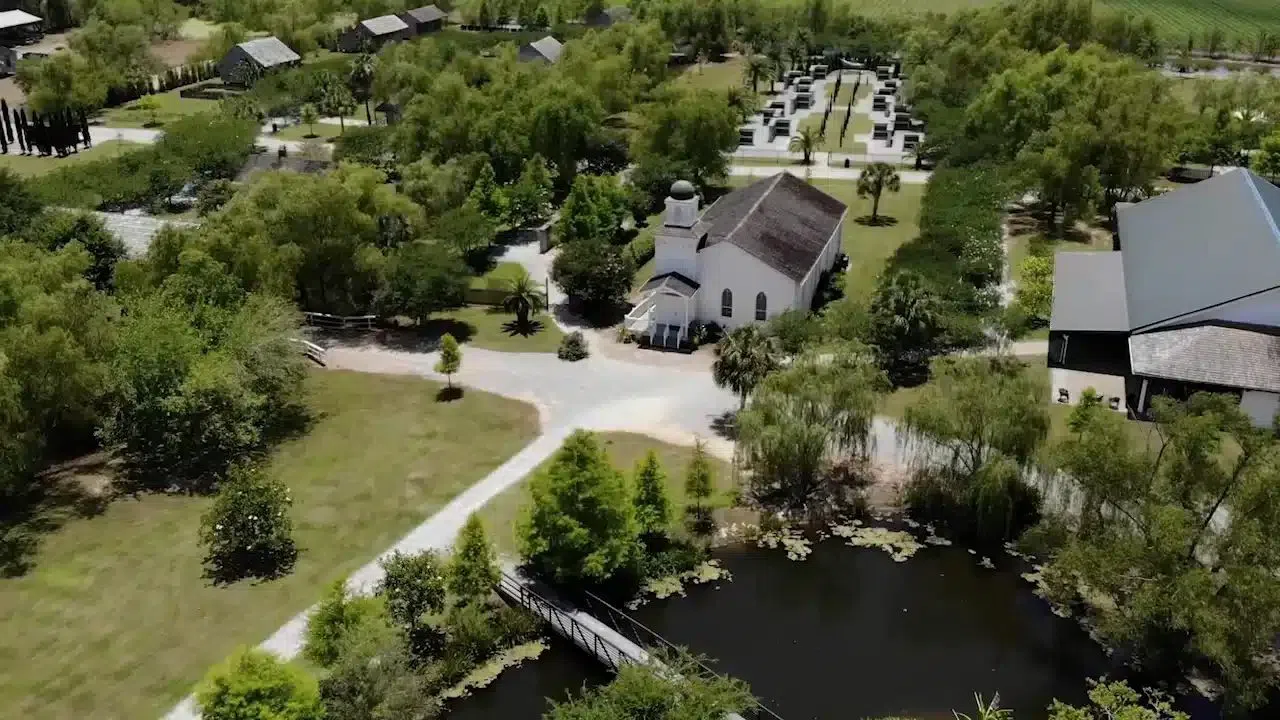
Whitney Plantation (River Road, roughly an hour up the west bank) is the only major Louisiana plantation told entirely from the point of view of the enslaved people who worked it, covering 1752 to 1865. That is the whole reason to spend a day on the River Road rather than a morning in the Garden District. It is $25 for adult self-guided audio and $32 for an adult guided tour, under-sixes free, and you should allow two hours minimum. People who budget an hour end up rushing the memorial walls, which are the part that stays with you. It is closed on Tuesdays and last entry is 3pm, so this is a morning departure, not an afternoon whim. Large-group tours for 20 to 50 are booked online in advance and the museum takes them seriously; it does not take weddings or private parties, and given the subject matter, that refusal tells you how the place is run.
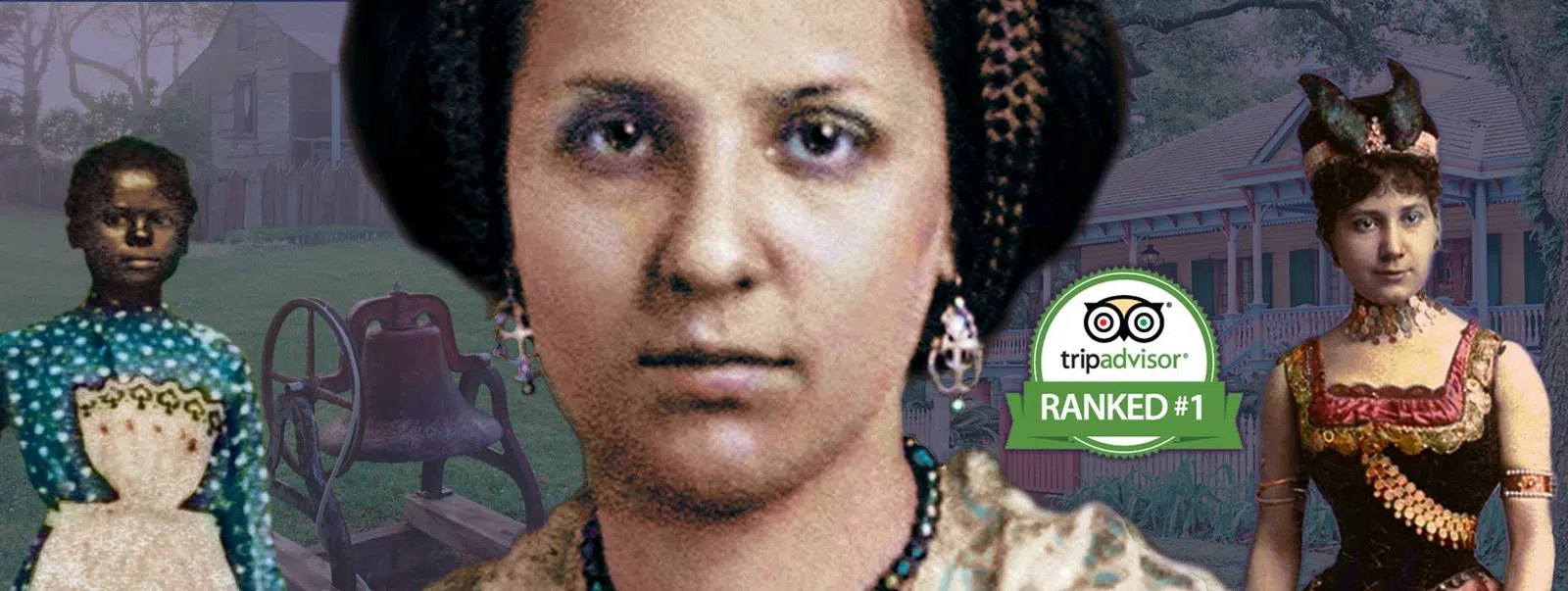
Laura Plantation (River Road, a short drive on from Whitney) is the Creole counterweight, a working sugar estate documented through an unusual survival of family papers, with a museum exhibit that deals with both the free and the enslaved households. It runs about $28 to $35 for an adult guided tour, and tours leave roughly every forty minutes from 10am, which means walk-ups are usually absorbed even in high season. There is a dedicated groups desk for coach and school parties, so if you are moving thirty people this is the easier of the two to slot in.
If you only have one day for the River Road, do both. They are close enough to pair, and the pairing is the point: Whitney gives you the ledger of the labour, Laura gives you the family that kept the ledger, and neither is complete without the other. If you only have half a day, take Whitney. It is the harder visit and the more honest one, and two hours there will reframe the rest of your week in New Orleans.
Days when the heat wins
Between roughly June and September the middle of the day outdoors is not a plan, and any sensible itinerary keeps two or three indoor days in reserve. Plan the swamp and the River Road for the cooler mornings and put the following in the afternoons.
The National WWII Museum (Warehouse District) is the heavyweight: around $35 to $40 for adult admission with add-ons priced separately, open seven days, and easily half a day if you are the sort who reads the captions. The second-day pass is worth buying up front, because almost nobody finishes it in one visit. Groups of ten or more get a rate at both the museum and BB's Stage Door Canteen, with one leader paying 72 hours ahead and checking the party in at the door, so nominate that person before you arrive. It closes on Mardi Gras Day, Thanksgiving, Christmas Eve and Christmas.

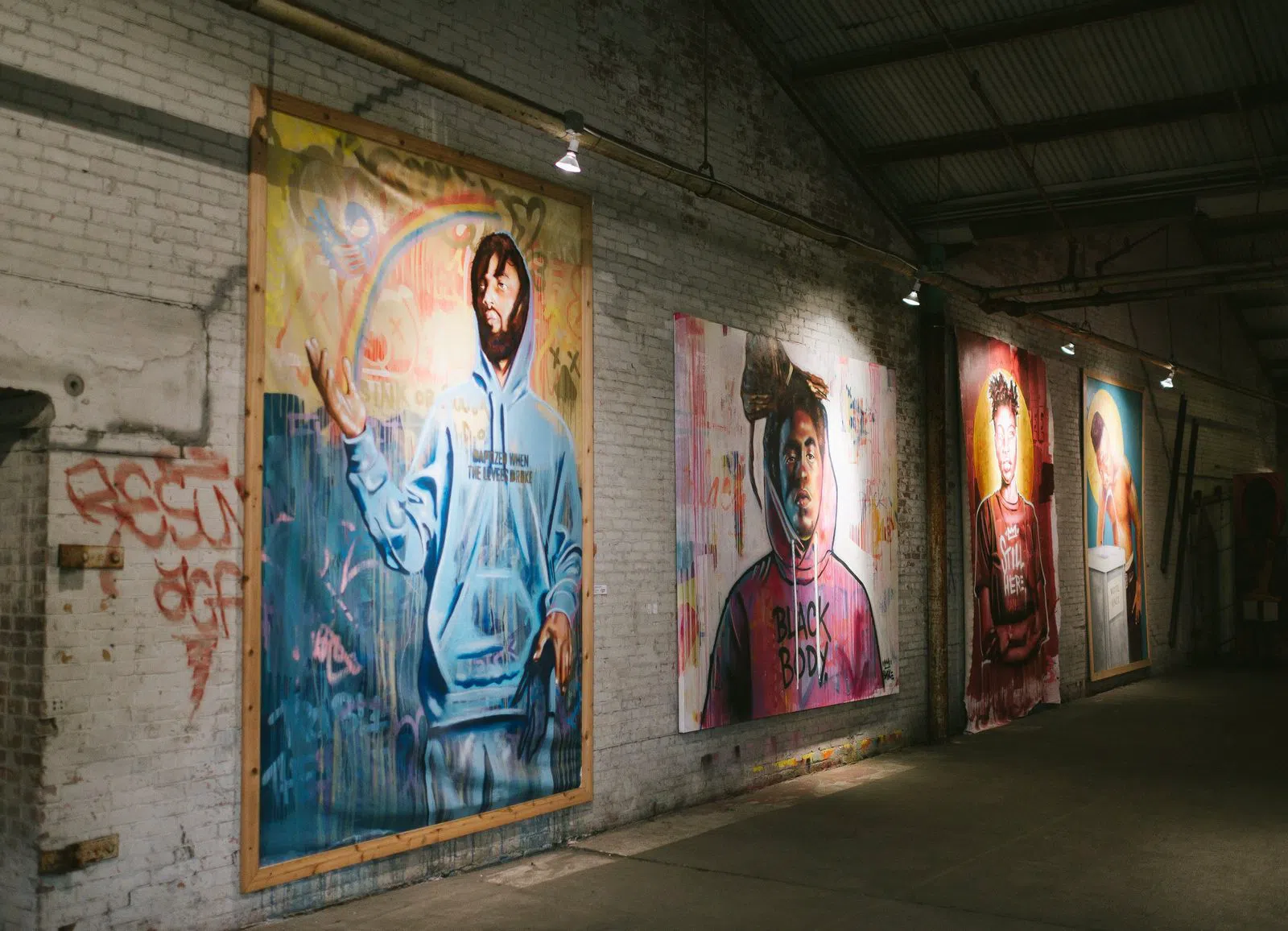
Studio Be (Bywater) is a warehouse of murals by Brandan 'BMike' Odums on resistance and Black New Orleans history, and it is the best hour in the Bywater: dark, cool and enormous. It is $15 for adults, $10 concessions, $5 for under-12s, walk-in ticketed, and the volume of the building means groups fit without trouble, though anything genuinely large is best emailed ahead. It is closed Monday and Tuesday, which catches people out.
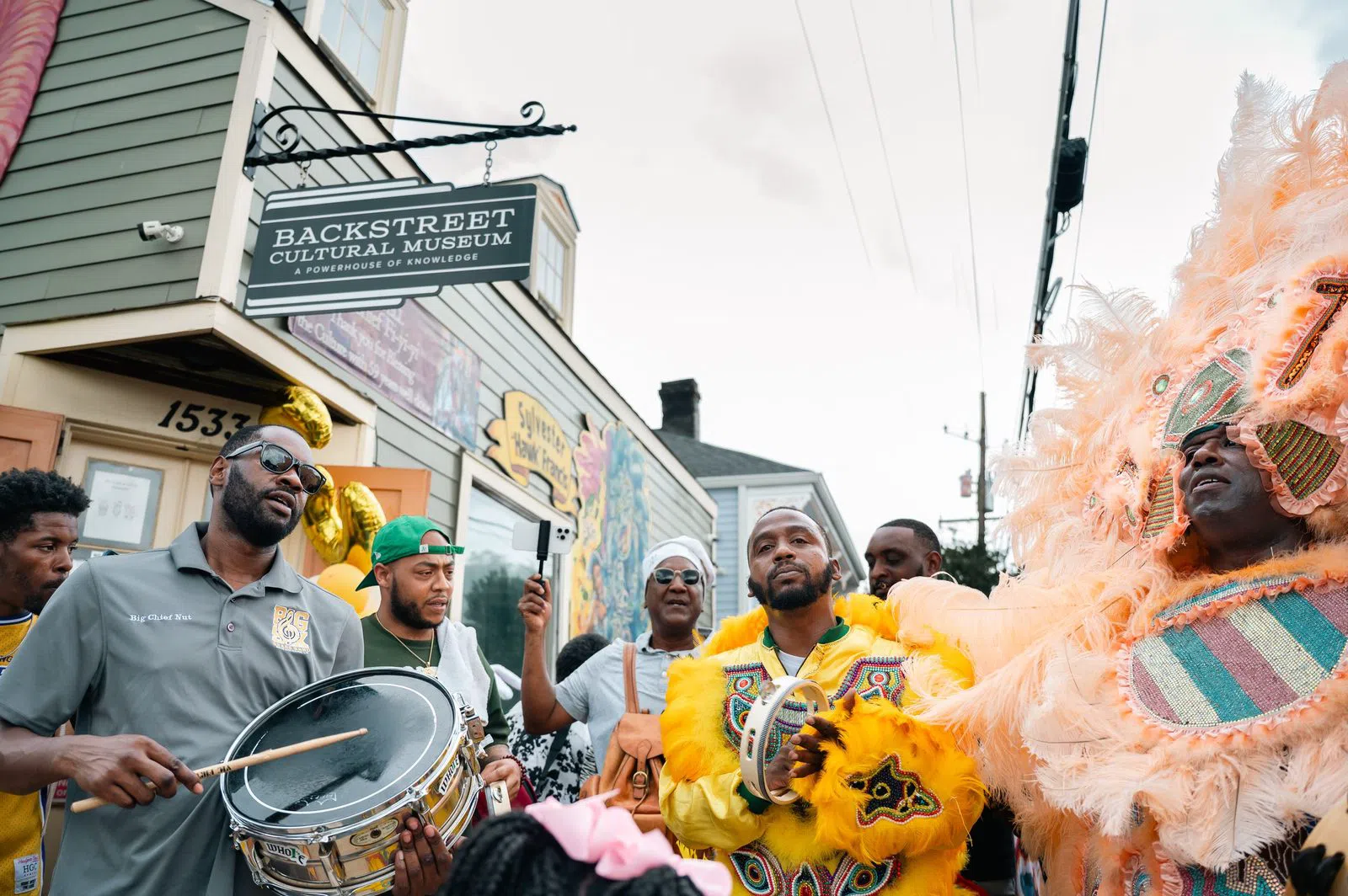
The Backstreet Cultural Museum (Tremé) is the opposite scale, a few small rooms holding Mardi Gras Indian suits, jazz funeral and second line material, run by the community that makes them. After Hurricane Ida wrecked the old St Claude building it now sits at 1531 St Philip Street. It runs about $10 to $15 and is open Tuesday to Saturday, closed Sunday and Monday. Go in a party of a handful; the rooms physically cannot take a coach, and if you are more than five or six, call ahead rather than turning up and filling the place.
The Sydney and Walda Besthoff Sculpture Garden at NOMA (City Park) is free, open seven days, and holds ninety-odd sculptures under deep oak shade beside the art museum, shade being the operative word. Free guided tours run every Sunday with no registration, so a group can simply arrive. Summer hours are 10am to 6pm, dropping to 5pm from 1 October. Gallery admission to NOMA itself is separate and optional.

Two dollars on the river
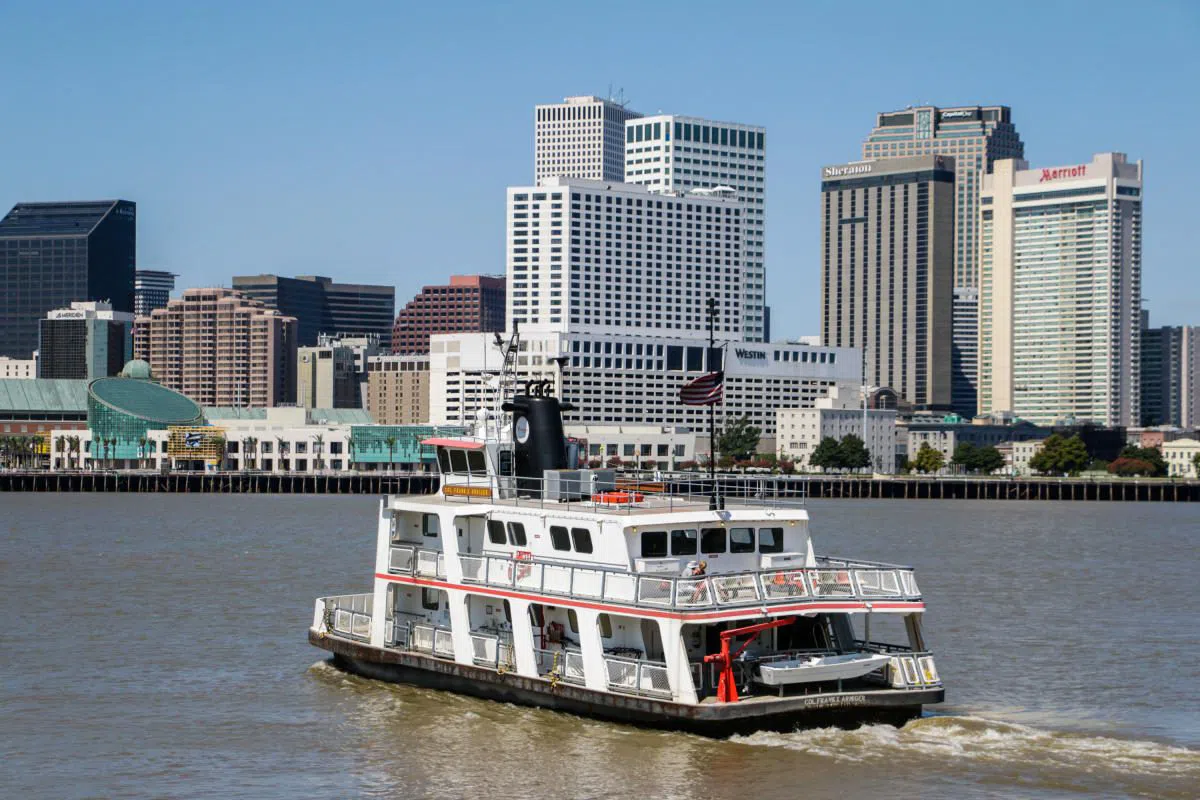
The cheapest good hour in New Orleans is the Algiers Point–Canal Street Ferry. Two dollars each way, pedestrians only, no booking, any size group walks straight on, and it is cash only with no change given, so carry singles. It buys you the best skyline view in the city, a breeze that exists nowhere on land in August, and a landing at Algiers Point, a quiet grid of nineteenth-century Creole cottages with a couple of good bars in it. Watch the return: the last boat from Canal Street is 8.45pm Sunday to Thursday and 10.45pm Friday and Saturday.
On the same theme of free river, Crescent Park (between the Marigny and the Bywater) is a mile and a half of reclaimed wharf, open 6am to 7.30pm daily. Walk it at dawn or in the hour before sunset and it is the best river view you can get on foot; walk it at two in the afternoon and you will regret it, because there is almost no shade on the wharf. It pairs naturally with Studio Be for a Bywater half-day.

Where to eat around the day trips
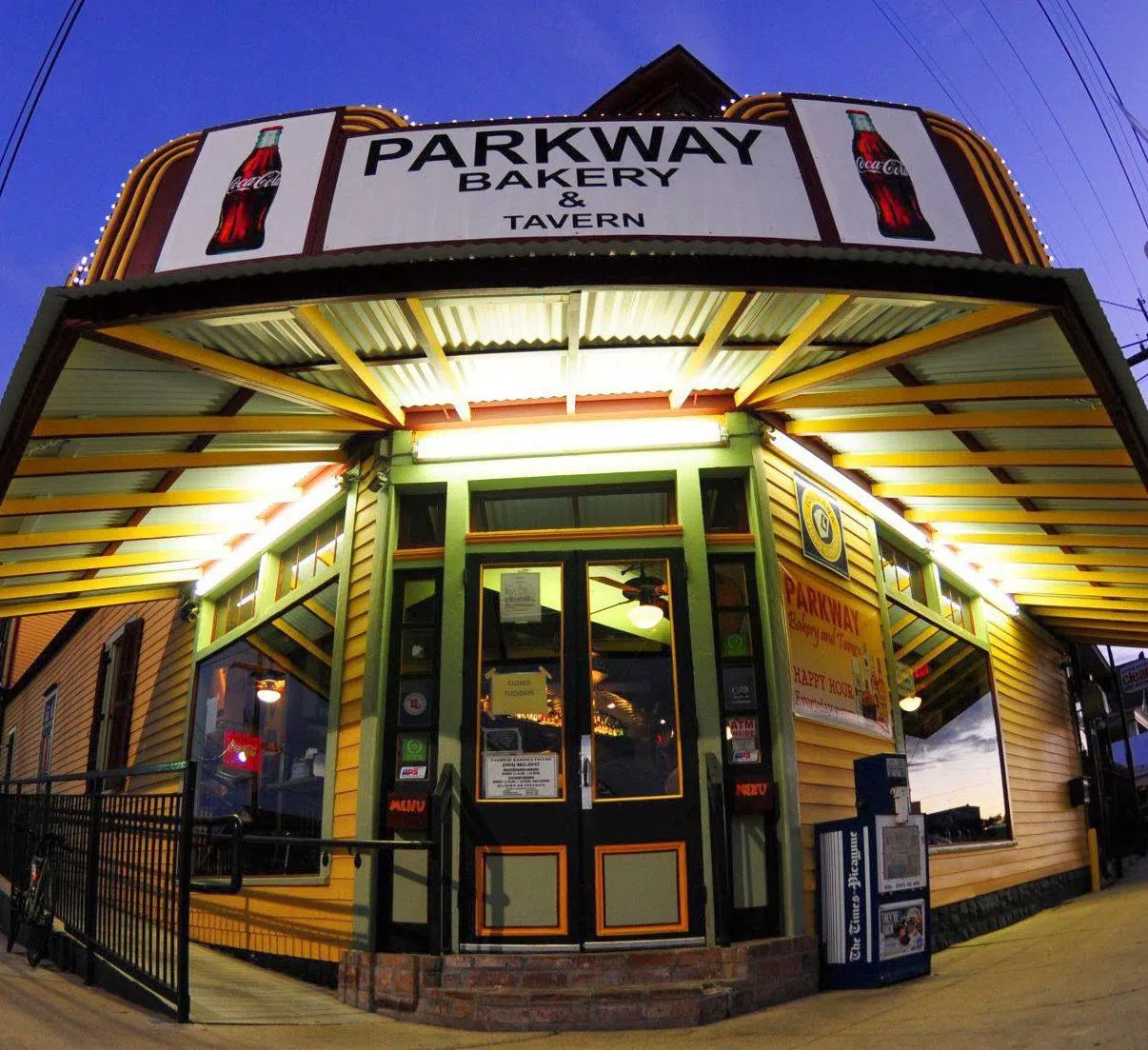
After a morning on the water you want a po-boy, and Parkway Bakery & Tavern (Mid-City, a short walk from City Park and the bayou) makes the roast beef and gravy against which every other one in the city is judged, at $12 to $20 a sandwich. It is counter service with a big tavern room and outdoor tables, so a group is fine but should expect to queue and then split across two tables. It is open Wednesday to Sunday, 10am to 6pm, and closed Monday and Tuesday, a genuine trap for anyone arriving on a Monday with a plan.
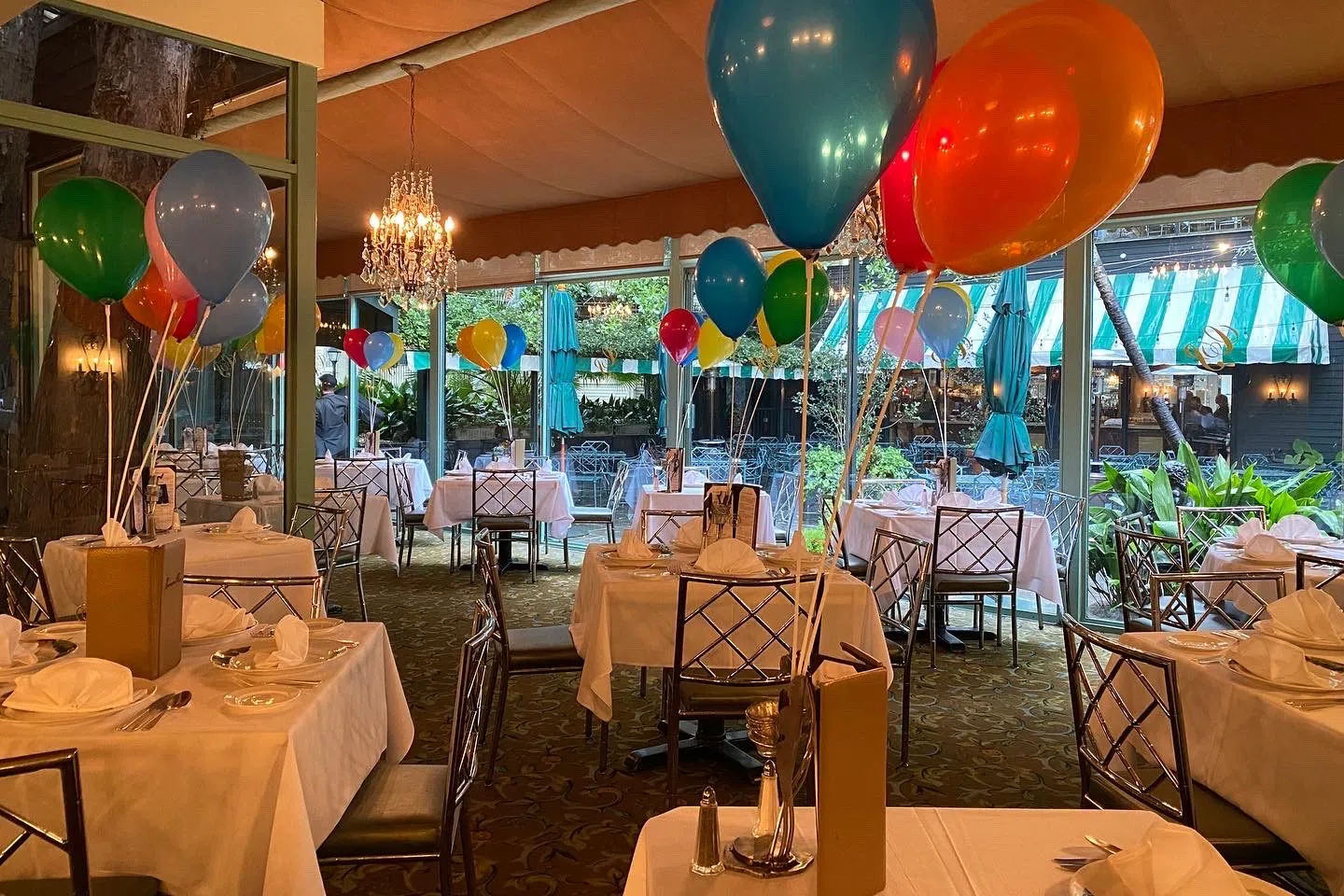
For the proper meal, Commander's Palace (Garden District) remains the benchmark for Creole cooking and takes private parties and large tables. Book through Resy: weekday lunch is often available within the week, weekend dinner runs two to four weeks out. Go at lunch, Wednesday to Friday, for the relaxed dress code, the three-course turtle soup, quail and bread pudding soufflé menu at roughly $45 to $60 a head, and the 25¢ martinis. Dinner is $90 to $150 a head and expects a jacket-ish standard, meaning collared shirts, closed shoes and no shorts, which is worth knowing before you pack for a swamp holiday. Nearby beds are easy to compare through New Orleans hotel search if you want to stay Uptown rather than in the Quarter.
Evenings away from Bourbon Street
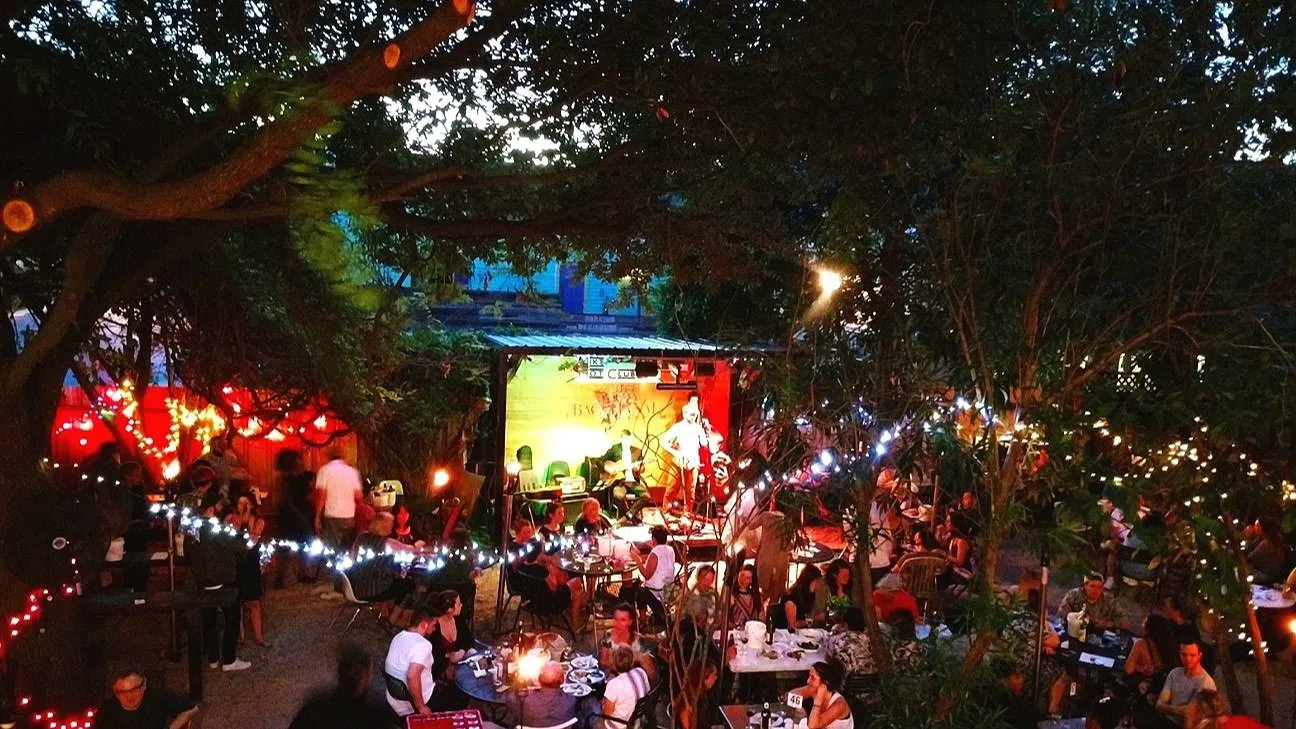
Bacchanal Wine (Bywater) is a wine shop with a backyard attached, live music seven nights, no door policy at all: you choose a bottle inside and find space in the yard. Bottles start around $30 and plates run about $20. A big group is comfortable on a weeknight and hopeless on a Friday or Saturday, when the yard fills early. It opens at 5pm daily, to 11pm on Friday and Saturday.
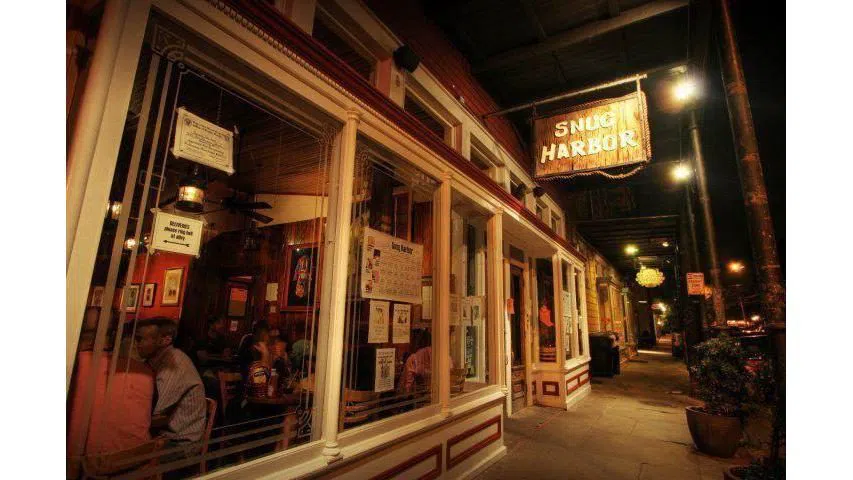
Snug Harbor Jazz Bistro (Frenchmen Street, Marigny) is the serious listening room, seated, ticketed and quiet, with sets at 7.30pm and 9.30pm seven nights and tickets around $30 to $45 plus dinner. Because it is seated, groups must book; advance ticket-holders can reserve a dinner table through OpenTable, and the balcony is the right call for parties of six or more. Go here instead of standing three-deep in a bar and shouting.
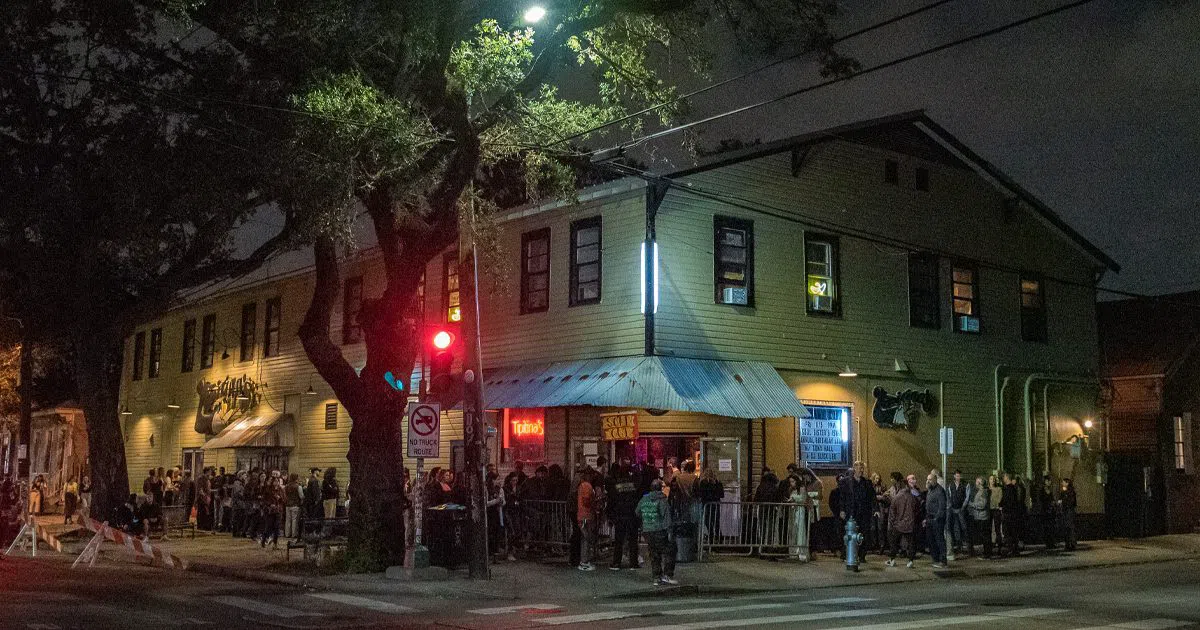
Tipitina's (Uptown) is where New Orleans funk still actually lives: band-owned, general admission, standing room, $20 to $50 a show, roughly thirty shows a season. There is no group policy to speak of, so buy tickets ahead for anything with a name attached, and check the calendar before you commit an evening, because the room is dark on nights with no booking.
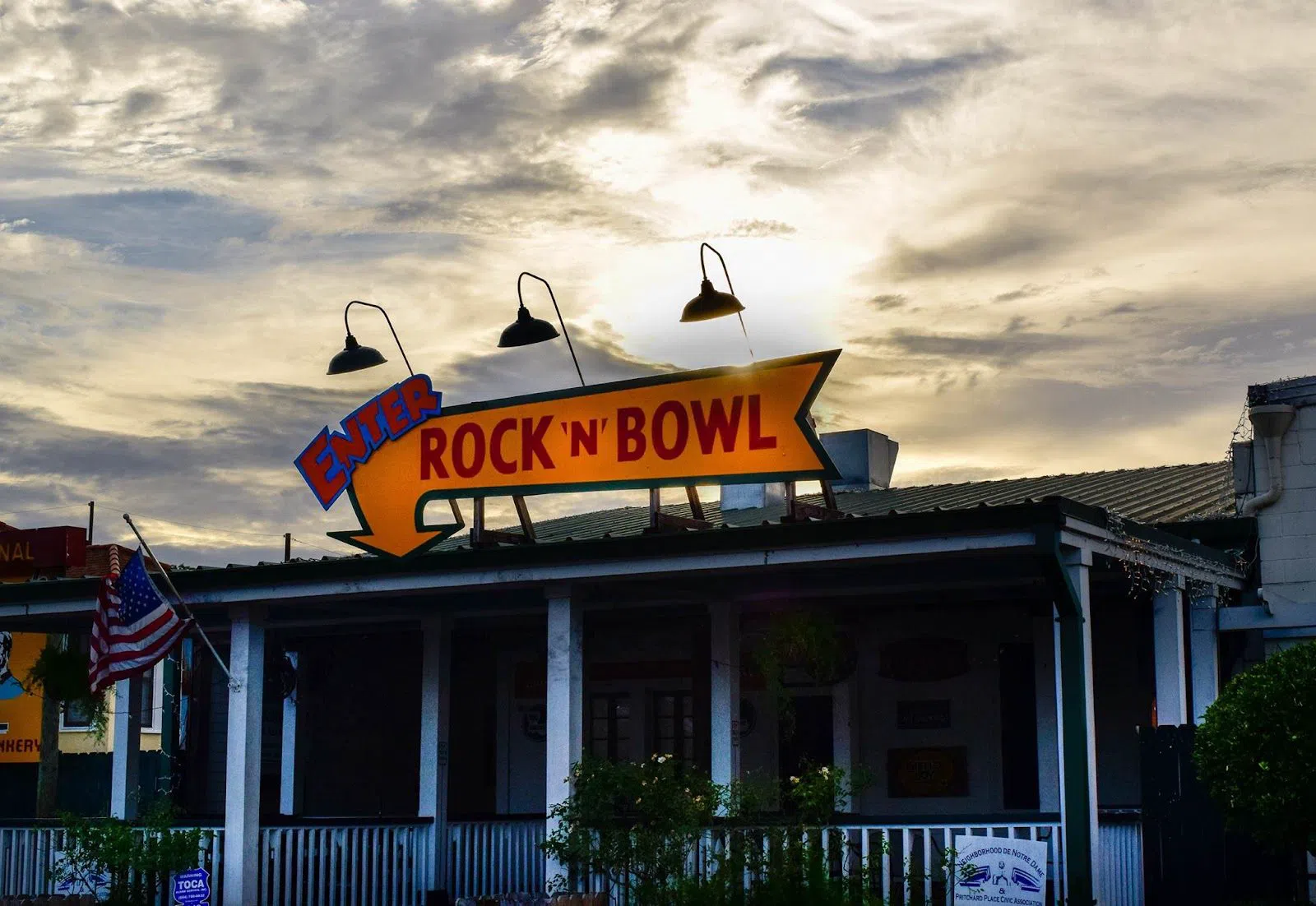
Rock 'n' Bowl (Mid-City, on South Carrollton) is the best group venue in the city: bowling, live zydeco and locals who can genuinely dance, all under one roof, with lanes bookable for parties and an event space for private hire. Cover runs $10 to $20 plus lane hire. Thursday zydeco night is the reason to go. It is closed Sunday and Monday.
Getting around, paying and timing it
The swamp and the River Road both need wheels. Barataria and the plantations have no useful public transport, so it is a hire car, a rideshare each way, or a tour with pickup, and for Cajun Encounters the French Quarter hotel pickup add-on is the cheapest way to avoid the problem entirely. Inside the city the streetcar and short rideshares cover everything above, and the ferry is walkable from the Quarter.
Carry cash. The ferry takes cash only and gives no change; small notes also make life easier at bar doors and lane hire. Everything else here takes cards.
Build the week around closures rather than fighting them: Whitney is shut Tuesdays, Studio Be Mondays and Tuesdays, Backstreet Sundays and Mondays, Parkway Mondays and Tuesdays, Rock 'n' Bowl Sundays and Mondays. Whitney's 3pm last entry and Crescent Park's 7.30pm gate are the two hard stops most likely to catch you out.
On budget, a realistic day out of the Quarter is $40 to $100 for the boat, $25 to $67 for one or both plantations, and $12 to $20 for lunch, so call it $100 to $180 a head for a full swamp-and-River-Road day including transport. The free half is genuinely free: Barataria, the sculpture garden, Crescent Park, and $4 return on the river. For the rest of the city, from where to stay to what to eat, start with the New Orleans guide.
One last piece of timing. In high summer, treat the middle of the day as unusable and stack the outdoors at either end: swamp at 5pm, River Road before noon, museums and the sculpture garden's oak shade in between. Plan it that way and the heat becomes a scheduling problem rather than a reason to stay in a bar on Bourbon Street.
Before you go
Can you do a swamp tour and a plantation visit on the same day?
It is tight but possible if you drive. Whitney Plantation has a 3pm last entry and needs two hours minimum, so do the River Road in the morning, then take the 5pm departure from the Cajun Encounters dock at Slidell. That boat runs about two hours. If you would rather not spend the day in a car, split them across two mornings instead.
Do you need a car to see the swamp and the plantations?
For Barataria Preserve and the River Road, effectively yes: a hire car or a rideshare each way, as there is no useful public transport to either. The exception is Cajun Encounters, which sells hotel pickup from the French Quarter as an add-on; book it at the same time as the seat.
Whitney or Laura if there is only time for one plantation?
Whitney. It is the only major Louisiana plantation told entirely from the point of view of the enslaved, covering 1752 to 1865, and that is what makes the drive worth it. Laura is the Creole counterweight, with the family papers and a free-and-enslaved exhibit, and the pairing is better than either alone. Whitney is the one that changes how you read the rest of your trip.
When are you most likely to see alligators on a swamp tour?
March through October. In warm weather ten to twenty-plus sightings on a single Honey Island trip is normal. In the cold months the animals are torpid and largely out of sight, so a winter tour becomes a birds and cypress trip, still worth doing but a different day out.
What is worth doing when it is too hot to be outdoors?
The National WWII Museum in the Warehouse District is open seven days and easily half a day, with a second-day pass worth buying up front. Studio Be in the Bywater is a dark, air-conditioned warehouse of murals, and the Besthoff Sculpture Garden at NOMA in City Park is free and sits under deep oak shade. Studio Be shuts Monday and Tuesday, so check closures before you go.