
In September the French Quarter belongs to the people who live in it. The barricades are stacked in a yard somewhere, nobody is holding a spot on Canal Street with a stepladder, and the flagstones give the afternoon heat back at you until the evening storm knocks it down. Carnival is still here, just folded away in museums, in a float den upriver, and in the quiet shops where next February's costume is already being built.
Carnival is a season, and September sits outside it
The mistake visitors make is treating Carnival as a single Tuesday. In New Orleans it is a season. It opens on Twelfth Night, 6 January, and ends at midnight on Mardi Gras, 9 February in 2027. Everything people picture happens inside that window: the hand-drawn satire parade through the Quarter on Saturday 23 January 2027, the Greasing of the Poles on Friday 5 February 2027, the costumed walking procession and the big floats on Canal Street on 9 February 2027.
September is the off-season, flatly. There is no parade, no throw, no crowd in costume, and any article that tells you otherwise is selling you something. What September gives you instead is unhurried access: the collections empty, the guides willing to talk, room rates at their lowest of the year, and a chance to walk the routes slowly enough to understand why they run where they do. Decide which of those two trips you actually want before you book flights.
The room that explains everything is shut until October
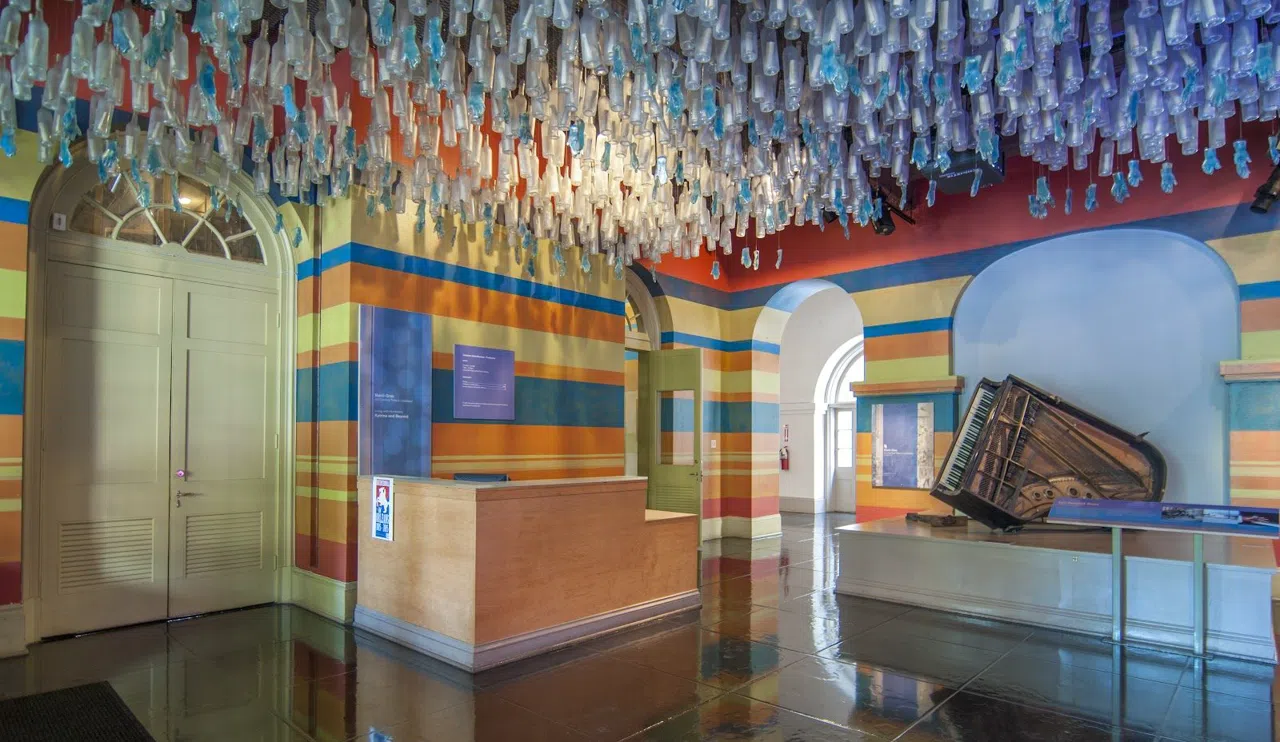
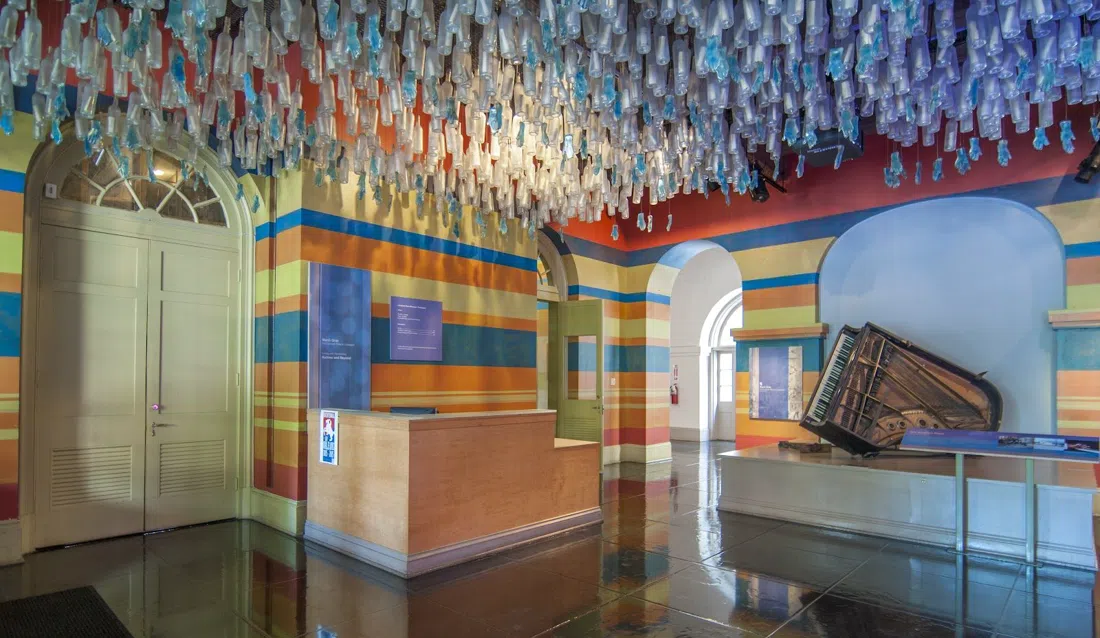
The Presbytère (Jackson Square, French Quarter) is the one place that lays the whole thing out in an air-conditioned hour: float construction, krewe hierarchy, Black masking, and the rural chicken-chase Mardi Gras that looks nothing like Bourbon Street. It is the first stop you should make and, for a September 2026 trip, the one you cannot make. It is closed for building upgrades from 27 July to 30 September 2026 and reopens in October, well ahead of the 2027 season.
Plan around it rather than turning up hopeful. If your dates run into the first days of October you get it back, and tickets are $15 for adults, $13 for Louisiana residents, $2 off for seniors, military and students, free under six. Group reservations are accepted for parties of 50 or fewer, 15 or more take $1.50 off a head, and anything larger has to split and enter in staggered slots.
Two costume collections, one of them free
Mardi Gras Museum of Costumes & Culture (French Quarter) is the hands-on counterweight: you wear the costumes rather than read about them, for $15 general admission. The hours are the problem, not the price. It opens in a four-hour window, noon to 4pm, and closes Tuesday and Wednesday, which trips up more visitors than anything else on this list. Put it in your calendar before you build the rest of the day around it. The whole venue can also be rented for private events and parties.
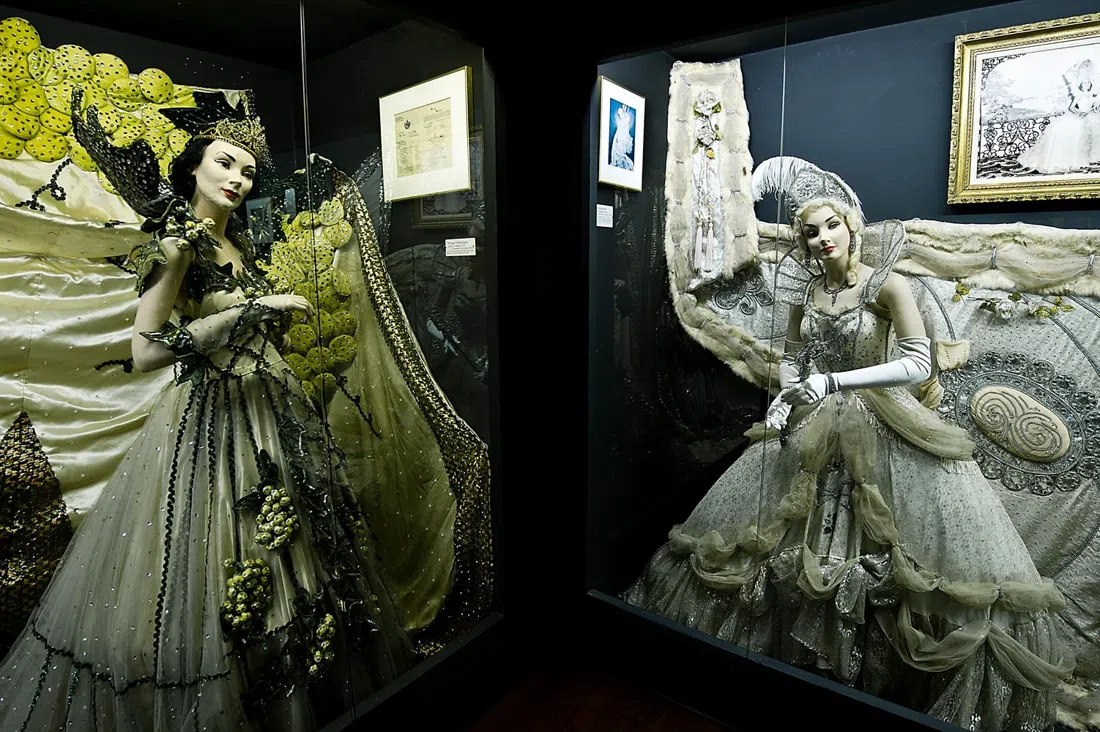
Arnaud's Germaine Wells Mardi Gras Museum (French Quarter) sits upstairs above the restaurant's dining rooms and costs nothing. More than two dozen real Carnival court costumes worn by one family, arranged along a landing, with almost nobody up there with you. There is no ticket and no booking; you walk up. The constraint is that it is only open during Arnaud's service hours: Monday to Saturday evenings, Friday lunch, and Sunday jazz brunch. A handful of people at a time is comfortable. The landing is narrow, so a larger party should either eat downstairs, where prices are fine-dining, or call ahead.
Over Rampart Street for the Carnival the Quarter doesn't show you
Backstreet Cultural Museum (Tremé) is a five-minute walk over Rampart and the most important room in this piece. It is the only place that properly explains Black Masking Indians, second lines and Baby Dolls, and it does it in the community's own voice rather than a curator's. Adult tickets run roughly $10 to $25 depending on ticket type; confirm at the door. The rooms are modest, so small groups are fine as they are, but call 504-657-6700 for anything over about ten and a guide will talk you through it.
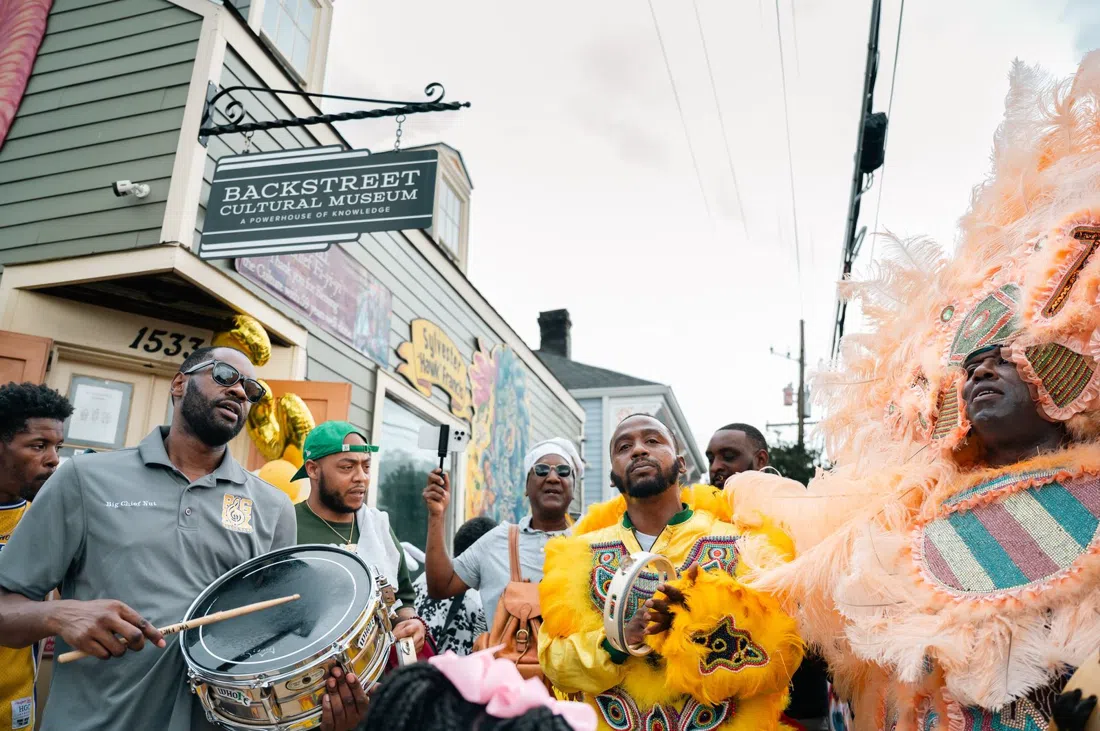
If you are here in early October rather than September, do this and the Presbytère on the same day. They are the two halves of the same story, and most visitors only ever see one.
The float den upriver
Mardi Gras World (1380 Port of New Orleans Place, a short ride upriver from the Quarter) is the year-round Carnival fix, and September may be its best month: the floats are mid-build for the coming season, so you see the papier-mâché, the armatures and the paint rather than a finished parade. Tours run every 30 minutes, 9:30am to 4:30pm daily, and take about an hour, covering a 15-minute film, the working den itself, a costume try-on and a slice of king cake. From about $29.95 an adult, king cake included.
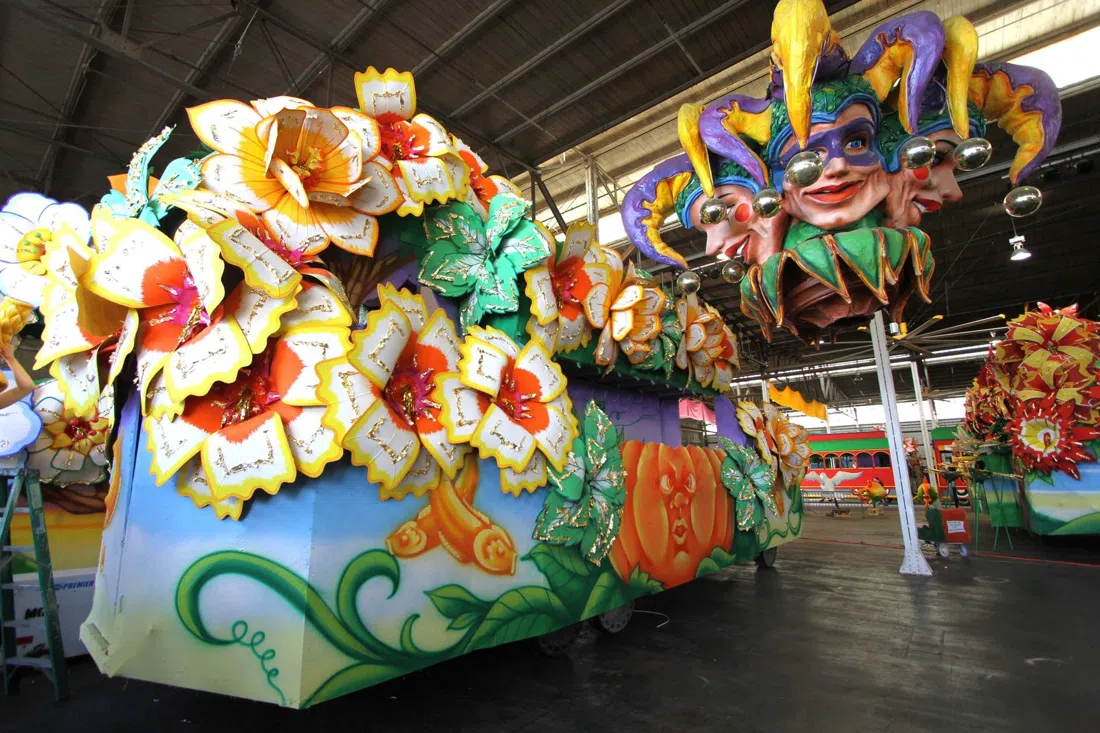
It is built for groups in a way nothing else here is: special rates for 20 or more, parties up to 75 bookable online, larger numbers through the sales team, and add-on mask-making and float-building workshops. One practical catch: the free downtown shuttle does not cover group bookings, so if you are travelling as a group, sort your own transport before you arrive.
Walking the routes with nothing on them
This is the September pleasure nobody advertises. Walk the ground while it is empty and the geography of Carnival makes sense.
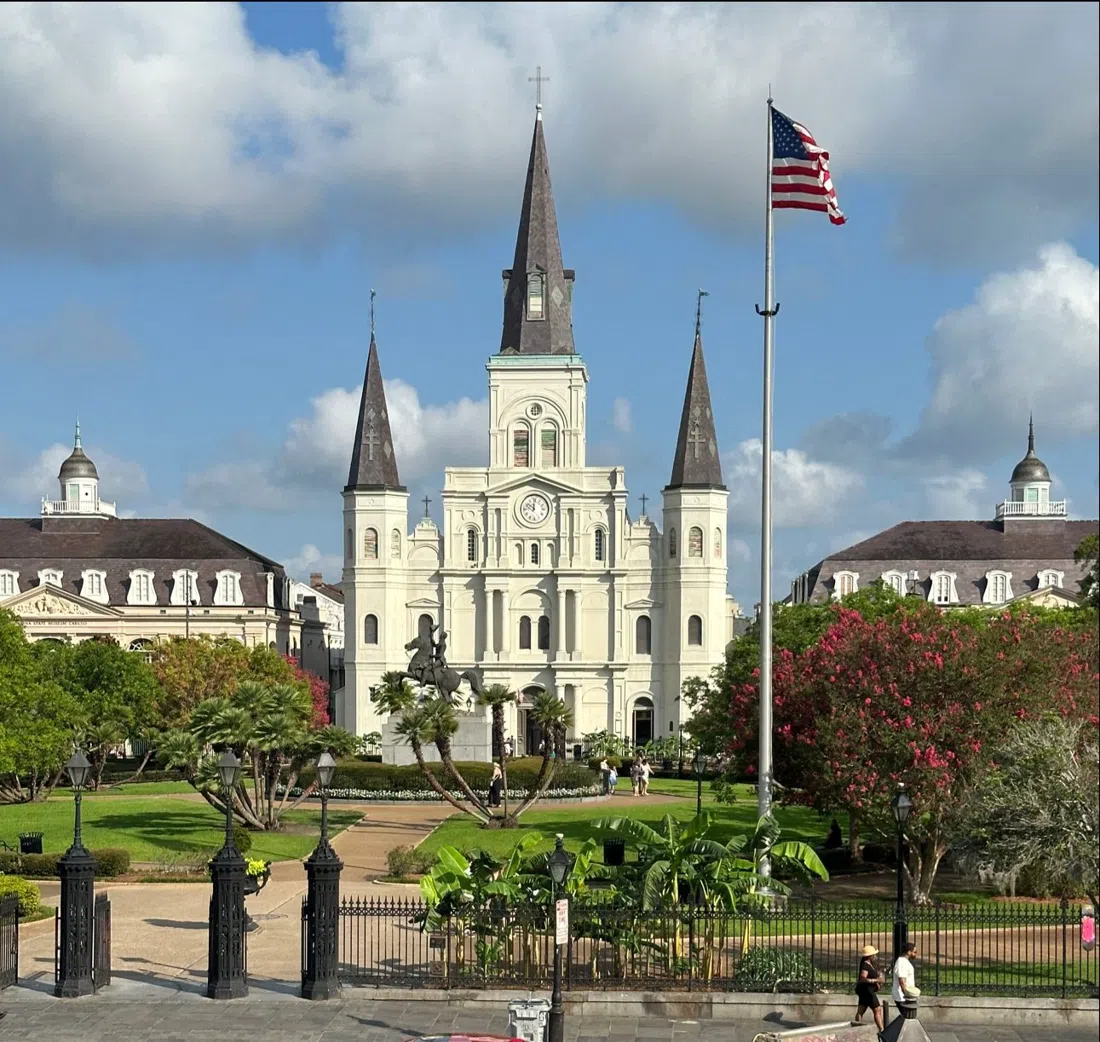
Jackson Square (French Quarter) is the Quarter's natural meeting point and, on Fat Tuesday, the best free costume-watching spot in the city. The inner garden gates open around 8am and close about 6pm in winter; the flagstones around it never shut. Stand there in September and you can see exactly where you would want to be in February.
Canal Street (the wide boulevard at the Quarter's edge, two minutes from Bourbon) is where the big parades actually pass. Large floats have been banned inside the Quarter since the early 1970s on fire and crowd-safety grounds, which is why the famous krewes roll down Canal on Mardi Gras Day, 9 February 2027. Standing room on the neutral ground is free for any number of people; ticketed grandstand seating exists separately if you want a guaranteed spot.
Krewe du Vieux (rolls from Marigny) is the exception, the one full parade still allowed through the Quarter's narrow streets, hand-drawn, live brass only, and famously filthy in its satire. It rolls Saturday 23 January 2027 at 6:30pm. Watching is free anywhere on the route, riding is members-only, and the associated ball is separately ticketed. It is not a children's outing, and the locals are not joking when they say so.
Société de Sainte Anne (leaves the Bywater) is Fat Tuesday's most beautiful sight and the moment the Quarter belongs to residents again. It sets off around 10am on 9 February 2027 and drifts through Marigny and the Quarter toward Canal Street. Anyone in costume can fall in behind it: no tickets, no registration, no barriers, groups simply join on the route. Turn up plainly dressed and you will feel like the only one there, which is the most useful thing anyone can tell you before a first Mardi Gras.
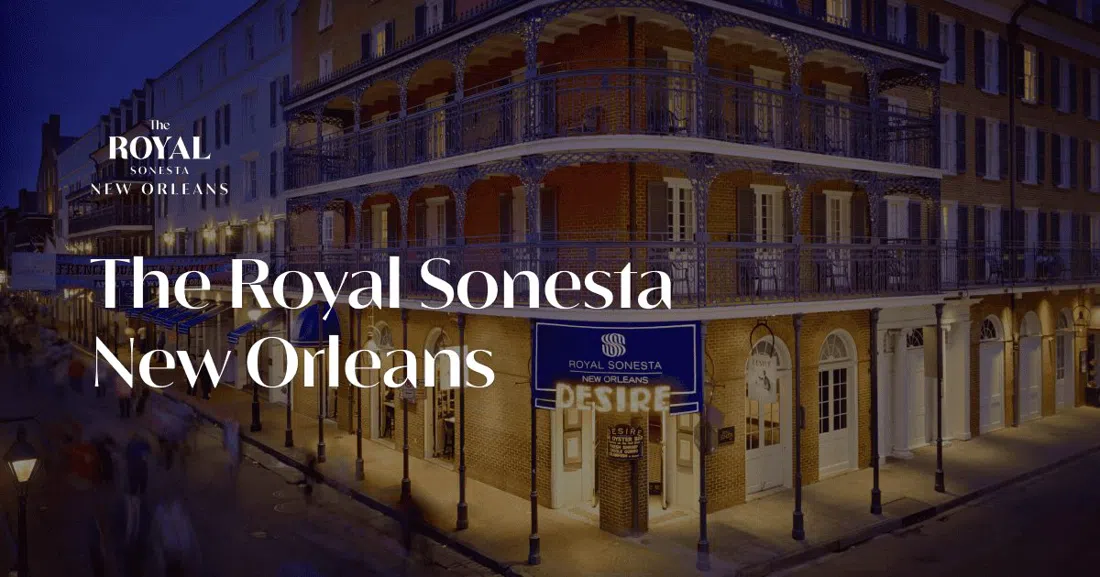
The Royal Sonesta New Orleans (Bourbon Street) is the realistic way to get a legitimate balcony rather than crowd-surfing the pavement below it. Bourbon Balcony Suites are reserved for private parties through the sales department, availability is tightest around Carnival, and those suites carry a significant premium then. The hotel also hosts the long-running Greasing of the Poles on the Friday before Mardi Gras, 5 February 2027. In September you can stand underneath and judge the sightlines yourself, then compare what the street costs across a New Orleans hotel search before committing to a February rate.
Buying next February's costume in September
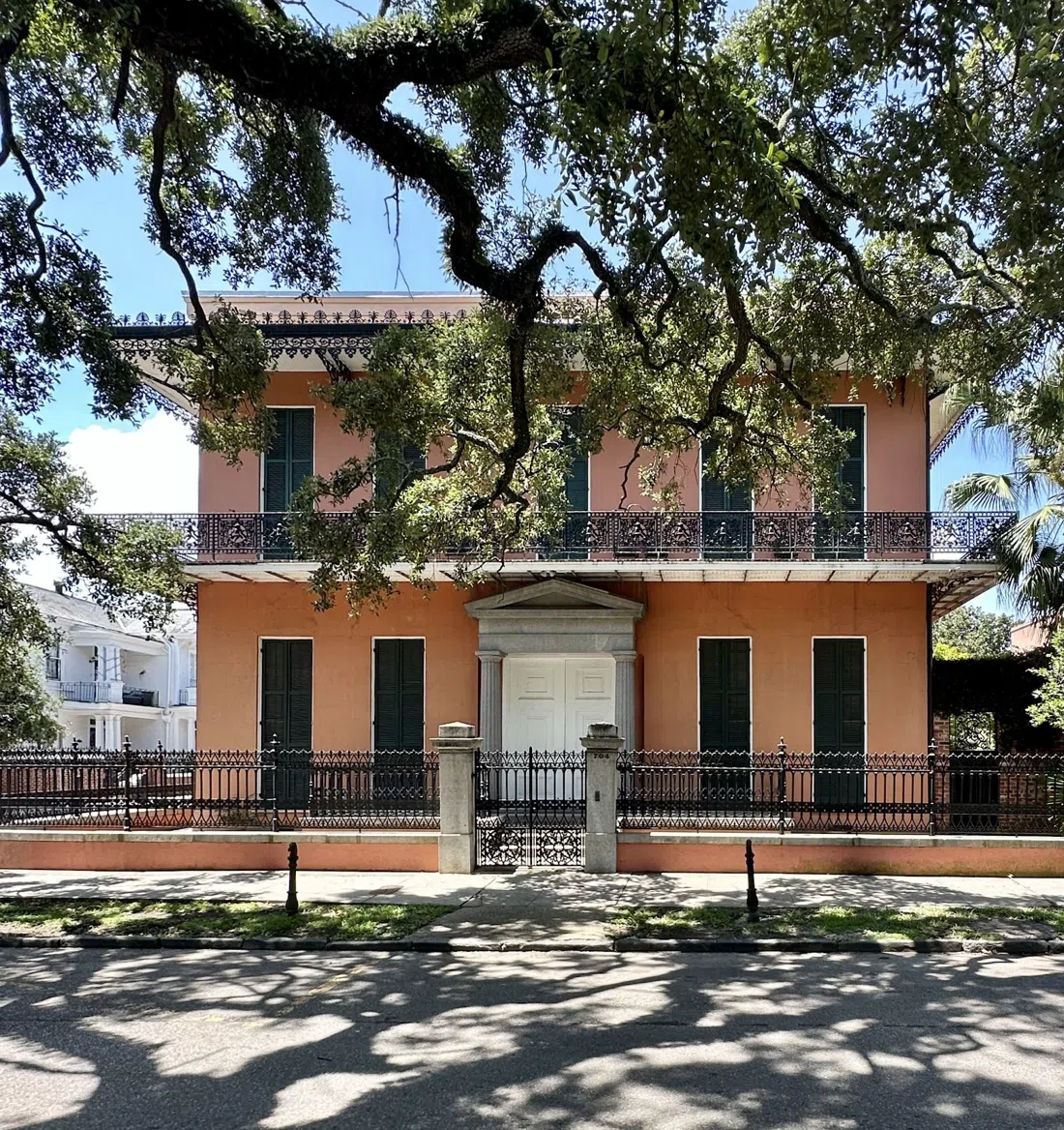
Fifi's Custom Wigs (French Quarter) is still the Quarter's costume headquarters under its new name; it was Fifi Mahony's before a change of ownership. Cosmetics and ready-made pieces are modest, a custom wig runs into the hundreds, and custom work and styling need to be booked ahead. This is precisely why September is the sane month to walk in: in season the shop adds Monday hours to cope, and the staff have no time to sit with you. Out of season it is open Wednesday to Sunday, 11am to 6pm, it is a small shop where a couple of people browse comfortably, and you can commission the thing properly.

Beignets, king cake and a myth worth correcting
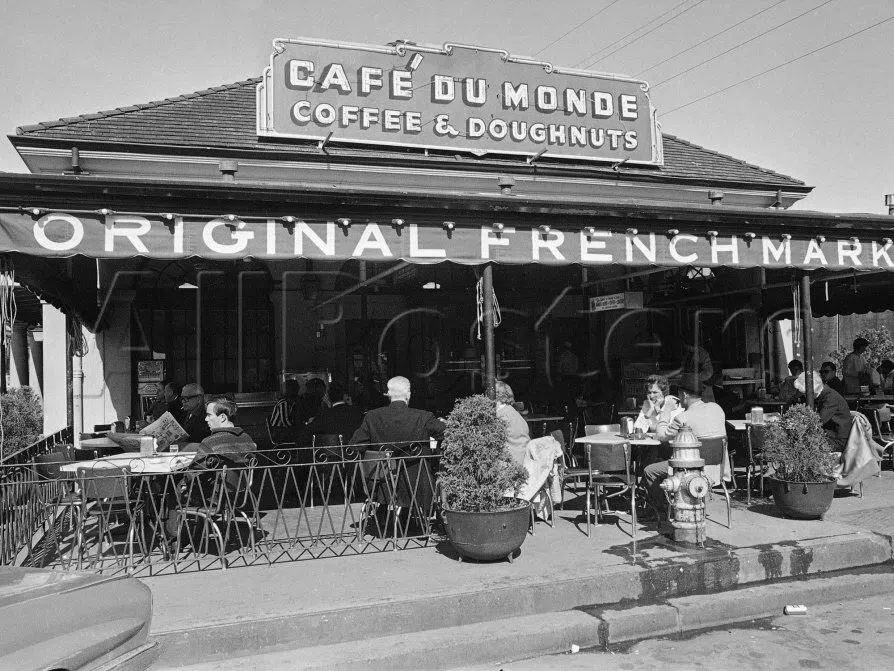
Café du Monde (French Market) is not open 24 hours and has not been for some time, whatever you have read. It runs roughly 7:15am to 11pm, to midnight on Friday and Saturday. Three beignets cost about $3.60 to $5.50 and a café au lait is similar. Go before 9am or after 9pm and the queue mostly disappears; the rest of the day it looks worse than it is, because seating turns over constantly. There are no reservations, so a group splits across small tables and accepts it.
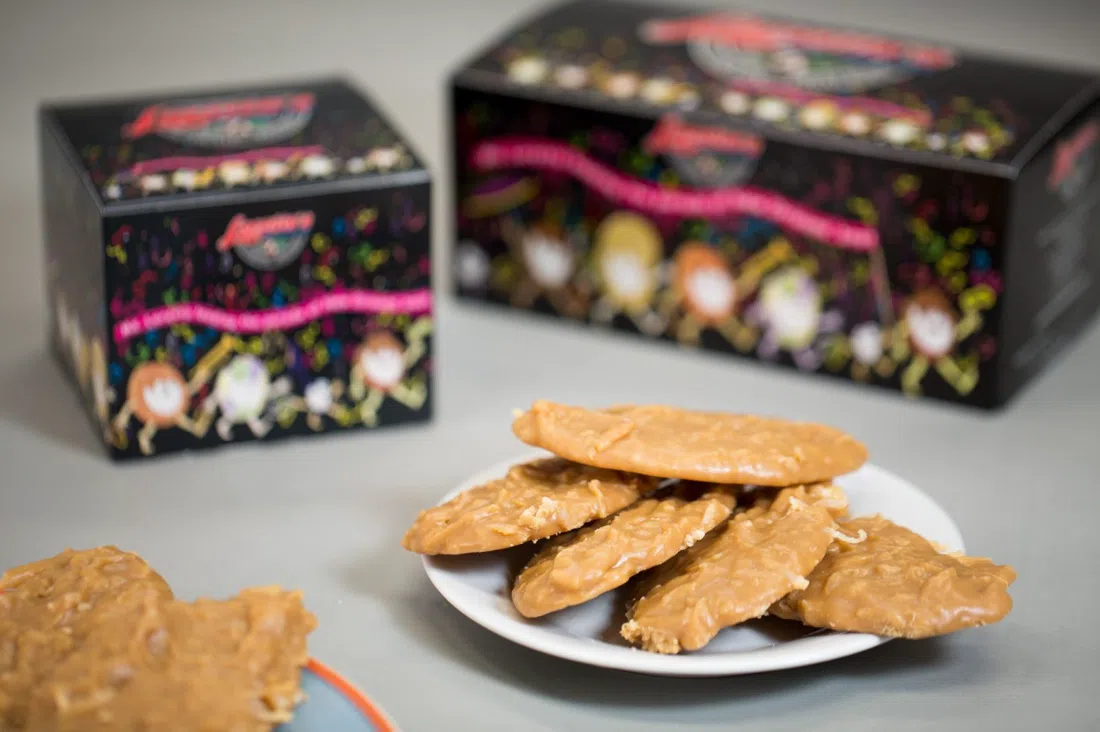
Loretta's Authentic Pralines (French Market) is the better short detour: the praline-stuffed beignet you cannot get at the famous stand, and king cake by the slice. Counter service only, lines wrap the building and still move, and reservations are now taken, which helps larger parties. Hours are short, roughly 9am to 4pm, closed Tuesdays. King cake is a Carnival-season item by tradition, so ask at the counter in September rather than assuming; the dependable out-of-season slice is the one handed to you at the float den.
The river, a jazz room and getting out of the heat
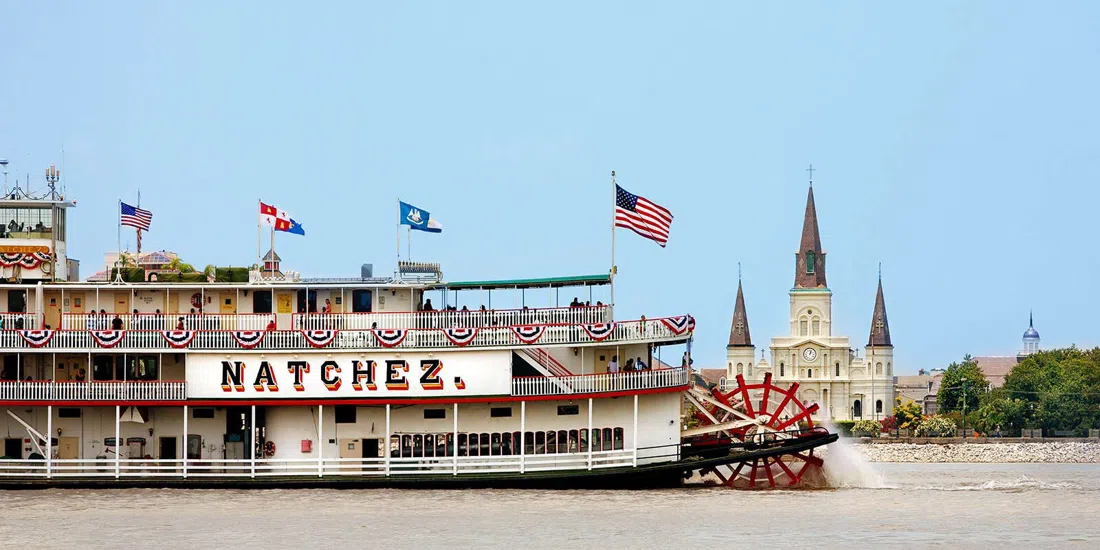
Steamboat Natchez (boards two blocks from Jackson Square) is the one way to escape the crush without leaving the Quarter, and in September the crush is heat rather than people. Sightseeing cruises start around $25.75, brunch from $80, and evening jazz dinner cruises from about $107.50. Groups, reunions and charters go through 504.569.1401. A themed Mardi Gras party package runs 5 January to 28 February 2027 if you come back in season.
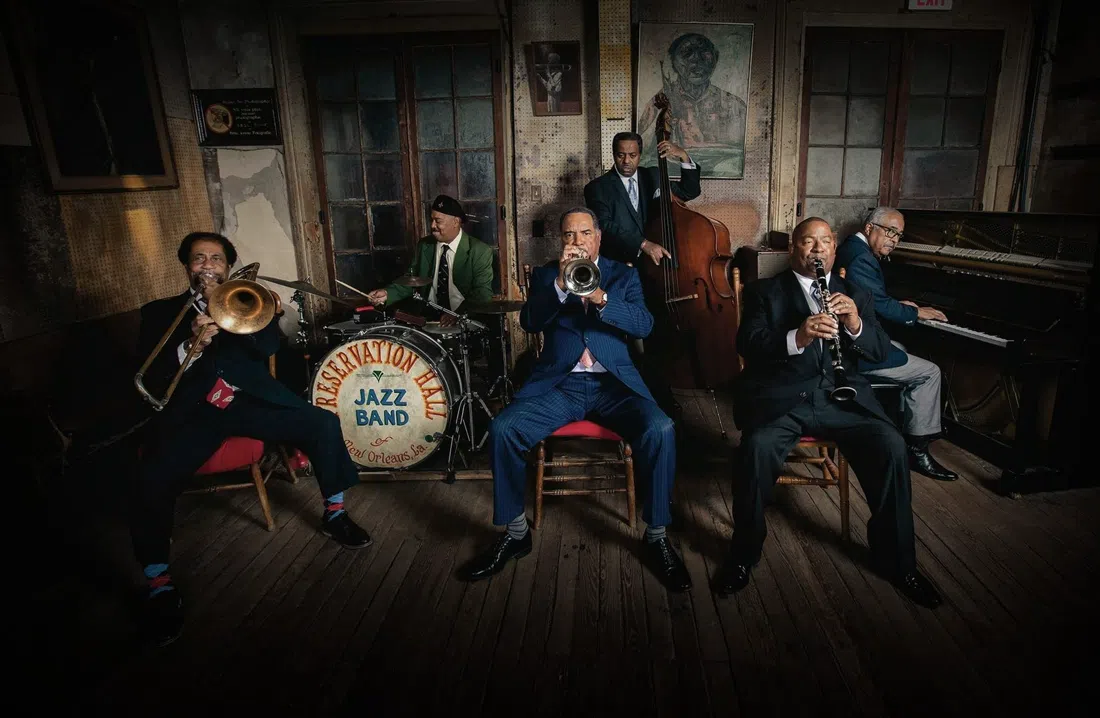
Preservation Hall (French Quarter) is the strictest door in this article and worth respecting. Sets typically run 5pm, 6:15pm, 7:30pm and 8:45pm, last about 45 minutes, and cost roughly $25 to $60 a head depending on tier. Tickets are advance-only: no door sales, and no seat selection, since you are assigned by section rather than by seat. A group has to buy the same show together. All ages are welcome. No photography, no recording, no outside food or drink, and the restrooms are next door at their Le Spectacle café. Arrive 15 minutes early, or 45 if you want a drink first.
The Carnival lunch, out of season
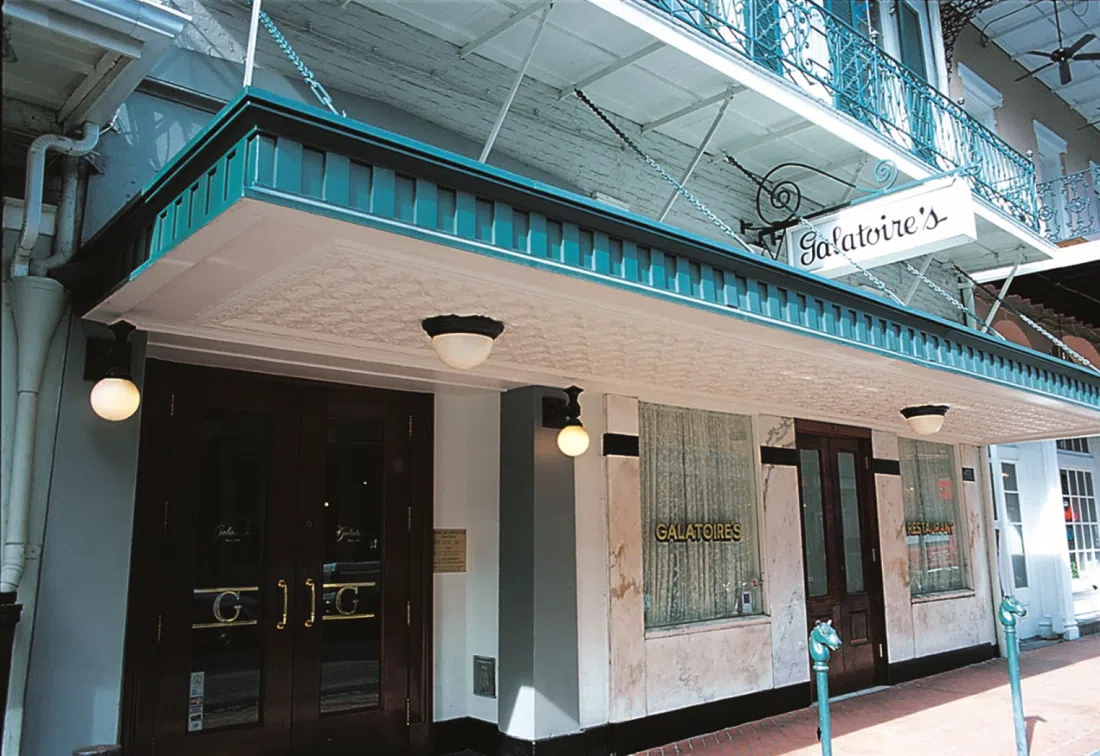
Galatoire's (French Quarter) is where the Carnival lunch tradition lives. The main-room tables on the Friday before Mardi Gras are fought over, and some are auctioned for charity rather than booked at all. In September you can simply eat there, which is the whole argument for the month. Jackets are required for men in the main and second-floor rooms after 5pm and all day Sunday, with loaners available. The downstairs room keeps a first-come element, so plan for a wait or take the adjoining 33 Bar & Steak instead. Private dining rooms and a sales team handle groups.
Door prices, guided walks and what to book
Almost everything above sells at the door in September, and that is the season's real advantage: you can build a day in the morning and change it by lunch. The hard exception is Preservation Hall, which is advance-only year round, and anything you want during the Carnival window itself, which is a different planning problem entirely.
If you would rather be walked through the Quarter than read a map, a guided option exists and is easy to pick up: tours run seven days a week, and prices start from 38 USD per person. Across the bookable tours here there are 40,887 traveller reviews, and the top-rated walk holds 4.5 out of 5 from 13,736 of them, enough of a record that you are choosing a known quantity rather than gambling on a stranger with an umbrella.
Best time to go
Within September, the day matters more than the date. Friday is the strongest single day in the Quarter: Arnaud's museum is open for Friday lunch, which is the easiest daylight window into that free collection, Loretta's is trading, and you can take an early Preservation Hall set before dinner. Avoid Tuesday, which loses you both Loretta's and the costume museum, and Wednesday, which loses the costume museum again.
Within the day, be out by 8am. The Quarter is genuinely quiet then, the river side is shaded, and Café du Monde has no queue worth the name. Walk the routes and the riverfront in that first cool hour, put the museums and the float den in the 1pm to 4pm heat, and keep the evening for music and the water. September afternoons bring thunderstorms that arrive fast and pass, so carry something light rather than rearranging your day around them. This is also the peak of hurricane season, which is a real consideration rather than a disclaimer: book a flexible rate and take insurance.
If you have any latitude on dates, push into the first days of October. The Presbytère reopens then, and with it the one hour that makes everything else you have seen cohere.
Is it worth it in September
If you came for a parade, no, and no amount of good writing changes that. The season does not start until 6 January and the streets stay empty of floats until then.
If you came to understand Carnival, September is arguably the better month. You get the float den mid-build, the costume collections without a queue, Tremé's museum with someone willing to talk you through it properly, and the routes walkable at your own pace. It suits couples, solo travellers and anyone with a genuine interest in how the thing is made. Families do well at the float den and the costume museum, less so at the satire parade in January. Large groups need to plan hardest: the float den is built for you, the Tremé rooms and the Arnaud's landing are not.
Practical notes
The Quarter is small and walkable end to end in about 20 minutes, so you need no transport for most of this. The one exception is the float den upriver at 1380 Port of New Orleans Place: take a short ride, and if you are booked as a group remember the free downtown shuttle does not apply to you. The riverfront is close enough to Jackson Square that the steamboat needs nothing but a two-block walk.
Cards work almost everywhere, but carry some cash for counter service and small museum doors, and confirm the Tremé ticket price at the desk rather than assuming. Budget roughly $60 to $90 a person for a full Carnival-focused day (the float den at about $29.95, a $15 museum, a $10 to $25 community museum, and beignets and coffee for under $10) before you add a jazz set at $25 to $60 or a river cruise from about $25.75. Room rates are at their lowest of the year in September and their highest around Carnival, which is the single biggest line in either budget.
For everything outside Carnival (where to eat, which streets reward a slow morning, how the rest of the city connects) the wider New Orleans guide covers it.