New Orleans专刊
Walking Faubourg St. John, New Orleans' bayou neighbourhood
A Creole country house that opens three days a week, a blue swing-span footbridge, po-boys from 1911 and the racetrack that holds Jazz Fest. Walk them in the order they open.

作者:Robin de VriesThe city by streetcar line, block by block
White egrets wade the grassy banks of Bayou St. John, a narrow tidal waterway with low brick steps running down to flat-calm water. Faubourg St. John grew along it. The colonial Creole house of the city's first US mayor stands on those banks, and the racetrack that holds Jazz Fest is at the northern edge.
Walking the bayou bank
Bayou St. John (Moss Street bank) is open public ground and free to walk. Give it the 3 km from Esplanade Avenue up to Robert E. Lee Boulevard, and go early or at golden hour, because the bank has no shade in summer. Picnic blankets go down on the grass of the Moss Street side, paddleboarders work the water, and second-lines come along the banks. Mid-City rooflines close the view, with a single steel truss footbridge in the distance.
Magnolia Bridge (Moss and Harding), also called the Cabrini Bridge, is the most photographed object in Faubourg St. John and one of the oldest bridges in the city. The squat late-1800s steel swing span is painted bright blue: riveted lattice girders, cable barrier rails, composite deck boards, with the buildings of Cabrini High School behind it. A $1.3 million overhaul rebuilt it and reopened it to walkers, runners, cyclists and dogs. The best light is the hour before sunset. The span is narrow, so a large group should spread along it instead of blocking the deck.

规划您的New Orleans之旅
实时价格,来自我们的预订合作伙伴。
许多客房可免费取消。您预订时,我们可能会获得佣金。
Pitot House on Moss Street
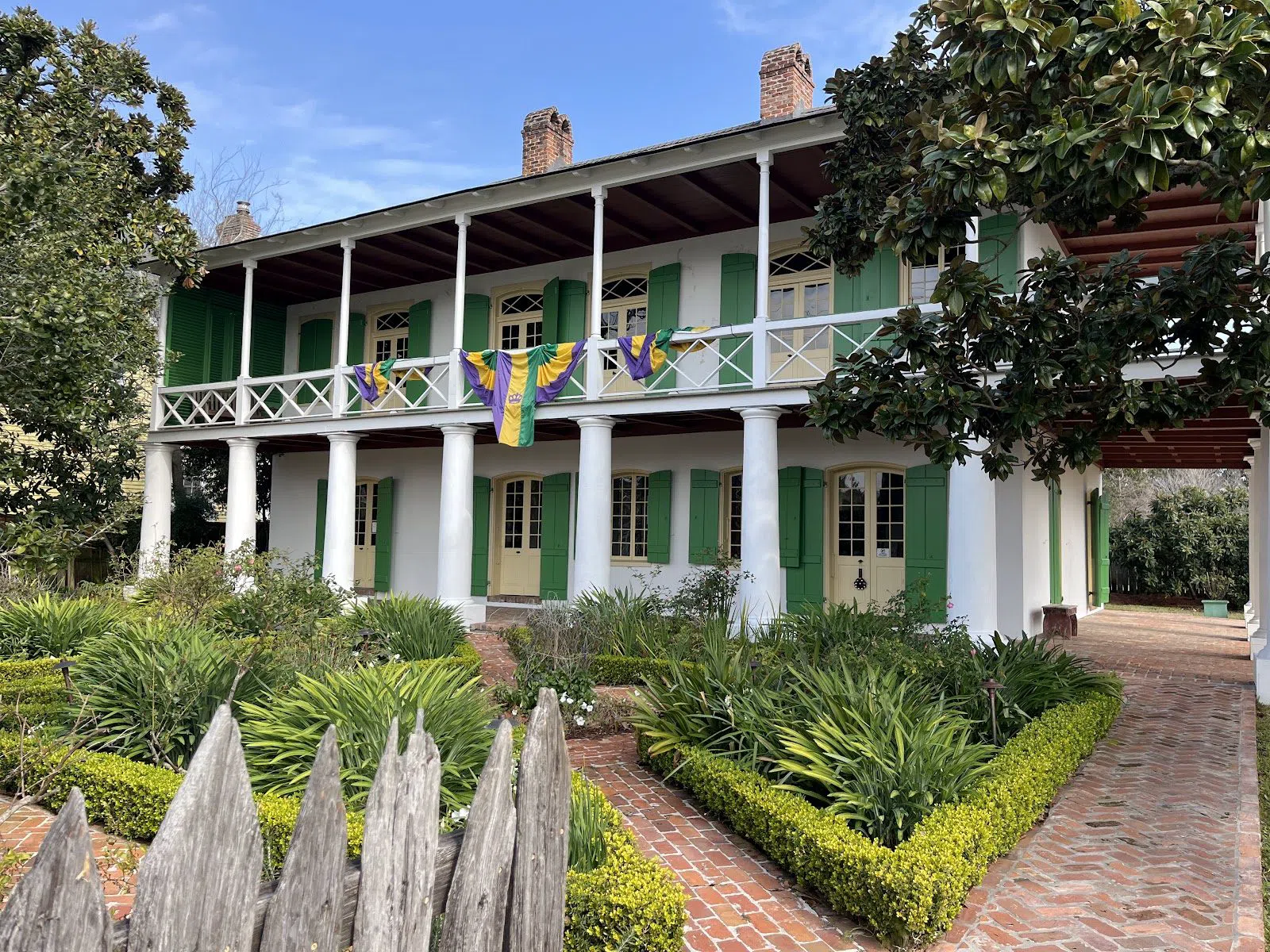
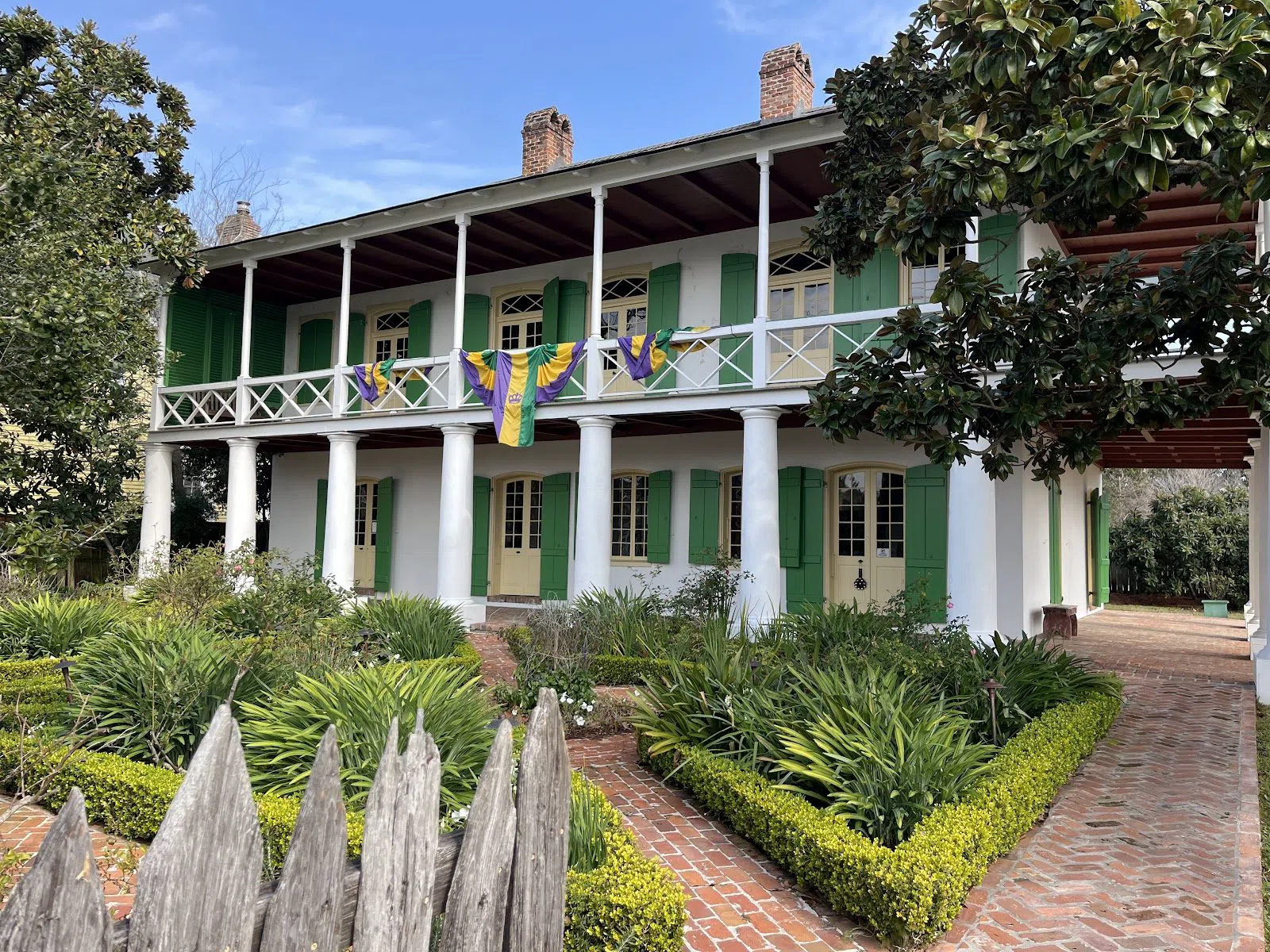
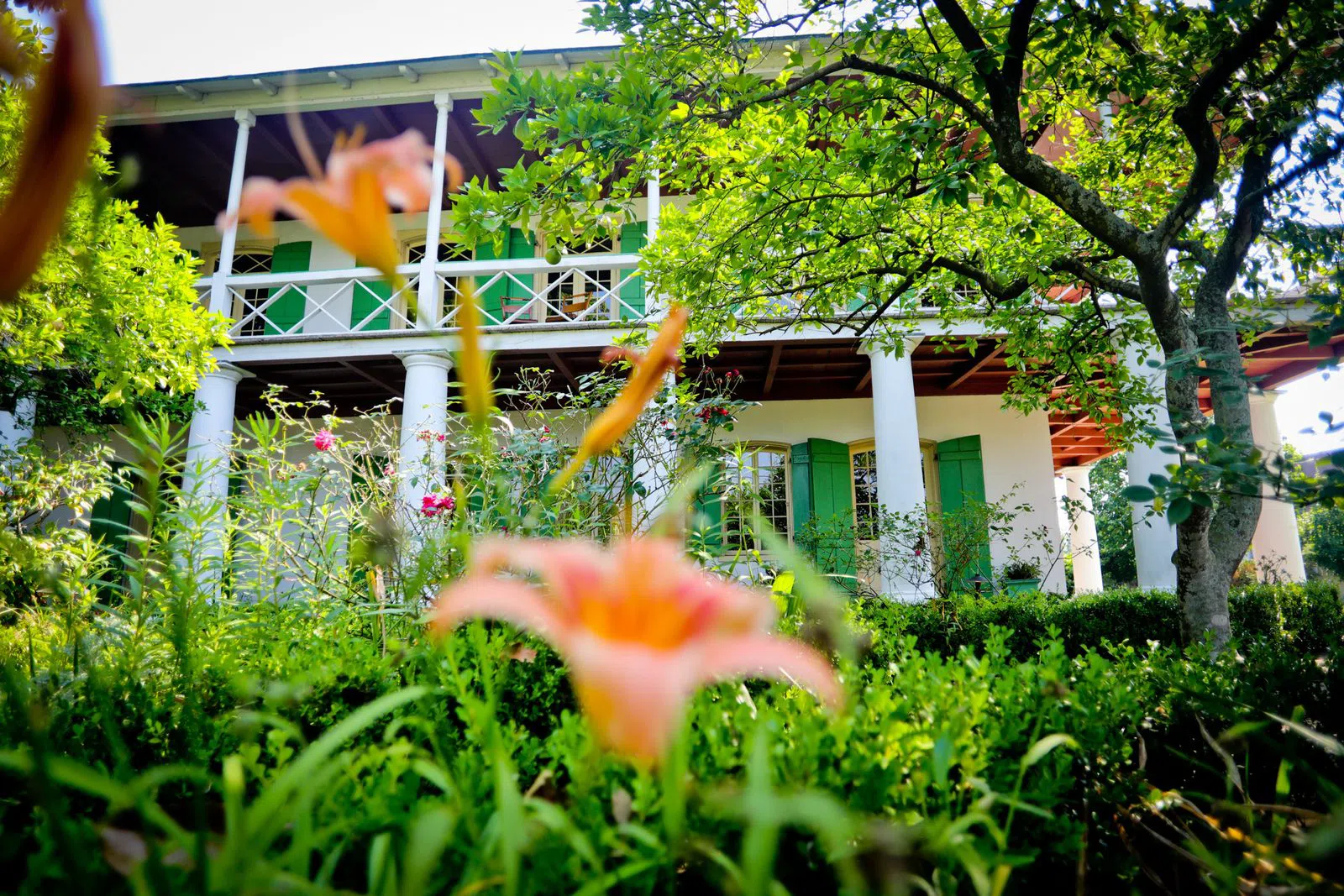
Pitot House (1440 Moss Street) is the one colonial Creole country house in New Orleans you can go inside, and it was the home of the city's first US mayor. White stuccoed and West Indies in style, it sits on a lawn directly on the bayou bank, a double-pitched hipped roof over wide shaded galleries on brick columns, French doors behind them.
Entry is by guided tour only, on the hour. Tours are $15 for an adult and $12 for a student, senior or National Trust member. The house opens Wednesday to Friday, 10 a.m. to 3 p.m., and the last tour leaves at 2 p.m., so plan the week around those three mornings. Groups can book a dedicated off-hours tour by phone at $20 a head.
Paddling with Kayak-iti-Yat
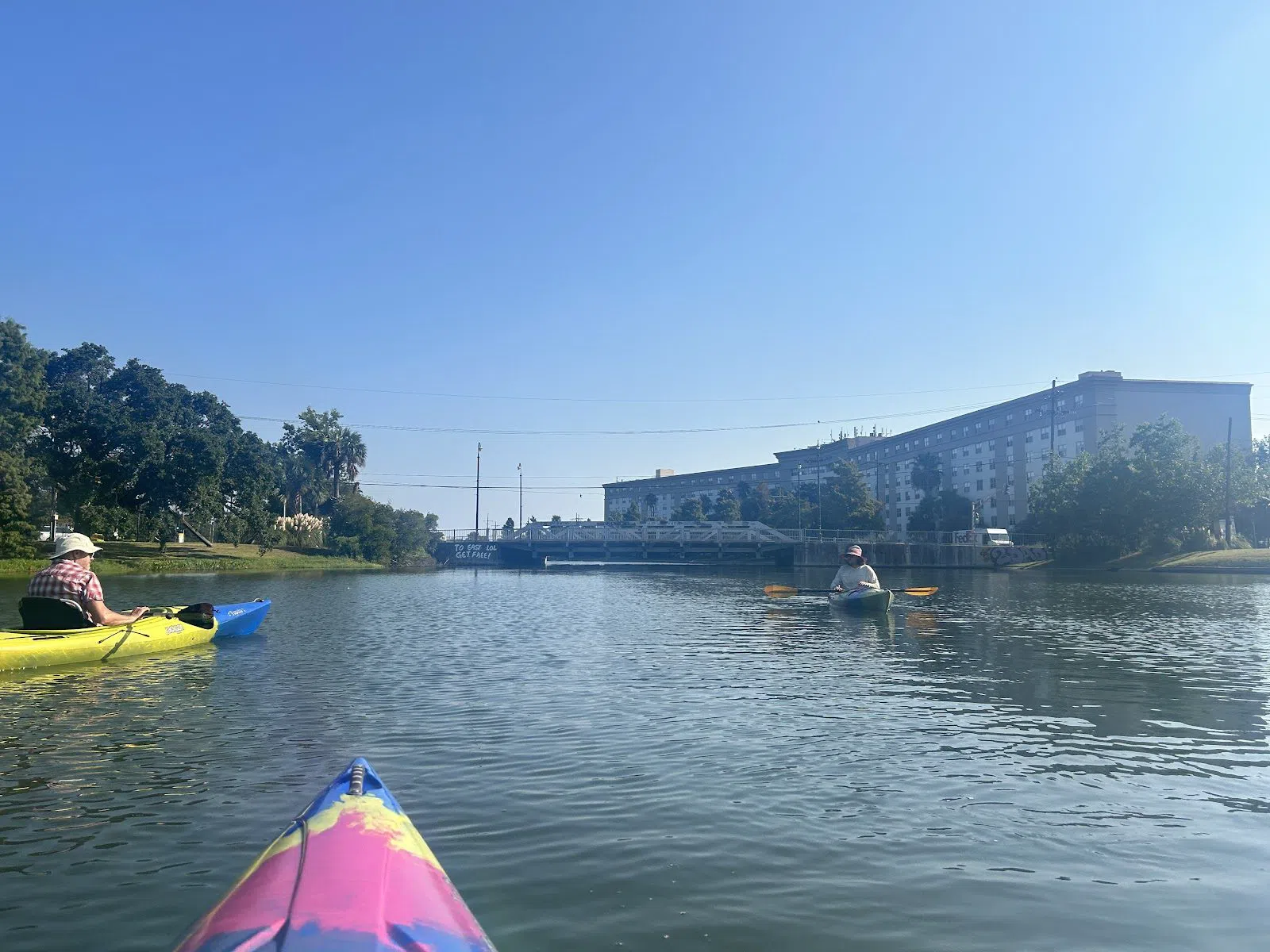
Kayak-iti-Yat (near 3494 Esplanade Avenue) is the original bayou kayak outfit, running six days a week year-round by reservation only. The two-hour Big Easy Bayou tour is $55 per person, $49 for residents, and needs no previous experience; the Lake Pontchartrain paddle is $100. Bright plastic sit-on-top kayaks are pulled up on the grassy bank before you start.
You sit low on flat brown water, pass under a low steel bridge, and look up at Creole cottages and cypress on the banks. It is the clearest way to see why the city began on this water. Private paddles start at eight tickets, and custom group paddles are built for parties above nine, which covers stag and hen groups, company outings and family reunions.
Esplanade from the church to the museum
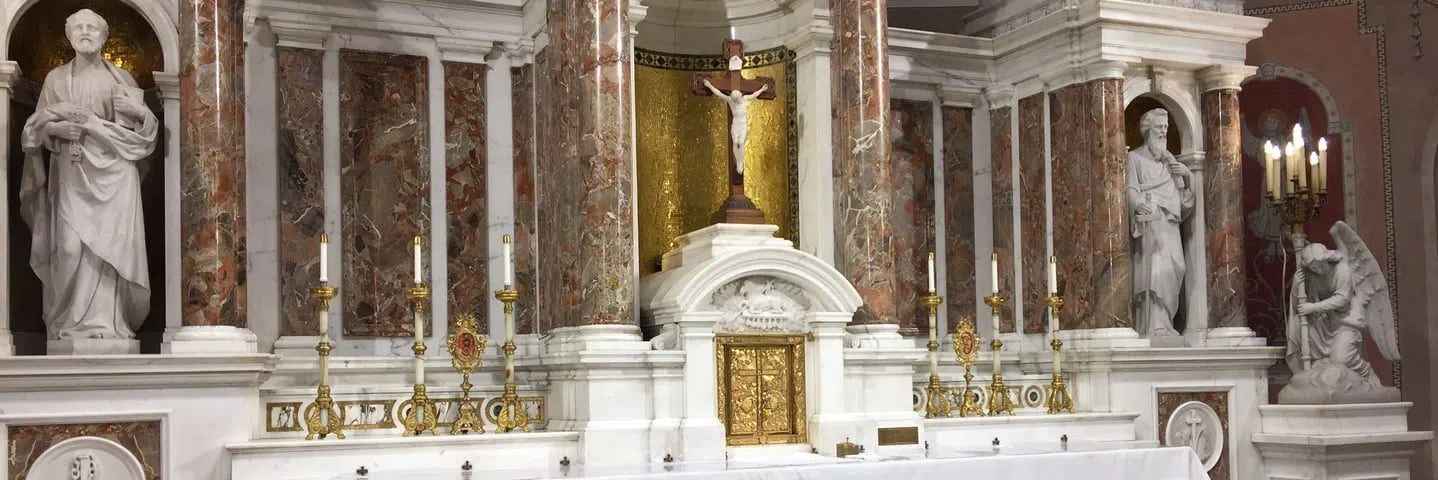
Our Lady of the Rosary Catholic Church (3368 Esplanade Avenue) is the domed silhouette that fixes this stretch of the avenue in your memory. The 1925 Venetian-Renaissance building has a tall green-weathered copper dome over a high columned portico, pale brick and stone below, big rounded arches inside. It fronts the oak-lined Esplanade neutral ground and looks straight across at the Fair Grounds gates, which makes it a two-minute detour on any bayou walk. The parish is a working one with a congregation: Mass is Saturday at 4 p.m. and Sunday at 9 and 11 a.m., and outside service times you keep quiet and dress modestly.
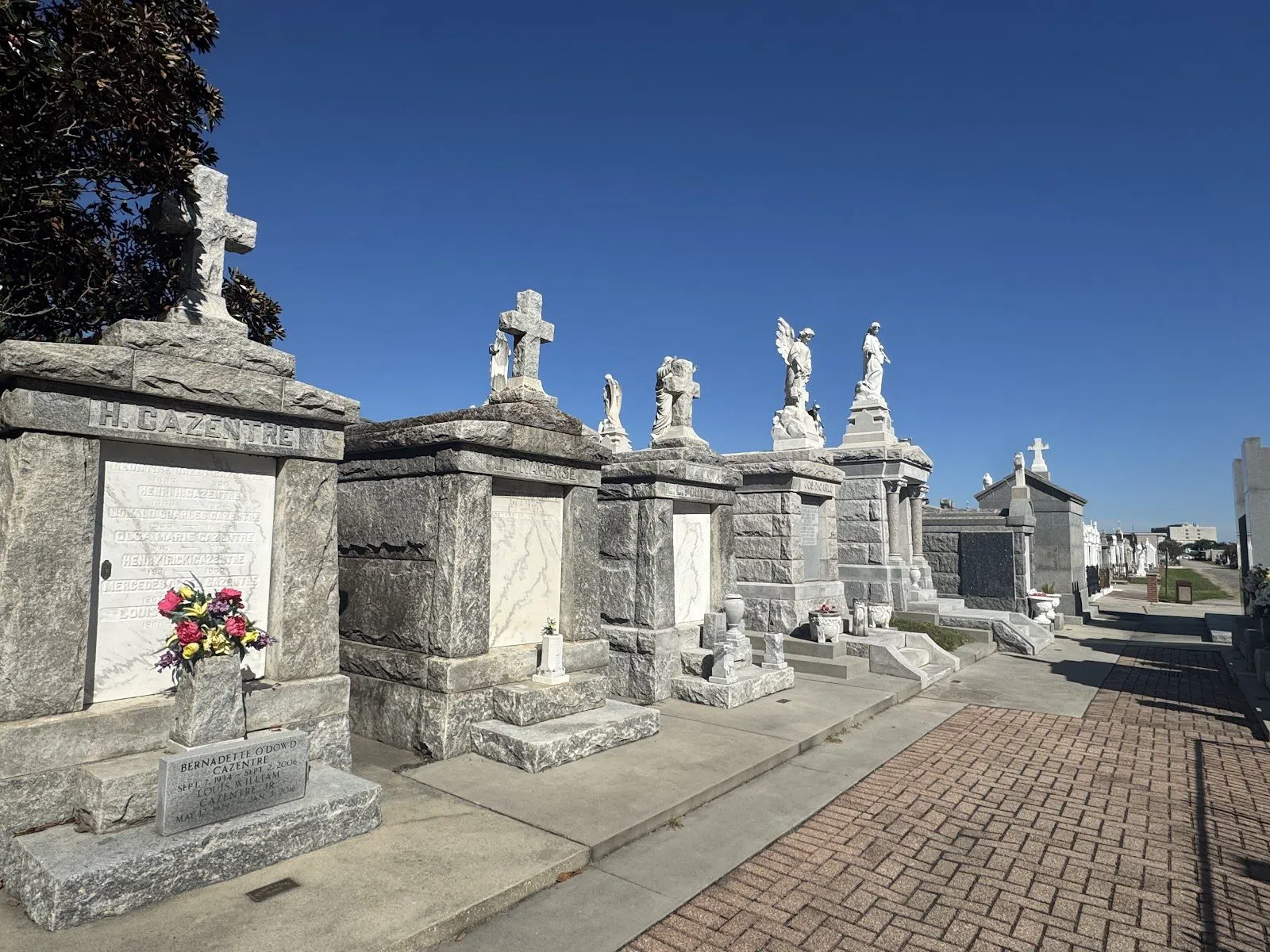
St. Louis Cemetery No. 3 (Esplanade Avenue) is at the bayou end of the avenue and costs nothing. Entry is free and self-guided, with no tour required, unlike No. 1. Gates open Monday to Saturday 8 a.m. to 4:30 p.m. and Sunday 8 a.m. to 4 p.m., and the cemetery closes on All Saints' Day, All Souls' Day and Mardi Gras. Go in the morning, before the heat turns the aisles into an oven. A wide central aisle runs back from a Gothic iron gate through a dense grid of white marble and plaster tombs, cast-iron fences and weeping-angel statuary, the older vaults streaked with dark mould and crumbling stucco.
The New Orleans Museum of Art and the Sydney and Walda Besthoff Sculpture Garden (head of Esplanade Avenue, City Park) are across the bayou, a five-minute walk from Esplanade. The neoclassical pale-stone museum with its columned portico charges $23 for out-of-state visitors, $18 for Louisiana residents, and nothing for under-19s; group rates and advance booking go through the museum. Behind it, 11 acres of lagoon garden hold large bronze and steel sculptures under Spanish-moss-draped live oaks, crossed by pedestrian bridges and reflecting water. The garden is free seven days a week and takes a party of any size.
Degas House down Esplanade Ridge
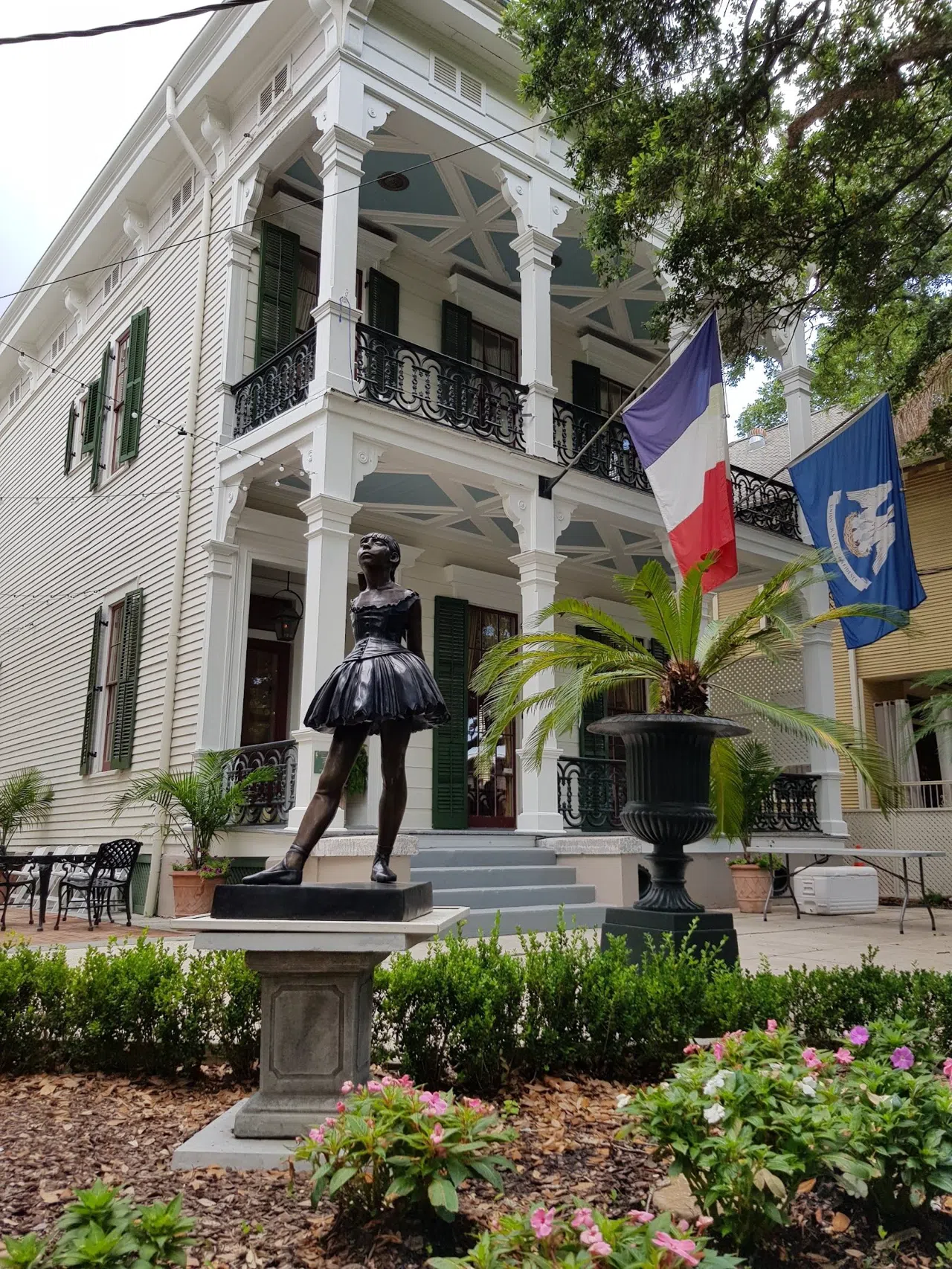
Degas House (2306 Esplanade Avenue) is the only Edgar Degas home or studio anywhere open to the public. He painted here on a family visit in 1872 and 1873. The double-galleried 1850s Italianate Creole mansion is cream clapboard with slim columns and tall shuttered windows, deep oak shade over the front steps, period parlours hung with Degas reproductions.
Guided tours run daily at 10:30 a.m. and 1:45 p.m. at $29 a head, or $50 with a Creole breakfast and mimosas. Group rates and free bus parking are available, and the house also takes private events and overnight B&B guests. It is about 1.5 km from the bayou, so walk the avenue to it rather than treating it as a detour.
Race days at the Fair Grounds
Fair Grounds Race Course and Slots (northern edge of the neighbourhood) is the third-oldest racetrack in America and the home of Jazz Fest. White rails ring a broad dirt and turf oval under a long green-roofed grandstand and tall floodlight pylons, and the huge live-oak-shaded infield fills with festival stages and tents in spring.
The 155th season runs Nov. 19, 2026 to March 21, 2027, peaking at the Louisiana Derby on March 20, 2027. General admission is free to $15, more on stakes days. The grandstand, the trackside boxes and the renovated Black Gold and Pan Zareta rooms take private parties, and hospitality on a stakes day needs booking ahead.
Dinner on Esplanade
Café Degas (Esplanade Avenue) has been open since 1980 and is the city's longest-running proper French bistro. You eat on a covered wooden deck with a mature pecan tree growing straight up through the roof and floor, lattice walls around you, strings of warm bulbs overhead, a zinc-topped bar and close-packed bistro tables with paper laid over white cloths. Mains are $26 to $40. It closes on Mondays. Reservations go online for parties up to eight and by phone for nine or more; the deck is tight, so a big group should book well ahead.
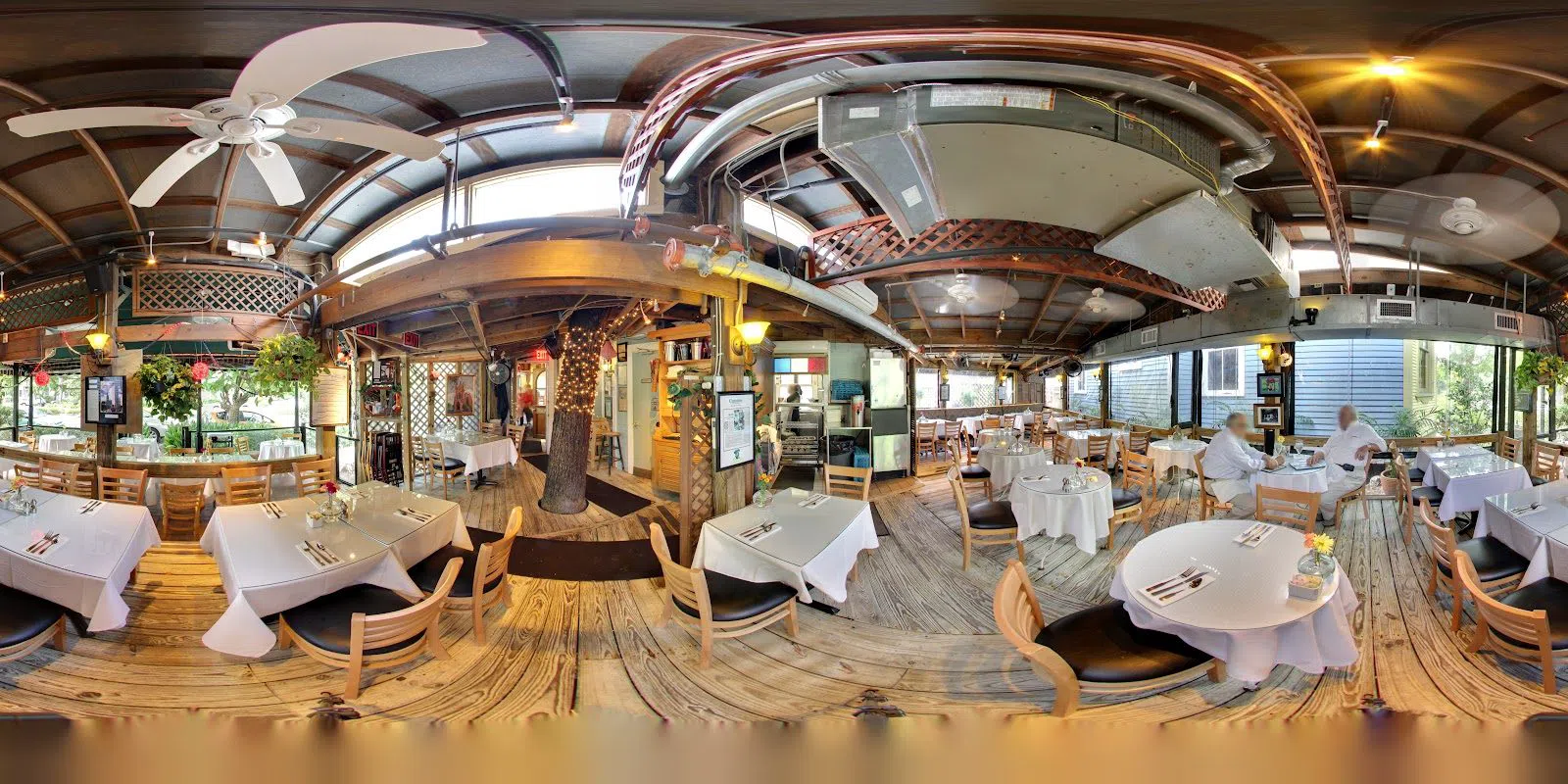
Lola's (3312 Esplanade Avenue) has fed this neighbourhood for 30 years, doing garlic shrimp and seafood paella for the people who live here. The small corner dining room under huge live oaks is bare brick and warm lamplight, and the paella arrives in wide black steel pans crusted with saffron rice, mussels and shrimp. Paellas are $24 to $36 and tapas less. Dinner runs nightly from 5:30 p.m., with a Sunday lunch sitting as well. Reservations are strongly advised, and a group over six should call, because the room is small.

Parkway po-boys and the Deutsches Haus biergarten
Parkway Bakery and Tavern (538 Hagan Avenue) has served po-boys since 1911, and its roast beef is the one every other version in the city is measured against. It stands on the bayou's far bank, a short walk over the bridge: cream and green paint, a vintage neon Parkway sign, an order window and tiled counter inside, walls of signed photographs. Dressed roast beef comes on soft Leidenheimer loaves in paper, $12 to $18. Hours are Wednesday to Sunday, 10 a.m. to 6 p.m., closed Monday and Tuesday. Nobody takes reservations; you queue at the counter and claim a table in the large indoor room or out on the fenced, shaded patio of picnic tables.
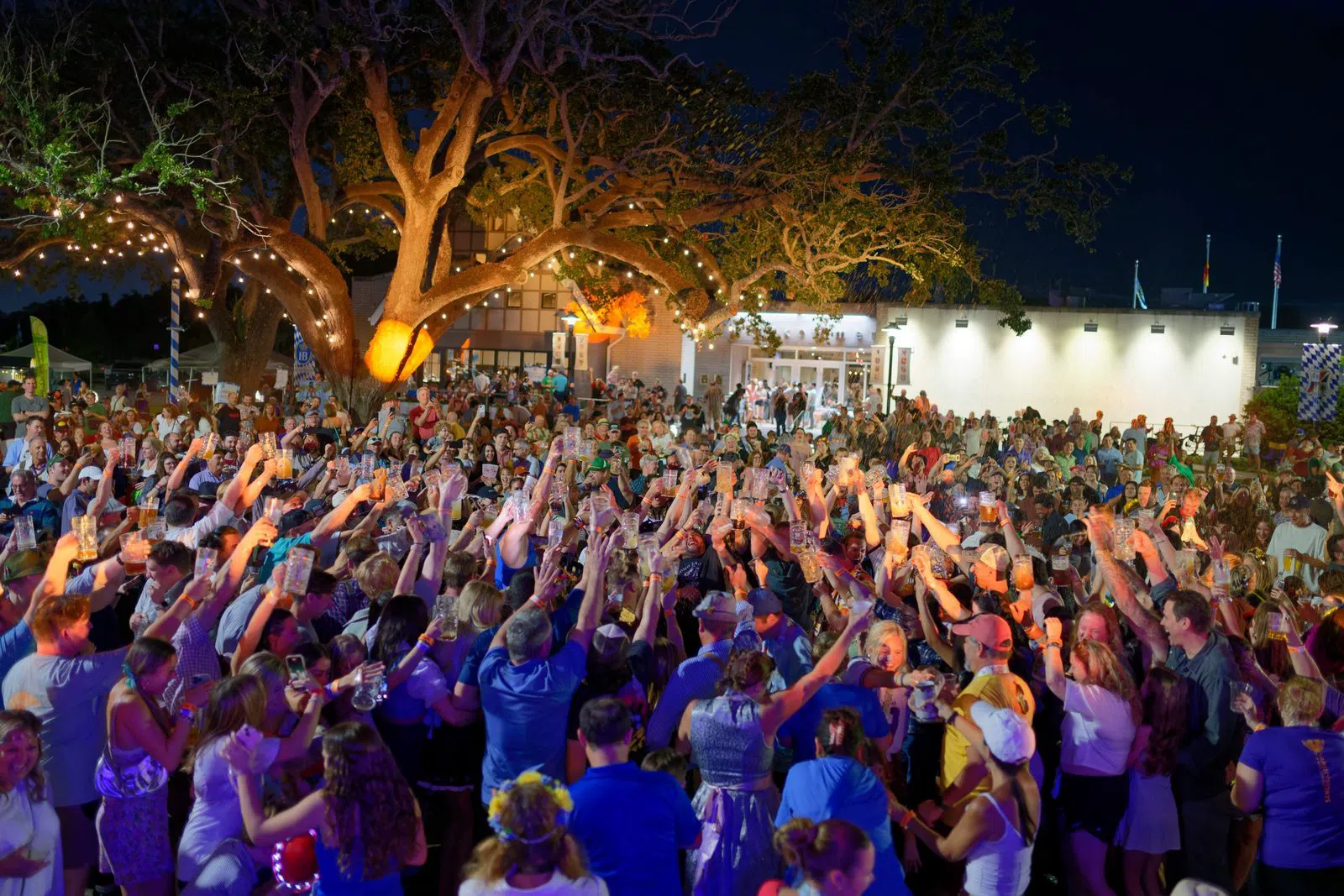
Deutsches Haus (1700 Moss Street) is a modern Bavarian-style hall with half-timbered gables set hard on the bayou bank, water glinting through the trees. Brats, schnitzel and etouffée come out side by side, and plates and litre steins are $8 to $20. It is the home of the city's Oktoberfest, six days across three October weekends, with entry at $10, and it runs a weekly open Biergarten the rest of the year under a tent of long communal trestle tables, brass bands and bunting. It closes on Mondays. Those trestles and the bookable halls make it the one room here that takes a large party without strain.
Late drinks at Pal's Lounge
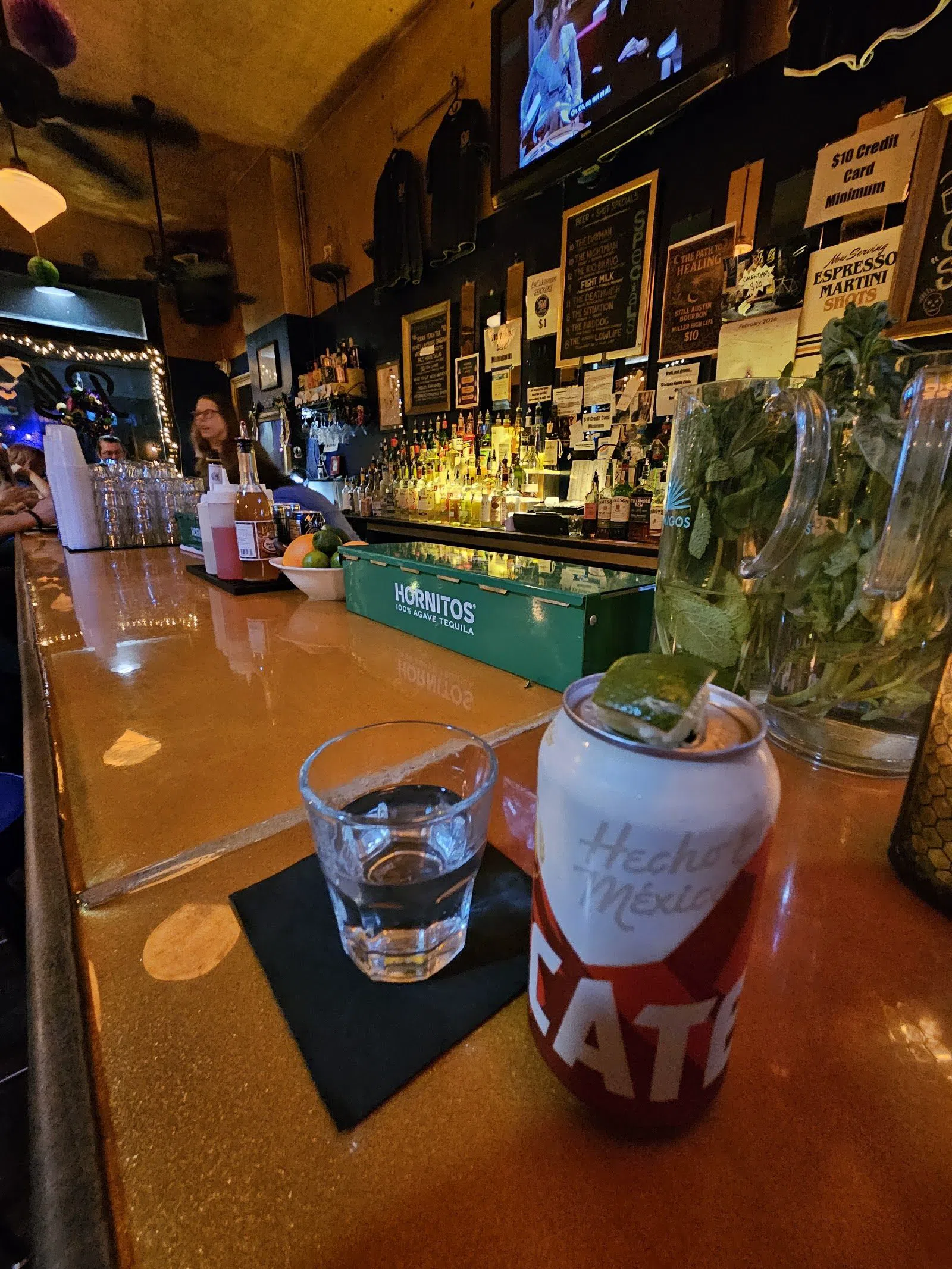
Pal's Lounge (949 N. Rendon Street) has been open since 2002 and runs 3 p.m. to 3 a.m. daily, which makes it the nightlife answer in Faubourg St. John. Drinks are $6 to $14, the mixers are made in house, and food pop-ups rotate through. The small freestanding corner bar is crammed with kitsch, taxidermy and oddities, with a vintage photo booth, a long wooden bar and a few pavement tables out front where dogs lie under the chairs. Walk in; there is no door policy, and the bar is dog- and LGBTQ-friendly. It is one room, so a dozen people take it over and the overflow goes onto the pavement.
Where to stay in Faubourg St. John
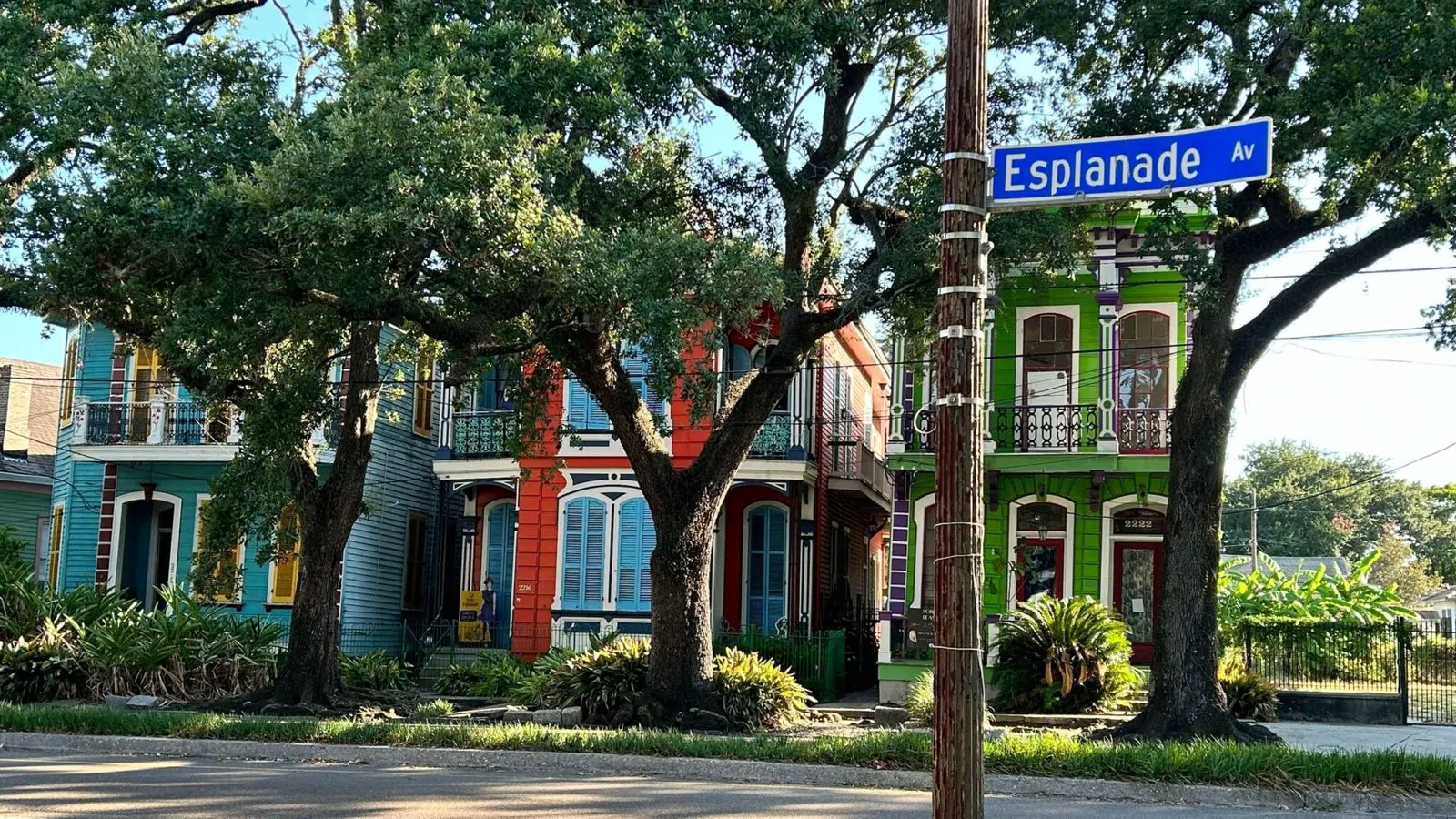
No hotel sits inside the neighbourhood, which leaves La Belle Esplanade (2216 Esplanade Avenue) as the realistic base. The double-gallery Victorian gingerbread manor house is painted in bold contrasting colours, with ornate turned columns and fretwork brackets outside and five large eccentric suites inside, high ceilings, ceiling fans and local folk art. Rates are $$$ among New Orleans guesthouses. It is about 1.3 km down the oak-lined avenue from the bayou, and the same walk from the French Quarter in the other direction. Five suites suit couples and small parties; a group of eight to 10 books the whole house.
Planning the week
Pitot House opens Wednesday to Friday only, Parkway closes Monday and Tuesday, and Café Degas and Deutsches Haus close Mondays. Reserve Kayak-iti-Yat before you arrive, phone Café Degas for nine or more, and keep the cemetery for the first hours after the gates open.
See the New Orleans guide and the New Orleans hotel search.
出发之前
When can you tour Pitot House?
Pitot House at 1440 Moss Street opens Wednesday to Friday, 10 a.m. to 3 p.m., and the last tour leaves at 2 p.m. Entry is by guided tour only, on the hour: $15 for an adult, $12 for a student, senior or National Trust member. Groups can book a dedicated off-hours tour by phone at $20 a head.
Can you visit St. Louis Cemetery No. 3 without a guide?
Yes. Entry is free and self-guided, and unlike No. 1 you do not need a tour. Gates open Monday to Saturday 8 a.m. to 4:30 p.m. and Sunday 8 a.m. to 4 p.m., and the cemetery closes on All Saints' Day, All Souls' Day and Mardi Gras. Go in the morning, before the heat builds in the aisles.
Is there a hotel in Faubourg St. John?
There is no hotel in the neighbourhood itself. La Belle Esplanade at 2216 Esplanade Avenue has five suites and is about 1.3 km down the avenue from the bayou, the same walk from the French Quarter in the other direction. A group of eight to 10 can book the whole house.
Where can a group of 10 eat and drink here?
Deutsches Haus at 1700 Moss Street handles groups best, with communal trestle seating and halls you can book. Parkway Bakery and Tavern takes no reservations but has a large indoor room and a patio of picnic tables. Café Degas books parties of nine or more by phone, and Lola's asks groups over six to call.
When does the Fair Grounds racing season run?
The 155th season runs Nov. 19, 2026 to March 21, 2027, with the Louisiana Derby on March 20, 2027. General admission is free to $15, and more on stakes days. On the big days you need to book hospitality ahead, whether in the grandstand, a trackside box or the Black Gold and Pan Zareta rooms.